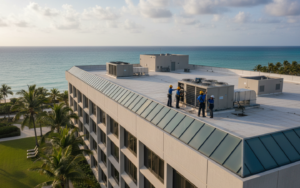
A small roof leak above a guest room often starts long before water reaches the ceiling. Damaged flashing, blocked drains, loose sealants or deteriorating exterior materials might allow moisture to enter gradually. Without scheduled inspections, hotel teams often identify these problems after guests report stains, leaks or unpleasant odours.
A roof and building-envelope inspection schedule for hotels helps property teams identify defects before they develop into larger repair requirements. For US hotel owners, general managers and operations leaders, a structured inspection programme also supports maintenance budgeting, contractor coordination and property protection.
This guide explains how to inspect roofs and building envelopes, organise inspection records and establish a practical schedule for US lodging properties.
Why Roof and Building-Envelope Inspections Matter
A building envelope separates indoor spaces from outdoor conditions. The envelope includes the roof, exterior walls, windows, doors, joints, sealants and other components that protect the building.
Damage to these components might lead to:
Roof leaks and water intrusion.
Interior ceiling and wall damage.
Moisture accumulation.
Deteriorating exterior finishes.
Damaged insulation.
Higher repair expenses.
Disruption to guest rooms and shared facilities.
Regular inspections help maintenance teams identify visible deterioration and arrange professional assessments when required.
Hotels should consider building age, construction materials, previous repairs, weather exposure and manufacturer recommendations when setting inspection frequency.
Building a Roof and Building-Envelope Inspection Schedule for Hotels
An effective schedule should cover routine observations, planned inspections and specialist assessments. Inspection frequency depends on property conditions, local weather and the building’s construction.
1. Start with a Building Component Inventory
Create an inventory of roof and exterior components across the property.
Include:
Main roof areas.
Roof edges and parapets.
Flashing and penetrations.
Gutters and downspouts.
Exterior walls and cladding.
Windows and exterior doors.
Expansion joints.
Sealants and waterproofing systems.
Balconies and exterior walkways.
Basement and foundation interfaces.
Record each component’s location, material, installation date where available, previous repairs and known defects.
Use photographs and location references to help maintenance teams compare conditions during later inspections.
2. Establish Inspection Frequencies
Different building components need different inspection intervals. Hotels should use professional recommendations and adjust the schedule after severe weather or reported leaks.
A sample planning framework is shown below.
Inspection activity | Suggested planning frequency |
Ground-level exterior observations | Monthly |
Interior leak and moisture observations | Monthly |
Roof drainage and visible condition review | Quarterly |
Detailed roof inspection | At least annually, subject to professional guidance |
Exterior sealant and joint review | Annually |
Post-storm exterior inspection | After significant weather events |
Specialist building-envelope assessment | Based on condition, risk and professional advice |
These intervals are planning examples, not universal legal requirements. Qualified roofing and building-envelope professionals should recommend the appropriate schedule for each property.
3. Inspect Roof Surfaces and Drainage Systems
Roof inspections should cover visible surface conditions and water drainage.
Depending on the roofing system, check for:
Loose or damaged roofing materials.
Cracks, splits or blisters.
Deteriorated flashing.
Damaged roof penetrations.
Ponding water.
Blocked drains.
Damaged gutters and downspouts.
Signs of previous repairs failing.
Standing water or repeated drainage problems deserve further assessment. Document the location and arrange professional review.
Hotel employees should not access roofs without approved procedures, suitable training and fall-protection arrangements. Technical inspections and repairs should go to qualified personnel.
4. Review Exterior Walls, Windows and Doors
Exterior walls and openings protect guest rooms and shared spaces from rain and wind.
Inspect visible areas for:
Cracked or damaged cladding.
Deteriorated mortar joints.
Loose exterior finishes.
Failed window sealants.
Damaged door frames.
Gaps around penetrations.
Water staining.
Corrosion around metal components.
Pay attention to areas below windows, around balconies and near transitions between different exterior materials.
Photograph defects and record their exact locations. A qualified professional should assess conditions where water intrusion, structural movement or material failure appears likely.
5. Check Interior Areas for Signs of Water Intrusion
Interior observations often reveal exterior defects.
Include guest rooms, corridors, meeting spaces, stairwells, service areas and ceiling voids where access is approved.
Look for:
Ceiling stains.
Peeling paint.
Bubbling finishes.
Damp odours.
Visible mould growth.
Damaged wall coverings.
Water near windows.
Repeated moisture complaints.
Record the affected room or area, date, visible condition and any reported history. Do not assume the visible damage identifies the original water-entry point. Arrange professional investigation where the source is unclear.
Roof and Building-Envelope Inspection Checklist
A roof and building-envelope inspection schedule for hotels should give staff a consistent way to document observations.
Use a checklist with the following fields:
Inspection area | Items to record |
Roof surface | Visible damage, loose materials and deterioration |
Flashing | Separation, corrosion and damaged joints |
Drainage | Blockages, standing water and damaged outlets |
Exterior walls | Cracks, loose finishes and staining |
Windows and doors | Sealant condition, gaps and water entry |
Roof penetrations | Visible damage around vents and equipment |
Interior spaces | Water stains, damp odours and reported leaks |
Corrective actions | Responsible person, contractor and target date |
Each entry should include the inspection date, property location, inspector name and supporting photographs where appropriate.
Separate routine observations from specialist inspection findings. This distinction helps management understand which issues require immediate professional assessment.
Best Practices for Managing Inspection Findings
A schedule is useful only when teams act on the findings. Hotels should establish a process for recording defects, assigning responsibility and confirming repairs.
Prioritise Defects Based on Risk
Not every observation requires the same response.
Management should review findings with qualified professionals and consider:
Active water intrusion.
Damage affecting guest safety.
Loose or falling exterior materials.
Deterioration around roof edges.
Repeated leaks in occupied areas.
Damage affecting electrical or mechanical equipment.
Follow the property’s emergency procedures when a defect creates an immediate hazard. Restrict access where required and arrange professional assessment.
Coordinate Contractors and Repair Work
Maintain an approved contractor list for roofing and building-envelope services.
Record each contractor’s scope, contact information, insurance documentation, service history and agreed response arrangements.
Before approving work, confirm:
The defect location.
The proposed repair scope.
Materials and methods.
Access and safety arrangements.
Estimated cost.
Expected completion date.
Inspection or verification requirements.
Request written service reports and completion evidence. Reinspect repaired areas according to professional recommendations.
Maintain Inspection Records
Keep inspection reports, photographs, contractor proposals, invoices and repair documents in an organised record system.
Use consistent location labels. For example, identify roof sections by building wing or floor rather than using general descriptions such as “north side.”
Review records during regular maintenance meetings. Look for repeated leaks, recurring sealant failures and repair costs increasing across the same building areas.
Preparing US Hotels for Regional Weather Conditions
Roof and building-envelope maintenance should reflect local climate and weather exposure.
Coastal Properties
Hotels along the Atlantic and Gulf coasts should pay attention to wind-driven rain, salt exposure and storm-related damage. Inspect roof edges, exterior metal components, sealants and drainage after significant weather events.
Northern States
Properties in states such as New York, Michigan and Minnesota should review roof drainage, ice-related damage and exterior joint conditions before and after winter.
Snow and ice management should follow approved procedures and professional guidance. Avoid placing staff on roofs without appropriate training and safety controls.
Southern and Southwestern States
Hotels in Florida, Texas and Arizona face different combinations of heavy rainfall, heat and ultraviolet exposure. Review waterproofing materials, sealants, roof surfaces and drainage systems based on local conditions.
Properties in Severe-Storm Areas
After hurricanes, hailstorms or severe wind events, arrange a suitable post-event assessment. Document visible damage and contact qualified roofing or building-envelope professionals before approving repairs.
How Hotel Technology Supports Maintenance Coordination
Roof inspections involve specialist building records, while hotel systems support guest-facing operations during maintenance work.
Aiosell provides connected hotel technology for reservations, front-desk operations and revenue management. Hotels using Hotel management software should review how reservation information and reporting support maintenance planning around occupancy.
When roof repairs affect guest rooms or shared facilities, a Hotel property management system supports coordination of room availability and reservation-related activities. Front-desk teams should receive timely updates about restricted areas and expected repair periods.
Aiosell supports connected hotel operations. Hotels should confirm available integrations before relying on a platform for inspection scheduling, defect tracking or contractor work orders. Specialist building-envelope records should remain within an approved maintenance system.
Conclusion
A planned inspection programme helps hotels identify roof deterioration, exterior defects and early signs of water intrusion. Management should maintain a building component inventory, establish suitable inspection intervals and document every finding.
A roof and building-envelope inspection schedule for hotels should also include contractor coordination, repair verification and post-storm assessments. Consistent records help teams monitor recurring defects and plan maintenance budgets.
Aiosell supports connected reservation and front-desk operations, helping hotel teams coordinate guest-facing activities when building maintenance affects room availability.
Frequently Asked Questions
How often should hotels inspect their roofs?
Hotels should follow roofing manufacturer recommendations and advice from qualified roofing professionals. A property might use routine visual reviews alongside detailed annual inspections and additional checks after significant storms.
What should a hotel building-envelope inspection cover?
An inspection should cover roof surfaces, flashing, drainage, exterior walls, windows, doors, joints, sealants and visible signs of interior water intrusion.
Who should perform hotel roof and building-envelope inspections?
Trained property staff might complete approved visual observations. Qualified roofing contractors and building-envelope professionals should handle technical inspections, assessments and repairs.
What should hotels do after discovering a roof leak?
Record the affected location, protect guests and property, notify the maintenance team and arrange professional assessment. Document the repair and verify the affected area after completion.
Why should hotels inspect building envelopes after severe weather?
High winds, heavy rain, hail and snow might damage roofing materials, exterior finishes and drainage systems. Post-event inspections help identify visible damage and determine whether specialist assessment is required.
How should hotels track roof inspection findings?
Maintain a central record containing inspection dates, defect locations, photographs, assigned contractors, repair deadlines and completion evidence. Review unresolved findings during maintenance meetings.