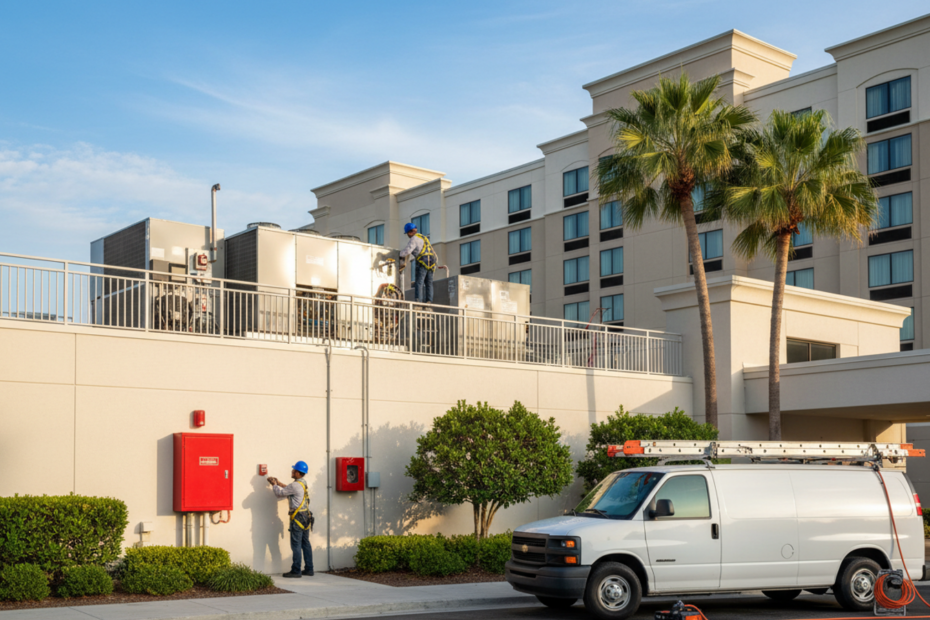
A fire alarm panel displays a trouble signal during a busy hotel shift. The front desk receives the alert, but the maintenance team has no recent service record. Staff now need to identify the affected system, contact the right contractor and follow the hotel’s fire-safety procedures.
For US hotel owners, general managers and operations leaders, fire alarm testing and corrective maintenance at hotels require clear responsibilities and reliable documentation. Regular testing helps identify faults. Corrective maintenance addresses reported defects and helps keep fire protection systems ready for emergencies.
1. Understand the Main Components of a Hotel Fire Alarm System
Hotel fire alarm systems include several connected components. Each component needs suitable inspection, testing and maintenance by qualified personnel.
Common components include:
Fire alarm control panel: Receives signals from connected devices and displays system status.
Smoke detectors: Detect smoke in guest rooms, corridors, service areas and other protected spaces.
Heat detectors: Respond to temperature changes in locations where heat detection is appropriate.
Manual pull stations: Allow occupants to activate an alarm when they identify a fire.
Notification appliances: Include audible alarms, visual strobes and other devices used to alert occupants.
Initiating devices and circuits: Carry signals from detectors and manual stations to the control panel.
Power supplies and batteries: Provide system power and backup during interruptions.
Monitoring connections: Transmit alarm or trouble signals to an approved supervising station where applicable.
Hotels should maintain an accurate inventory of installed devices and system locations. Include manufacturer details, model numbers, installation information and relevant service records.
This inventory gives contractors a reliable reference during inspections and helps managers track changes after renovations or equipment replacements.
2. Establish a Planned Testing Schedule
A testing schedule should reflect the adopted fire code, applicable NFPA 72 requirements, manufacturer instructions and directions from the local Authority Having Jurisdiction (AHJ).
Testing intervals differ by device and system component. Hotel managers should not apply one frequency to every device. A qualified fire alarm contractor should prepare or confirm the testing schedule for the property.
A practical fire alarm testing and corrective maintenance at hotels checklist should include:
System component | Records and checks to maintain |
Control panel | Panel condition, system status, signals and reported faults |
Smoke and heat detectors | Device identification, test results and condition |
Manual pull stations | Device location, identification and test results |
Notification appliances | Audible and visual notification test results |
Backup batteries | Inspection findings, test results and replacement details |
Monitoring connection | Signal transmission and monitoring test records |
System circuits | Reported faults, repairs and verification results |
The schedule should identify the responsible contractor, planned testing dates, completed work and outstanding actions.
Managers should also review testing requirements after building alterations, system upgrades or changes in occupancy. Renovations often affect detector locations, alarm coverage and connected circuits.
3. Coordinate Testing Around Hotel Operations
Fire alarm testing affects guests, employees and daily hotel activities. Poor coordination creates confusion, unnecessary complaints and interruptions.
Before scheduled testing, managers should coordinate with the fire alarm contractor, front desk, housekeeping, security and other relevant departments.
Use a preparation process:
Confirm the testing date, expected duration and affected areas.
Review guest occupancy and planned events.
Identify guest rooms, meeting spaces and shared areas within the testing scope.
Inform department heads about the testing schedule.
Agree on approved communication procedures for guests and employees.
Confirm how contractors will access restricted areas.
Record the completion status and any defects reported during testing.
Hotels should follow the contractor’s instructions and approved site procedures for alarm testing. Staff should never assume a system is available for normal operation while testing or maintenance affects its functions.
For occupied properties, managers should coordinate room access carefully. Front-desk teams need accurate information about affected areas and expected interruptions.
A Hotel front-desk management system supports reservation and guest-service coordination. Staff should use the hotel’s approved communication process to handle guest questions, room changes and service requests during scheduled work.
4. Record Defects and Prioritise Corrective Actions
Testing sometimes identifies faults such as damaged detectors, communication failures, battery problems or notification-device issues. Each finding needs a documented response.
A useful defect record should include:
Date and time of discovery.
Building, floor and device location.
Device identification or reference number.
Contractor’s test result.
Description of the defect.
Immediate actions taken.
Person or contractor assigned to the repair.
Target completion date.
Repair findings and verification results.
Final closure approval.
Managers should classify defects according to the contractor’s assessment and the potential effect on fire protection.
Defect category | Example | Management response |
Critical system impairment | Control panel failure or loss of essential alarm functions | Follow the approved impairment procedure and contact qualified personnel immediately |
Device fault | Detector or notification device fails testing | Arrange assessment and corrective work according to the contractor’s guidance |
Communication fault | Monitoring signal transmission problem | Contact the responsible service provider and follow approved procedures |
Documentation gap | Missing test record or unidentified device | Obtain the required evidence and update the system register |
A defect should not close simply because a contractor attended the property. Managers need the repair details and required verification evidence.
5. Follow Approved Procedures During System Impairments
A fire alarm system impairment requires careful coordination. Hotels should follow the property’s approved fire protection and impairment procedures.
When a contractor identifies an impairment, managers should confirm:
Which devices, zones or system functions are affected.
Whether the issue affects guest rooms, public areas or service spaces.
Who has authority to approve the required response.
Which temporary safety measures the approved procedure requires.
Whether the fire department, monitoring provider or AHJ needs notification.
How staff will receive updates.
Who will confirm restoration and close the impairment record.
Temporary measures depend on the nature and extent of the impairment, local requirements and direction from qualified professionals or the AHJ. Measures might include fire watch arrangements or restrictions on affected areas where required.
Hotel employees should not bypass devices, silence faults indefinitely or make unauthorised changes to alarm settings. Qualified personnel should manage technical work and confirm system restoration.
6. Manage Contractors and Verify Completed Work
Fire alarm systems require specialist knowledge. Hotels should assign testing and repairs to contractors with suitable qualifications, licences and experience under applicable local requirements.
Before work begins, share the system inventory, previous test reports, open defects and relevant building plans.
Ask contractors to provide:
Testing scope and schedule.
Device-level inspection or test results.
Details of failed components.
Repair recommendations.
Replacement part information.
Records of system impairments.
Completion reports and verification results.
For fire alarm testing and corrective maintenance at hotels, managers should maintain one record of contractor visits, reported faults, repair approvals and final verification.
After corrective work, obtain written confirmation of the work completed. Confirm whether the affected devices and system functions passed the required tests. Update the system inventory when contractors replace, relocate or add devices.
Where a defect requires further work, keep the record open and assign a responsible person. Avoid marking unresolved issues as complete.
7. Maintain Records and Review System Performance
Consistent documentation helps managers understand the condition of the fire alarm system and identify recurring faults.
Maintain a central record containing:
Approved testing schedules.
Inspection and test reports.
Device inventories and system drawings.
Contractor details and service agreements.
Defect reports and corrective actions.
Battery and component replacement records.
Impairment notifications and restoration details.
Required approvals and follow-up evidence.
Managers should review records at regular intervals. Look for repeated device failures, overdue testing, delayed repairs and recurring problems in particular areas.
Useful performance measures include:
Measure | What managers should review |
Scheduled testing completion | Tests completed against the approved schedule |
Open defects | Number and age of unresolved findings |
Repair completion time | Time between defect reporting and verified closure |
Repeat failures | Devices or locations with recurring problems |
Documentation completeness | Availability of test reports and repair evidence |
Contractor follow-up | Outstanding actions and missed service commitments |
A Hotel management software platform supports connected hotel operations and helps managers coordinate core guest and reservation activities. Hotels should assess whether available reporting options or integrations meet their recordkeeping needs. Dedicated fire alarm inspection and maintenance tracking might require a separate approved system.
8. Use Hotel Technology to Support Operational Coordination
Fire alarm maintenance records serve a different purpose from reservation and guest-management records. Hotels should select technology based on the specific tasks each system needs to support.
A Hotel property management system helps organise core property operations such as reservations and guest information. During scheduled testing or an unexpected system fault, accurate operational information supports coordination between the front desk and management.
Aiosell provides connected hotel technology for reservations, front-desk operations and revenue management. Hotels should verify available features and integrations before relying on a platform for fire alarm testing schedules, technical defect records or impairment management.
Aiosell also supports connected hotel operations through its reservation and front-desk technology. Hotel leaders should retain approved fire-safety procedures and specialist maintenance records within the systems designated for those responsibilities.
Conclusion
Fire alarm testing and corrective maintenance at hotels require planned testing, qualified contractors and accurate defect records. Hotel managers should establish clear responsibilities, coordinate testing around guest operations and follow approved procedures when system impairments occur.
Regular reviews of test reports, repair records and recurring faults help management identify gaps before the next inspection. Keep system documentation current and obtain verification after corrective work. These steps support reliable fire protection management across guest rooms, public spaces and service areas.
Frequently Asked Questions
How often should hotels test fire alarm systems?
Testing frequency depends on the adopted fire code, applicable NFPA 72 requirements, manufacturer instructions and AHJ direction. A qualified fire alarm contractor should confirm the schedule for each system component.
Who should perform hotel fire alarm testing?
Qualified fire alarm professionals should perform testing and technical maintenance according to applicable licensing, code and manufacturer requirements. Hotel staff should follow approved reporting and coordination procedures.
What should hotel managers record after a fire alarm test?
Managers should retain the test date, system and device details, test results, reported defects, contractor information, corrective actions and verification records.
What should a hotel do when a fire alarm system develops a fault?
The hotel should follow its approved impairment procedure, contact qualified personnel and apply required temporary safety measures. Staff should not make unauthorised changes to the system.
Why should hotels track corrective maintenance after fire alarm testing?
Tracking corrective maintenance helps managers confirm repairs, identify recurring faults, monitor outstanding defects and retain evidence of completed work.