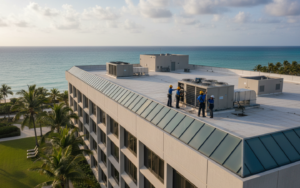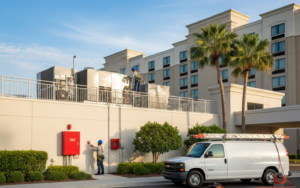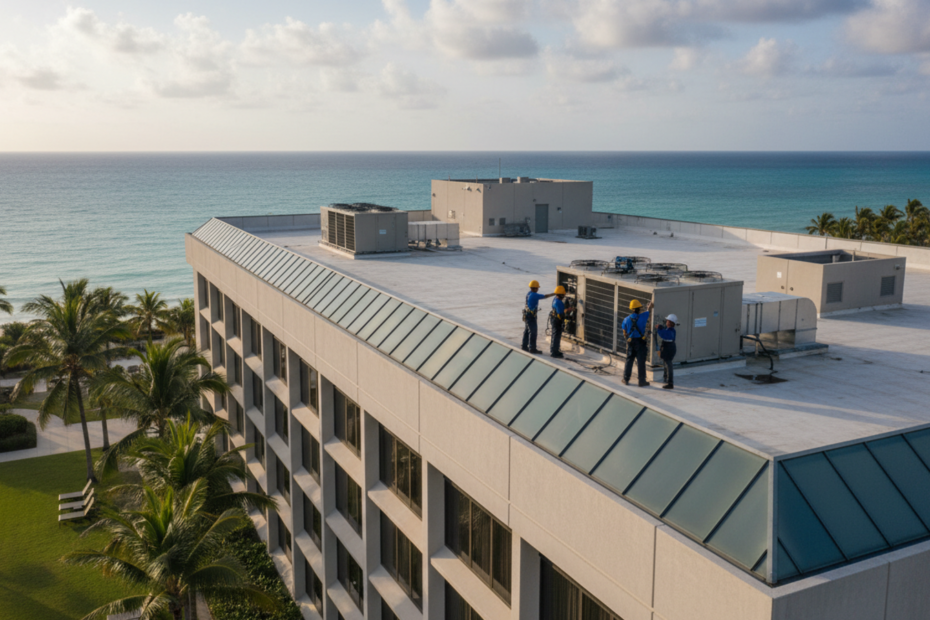
A coastal hotel receives a hurricane watch while weekend occupancy remains high. The engineering team checks roof drains, secures outdoor furniture and tests backup power. Meanwhile, the front desk prepares guest communication and reviews evacuation procedures.
Preparing hotel facilities for hurricane and severe-storm season requires coordination across engineering, housekeeping, security and front-office teams. Hotels need a practical plan covering property risks, building systems, emergency supplies and recovery procedures.
Storm preparation also applies to hotels outside coastal areas. Heavy rainfall, inland flooding, tornadoes and strong winds affect properties across different parts of the United States.
1. Assess the Hotel’s Exposure to Storm Risks
Every property has different vulnerabilities. A beachfront hotel faces storm-surge exposure, while an inland property might face flash flooding or tornado damage.
Hotel owners and operations leaders should review local hazard information before setting maintenance priorities.
Assess the following areas:
Flood zones, nearby rivers, drainage channels and low-lying access roads.
Roof condition, exterior walls, windows, doors and building connections.
Trees, outdoor signs, parking structures and unsecured equipment.
Electrical rooms, generators, fuel storage and essential utility connections.
Guest rooms, basements, kitchens, storage rooms and service areas.
Access roads, emergency exits and designated evacuation routes.
The National Hurricane Center identifies storm surge, heavy rainfall, inland flooding, high winds and tornadoes among major hurricane hazards. Hotels should assess these risks instead of relying only on a storm’s category.
Properties should review local emergency-management guidance, flood maps and insurance requirements. A qualified engineer or building professional should assess structural concerns and recommend suitable improvements.
2. Hotel Facilities for Hurricane and Severe-Storm Season Checklist
A documented hotel facilities for hurricane and severe-storm season checklist helps engineering teams complete inspections before severe weather arrives.
Roofs and drainage systems
Roof leaks and blocked drains increase the risk of interior water damage. Maintenance teams should:
Inspect roof membranes, flashing, gutters and downspouts.
Remove leaves, branches and debris from drainage points.
Check roof penetrations, skylights and rooftop equipment.
Review previous leak reports and outstanding repair work.
Arrange professional inspections for damaged or ageing roof sections.
Hotels should also inspect exterior drainage channels and stormwater systems. Clear drainage paths help move rainwater away from entrances and vulnerable building areas.
Windows, doors and exterior structures
High winds place pressure on windows, doors, canopies and exterior fixtures.
Facilities teams should inspect:
Exterior doors, window frames and seals.
Approved storm shutters or impact-resistant protection.
Garage doors and loading-area doors.
Awnings, canopies, signs and outdoor lighting.
Loose furniture, planters and decorative structures.
Hotels should follow manufacturer instructions and local building requirements when installing storm protection. Qualified professionals should review structural improvements.
Trees and outdoor equipment
Strong winds turn unsecured outdoor objects into potential hazards. Hotels should inspect trees, branches, fences, signs and outdoor furniture.
Remove loose objects from exposed areas. Arrange professional tree maintenance where branches threaten buildings, walkways or utility connections.
3. Protect Electrical Systems and Backup Power
Power interruptions affect guest safety, building access, communication and essential hotel operations.
Hotels should identify which systems require backup power. These often include emergency lighting, fire and life-safety systems, essential communication equipment, security systems and selected refrigeration equipment.
The engineering team should review:
Generator condition and service history.
Fuel availability and approved storage arrangements.
Transfer switches and electrical connections.
Backup power capacity for priority equipment.
Battery backup for essential communication systems.
Electrical panels and equipment exposed to floodwater.
Generator testing should follow manufacturer instructions and applicable local requirements. Qualified technicians should handle electrical inspections and repairs.
Flood exposure requires particular attention. Hotels should ask qualified professionals to assess generator placement, electrical equipment elevation and fuel-storage arrangements.
Never operate portable generators inside guest rooms, corridors, garages or enclosed spaces. Exhaust contains carbon monoxide, which presents a serious health hazard.
4. Review Plumbing, Water Supply and Flood Protection
Heavy rainfall can overwhelm drainage systems and cause water to enter ground-floor areas, basements and service spaces.
Hotels should inspect plumbing connections, sump pumps, backflow prevention equipment and stormwater drainage. Teams should also check whether floor drains and discharge points remain clear.
Recommended actions include:
Inspect sump pumps and confirm their operating condition.
Check drainage points in basements and lower-level service areas.
Review backflow prevention equipment with qualified contractors.
Identify vulnerable water heaters, pumps and electrical equipment.
Store important supplies above areas exposed to flooding.
Review procedures for shutting off water and other utilities.
Hotels should identify the location of main utility controls. Only trained and authorised personnel should operate utility shut-offs.
Properties in flood-prone areas should review suitable flood-protection measures with qualified engineers. Temporary barriers or sandbags should never replace a site-specific flood-protection plan.
5. Establish Clear Emergency Responsibilities
A facility inspection checklist is useful only when employees understand their responsibilities.
Hotel managers should assign responsibilities before the storm season. Engineering teams handle facility inspections, while security and front-office employees support emergency communication and guest coordination.
A responsibility plan should identify:
The manager responsible for activating the emergency plan.
Employees responsible for facility inspections.
Contractors responsible for specialist equipment.
Staff responsible for guest communication.
Employees responsible for accounting for staff and visitors.
Contacts for emergency services, utilities and local authorities.
A documented evacuation plan should include activation conditions, assigned responsibilities, routes and procedures for accounting for employees and visitors.
Hotels must follow local evacuation orders. Staff should never delay evacuation to protect equipment or complete routine inspections.
A clear front-desk management system supports organised guest administration during normal operations. During severe weather, hotels should also maintain separate emergency communication procedures and accessible contact lists.
6. Prepare Contractors, Maintenance Records and Emergency Supplies
Storm preparation often depends on contractors and suppliers. Demand for roofers, electricians, plumbers and restoration services increases after major weather events.
Hotels should review contractor arrangements before the season begins.
Maintain records covering:
Contractor names and emergency contact details.
Equipment warranties and service histories.
Inspection reports and outstanding defects.
Generator and pump maintenance records.
Insurance information and relevant property documents.
Photographs of vulnerable building areas.
Keep emergency supplies in accessible locations. Typical supplies include flashlights, batteries, first-aid materials, protective equipment, warning signs, barriers and basic repair materials.
Hotels should check stock levels regularly. Expired supplies and damaged equipment need replacement before an emergency.
Digital records also support communication between management and maintenance teams. Hotels evaluating Hotel management software should review its available reporting, access and integration options. Dedicated maintenance scheduling or emergency-response functions require separate feature verification.
7. Hotel Facilities for Hurricane and Severe-Storm Season Best Practices
A reliable storm-preparation programme requires regular reviews rather than a single annual inspection.
Hotels should follow these practices:
Create a seasonal inspection calendar
Schedule roof, drainage, electrical, plumbing and exterior inspections before the local storm season. Set inspection frequency according to property exposure, equipment condition and professional recommendations.
Record defects and corrective actions
Every inspection should identify the issue, responsible person, required action and completion date. Managers should review outstanding defects before severe weather threatens the property.
Conduct emergency exercises
Train employees on evacuation procedures, communication responsibilities and emergency contacts. Run exercises to identify gaps in the response plan.
Review local weather alerts
Use official National Weather Service and National Hurricane Center updates. Assign a manager to monitor warnings and communicate relevant updates to department heads.
Plan for business interruption
Identify essential operations and the resources required to maintain or restore them. Review temporary closure procedures, supplier arrangements and recovery priorities.
Hotels should also review occupancy and booking conditions when preparing operational decisions. Their revenue management processes should account for changing demand, cancellations and temporary room closures.
8. Inspect the Property After a Storm
A property should not resume normal operations until authorised personnel assess safety and essential systems.
Post-storm inspections should begin only when local authorities confirm conditions are safe.
The inspection process should cover:
Roof damage, broken windows and exterior structural concerns.
Standing water, leaks and visible signs of water intrusion.
Electrical systems and exposed wiring.
Generator condition and essential equipment.
Plumbing, drainage and water-supply systems.
Elevators, fire protection systems and emergency exits.
Guest rooms and shared spaces affected by water or debris.
Keep employees and guests away from damaged areas. Do not allow unqualified staff to inspect electrical hazards, unstable structures or contaminated floodwater.
Hotels should document damage with photographs and inspection reports. Share relevant information with insurers, contractors and local authorities as required.
9. How Hotel Technology Supports Storm-Season Operations
Storm preparation depends on facility maintenance, emergency planning and communication. Hotel technology supports selected administrative activities, but it does not replace engineering inspections or emergency-response procedures.
Hotels should maintain accurate reservation information and coordinate guest communication when room availability changes. Management teams also need clear visibility into bookings, occupancy and front-desk activity.
A connected platform such as Aiosell provides hotel technology for reservations, front-desk operations and revenue management. Hotels should assess available features and integrations before assigning emergency-specific responsibilities to any software platform.
Separate facility inspection records, contractor contacts and emergency plans should remain accessible to authorised employees. This approach helps hotel teams coordinate operational decisions without relying on one system for every emergency function.
Conclusion
Preparing hotel facilities for hurricane and severe-storm season requires early inspections, clear responsibilities and reliable maintenance records.
Hotel owners should review property exposure, protect essential equipment and confirm emergency procedures before severe weather approaches. Regular staff training and contractor coordination also help reduce confusion during disruptions.
Aiosell supports connected hotel operations through reservation, front-desk and revenue management technology. Combined with a documented facility-preparation programme, suitable technology helps management teams coordinate important hotel activities during changing operating conditions.
Frequently Asked Questions
1. When should US hotels begin hurricane-season preparation?
Hotels should begin reviewing facility conditions before their local storm season. Properties should follow regional forecasts and complete essential inspections well ahead of expected severe weather.
2. Which hotel facilities require inspection before a hurricane?
Hotels should inspect roofs, windows, exterior doors, drainage systems, generators, electrical equipment, plumbing, sump pumps and outdoor structures. Qualified professionals should assess structural and electrical concerns.
3. How should hotels prepare backup generators for severe storms?
Hotels should arrange professional generator servicing, test approved backup systems and review fuel availability. Technicians should assess electrical connections, transfer switches and flood exposure.
4. What should hotel teams do after a severe storm?
Teams should wait for official safety clearance before inspecting affected areas. Qualified personnel should assess structural damage, electrical hazards, flooding and essential building systems before reopening affected spaces.
5. How does hotel software support storm-season operations?
Hotel software supports reservations, front-desk administration and revenue management. Hotels should maintain separate emergency plans, facility inspection records and contractor information.