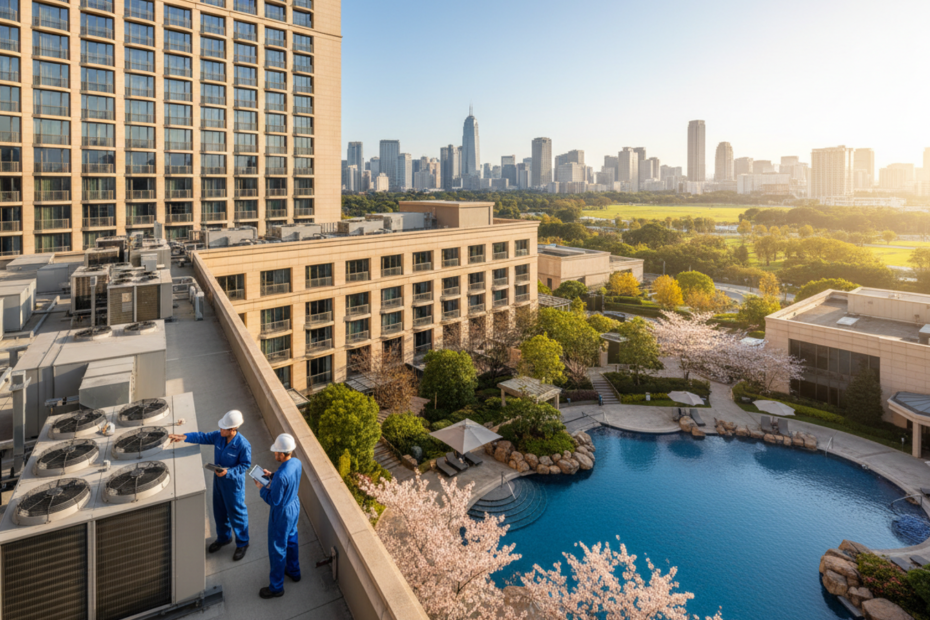
A change in season often places new demands on hotel heating and cooling systems. During warmer months, air conditioning runs for longer periods. As temperatures fall, heating equipment takes on more responsibility. If teams wait until guests report temperature problems, maintenance costs and service disruptions often increase.
Preparing a us hotel for seasonal HVAC maintenance requires advance planning, professional inspections, and clear communication between departments. Hotel owners, general managers, and operations leaders should establish a process before seasonal demand changes.
This guide explains how hotel teams should prepare HVAC equipment, coordinate contractors, and maintain guest comfort throughout the year.
Why Seasonal HVAC Maintenance Matters for Hotels
HVAC performance affects guest comfort, operating costs, and room availability. A poorly maintained system might struggle during periods of high demand. Equipment failures also create additional work for front-desk and maintenance teams.
Seasonal maintenance helps hotels:
Identify equipment problems before peak demand.
Maintain consistent indoor temperatures.
Reduce unexpected repair expenses.
Improve airflow across guest rooms and shared spaces.
Plan contractor visits around occupancy.
Keep maintenance records organised.
A planned approach also gives management better visibility into equipment condition and upcoming expenses.
A Seasonal HVAC Maintenance Checklist for Hotels
A structured checklist helps teams prepare equipment before seasonal changes. The maintenance team should adapt the checklist to the hotel’s equipment, building design, and contractor recommendations.
1. Review the HVAC Equipment Inventory
Start with an updated list of HVAC equipment across the property. Include guest-room units, central systems, ventilation equipment, thermostats, and other relevant components.
Record:
Equipment type and location.
Manufacturer and model.
Installation date, where available.
Warranty details.
Previous service dates.
Known equipment issues.
Contractor or service provider details.
Accurate records help maintenance teams identify equipment requiring attention. They also help managers plan service costs and replacement budgets.
2. Arrange Professional Equipment Inspections
Schedule qualified HVAC contractors to inspect systems before seasonal demand increases. The inspection scope should reflect the equipment type and manufacturer recommendations.
Depending on the system, contractors might review:
Filters and airflow.
Electrical connections.
Thermostats and controls.
Refrigerant-related components.
Condensate drainage.
Heating and cooling performance.
Ventilation equipment.
Visible signs of leakage or damage.
Hotels should request written inspection findings. Management should record recommended repairs, estimated costs, and suggested completion dates.
3. Check Guest-Room HVAC Performance
Guest rooms need particular attention because temperature complaints often reach the front desk first.
Ask maintenance teams to review room-level HVAC performance during scheduled inspections. Check whether thermostats respond correctly and whether equipment delivers suitable heating or cooling.
Prioritise rooms with previous complaints, recurring faults or inconsistent temperatures. Record each issue and confirm completion before returning affected rooms to normal service.
4. Inspect Shared Areas and Back-of-House Spaces
HVAC maintenance should cover more than guest rooms.
Include:
Lobbies and reception areas.
Restaurants and meeting rooms.
Corridors and common spaces.
Staff rooms and offices.
Laundry and other service areas.
Equipment and plant rooms.
Different areas have different operating requirements. Restaurants, meeting spaces and laundry areas might experience changing heat loads throughout the day.
Review these spaces separately when planning inspection frequency and equipment settings.
5. Review Filters, Airflow and Drainage
Filters, airflow paths and drainage components influence system performance. Dirty filters restrict airflow, while drainage problems might lead to water leakage.
Ask qualified technicians to inspect and service these components according to equipment specifications. Staff should report unusual odours, water around indoor units, weak airflow or unexpected noise.
Do not ask untrained employees to perform technical repairs or handle refrigerants.
Best Practices for Seasonal HVAC Maintenance
A us hotel for seasonal hvac maintenance should follow a consistent process rather than relying on emergency repairs. The following practices help management coordinate maintenance without creating unnecessary disruption.
Schedule Maintenance Around Hotel Occupancy
Review occupancy forecasts before confirming contractor visits. Avoid scheduling disruptive work during major arrival periods, conferences or local events.
Where possible:
Identify rooms and areas requiring inspection.
Review expected occupancy.
Select suitable maintenance windows.
Coordinate access with housekeeping and front-desk teams.
Confirm room availability before and after service.
For larger properties, divide equipment into groups. This approach helps teams complete maintenance in stages while limiting disruption.
Coordinate Contractors and Internal Teams
Assign one manager or maintenance lead to coordinate each seasonal maintenance programme.
Share the inspection schedule with relevant departments. Front-desk employees should know which rooms are temporarily unavailable. Housekeeping teams should receive updates about room access and expected completion times.
Before contractors arrive, confirm:
Scope of work.
Access arrangements.
Equipment locations.
Required safety procedures.
Expected service duration.
Reporting requirements.
Approval limits for additional repairs.
After the visit, review the contractor’s report and assign responsibility for outstanding work.
Maintain Service and Warranty Records
Keep service reports, invoices, warranty documents and equipment details in an organised record system.
A useful maintenance record should include the equipment identifier, service date, contractor details, inspection findings and recommended action.
Management should also track recurring faults. Repeated failures in one unit might indicate a larger repair or replacement requirement.
Monitor Energy Use and Equipment Performance
Review utility bills and energy consumption across comparable periods. Sudden changes deserve investigation, especially when occupancy and weather conditions do not explain the difference.
Track operational indicators such as:
HVAC-related guest complaints.
Emergency repair frequency.
Equipment downtime.
Planned maintenance completion.
Repair expenditure.
Repeat service visits.
These measures help management identify recurring issues and evaluate maintenance planning.
How Hotel Teams Should Prepare for Different Seasons
Seasonal requirements vary by location and property type. Hotels should adjust maintenance schedules to local weather conditions and equipment specifications.
Seasonal period | Maintenance priorities |
Before summer | Inspect cooling equipment, filters, airflow and condensate drainage. |
During summer | Monitor cooling performance and respond to recurring temperature complaints. |
Before winter | Arrange heating system inspections and test relevant controls. |
During winter | Monitor heating performance and investigate unusual equipment behaviour. |
Between peak seasons | Review service records, plan repairs and update equipment inventories. |
Properties in regions with mild winters might need a different schedule from hotels in areas with freezing temperatures. Management should follow local requirements and contractor recommendations.
How Hotel Technology Supports Maintenance Coordination
Hotel maintenance planning often depends on information from reservations, front-desk teams and management reports. Accurate occupancy information helps teams choose suitable maintenance windows and avoid unnecessary room restrictions.
Aiosell provides connected hotel technology for reservations, front-desk operations and revenue management. Its systems support hotel teams by connecting important operational information.
Hotels evaluating Hotel management software should review how the platform handles reservation information, reporting and integrations. A Hotel property management system also helps teams coordinate guest-facing operations around room availability.
Before selecting a platform for maintenance workflows, confirm whether dedicated maintenance scheduling, work orders or equipment records are included. Hotels should use an approved maintenance register or specialist system when these functions are not available.
Aiosell supports connected hotel operations, while property teams should retain clear procedures for technical inspections, contractor management and equipment servicing.
Conclusion
Seasonal HVAC maintenance requires early planning, professional inspections and consistent recordkeeping. Hotel teams should review equipment inventories, schedule contractor visits and prioritise rooms with recurring issues.
A clear process helps management control repair costs, reduce service interruptions and prepare the property for changing weather conditions. A us hotel for seasonal hvac maintenance should use occupancy information, equipment records and contractor recommendations to guide each seasonal programme.
With connected hotel systems from Aiosell, teams also have better access to reservation and front-desk information when coordinating property operations.
Frequently Asked Questions
How often should hotels schedule HVAC maintenance?
Hotels should follow equipment manufacturer recommendations, local requirements and advice from qualified HVAC contractors. Many properties arrange inspections before major heating and cooling seasons.
What should a hotel include in its seasonal HVAC checklist?
Include equipment inspections, filter checks, airflow reviews, thermostat testing, drainage checks, contractor coordination and service record updates.
How should hotels schedule HVAC maintenance without disturbing guests?
Review occupancy forecasts, select lower-demand periods and coordinate access with front-desk and housekeeping teams. Schedule disruptive work in stages where possible.
Who should perform hotel HVAC inspections?
Qualified HVAC professionals should inspect and service technical equipment. Hotel employees should report visible problems and follow approved safety procedures.
How should hote
ls track HVAC maintenance costs?
Maintain records of contractor invoices, repair expenses, service frequency, equipment downtime and recurring faults. Review these records regularly to support maintenance budgets.