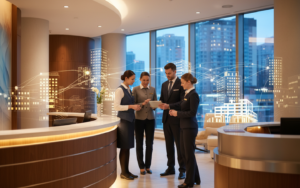
A guest complains about a delayed check-in while the front desk handles a queue of arriving visitors. Another guest raises concerns about room cleanliness during a busy weekend. These situations test how well hotel employees communicate, manage pressure and resolve problems.
Hotels need a consistent approach to prepare their teams for difficult conversations. Training staff to handle difficult guest interactions helps employees respond calmly, understand guest concerns and follow clear service recovery procedures.
Why Hotels Need Structured Training for Difficult Guest Interactions
Guest complaints often involve more than one department. A delayed room might require coordination between reception and housekeeping. A billing dispute might involve the front desk, finance team and duty manager.
Without clear procedures, employees might provide inconsistent answers or make commitments beyond their authority. Structured training helps teams understand their responsibilities and follow a common response process.
Indian hotels also serve guests with different languages, expectations and travel requirements. Properties in business centres such as Bengaluru and Mumbai often handle frequent corporate arrivals. Leisure destinations such as Goa and Jaipur experience different seasonal demand patterns.
Training should prepare employees for these operating conditions rather than rely on general customer service advice.
Common Difficult Guest Interactions in Indian Hotels
Hotel employees need preparation for situations involving:
Delayed check-ins: Guests become frustrated when rooms are unavailable at the promised time.
Cleanliness complaints: Guests report unclean bathrooms, used linen or incomplete room preparation.
Billing disputes: Guests question additional charges, taxes, deposits or differences between quoted and final amounts.
Noise complaints: Guests report disturbances from nearby rooms, events or public areas.
Service delays: Restaurant orders, maintenance requests or housekeeping services take longer than expected.
Reservation problems: Guests arrive with booking details that differ from the hotel’s records.
Special requests: Guests expect support with accessibility, dietary needs or other specific requirements.
Managers should review complaints received at their properties and use real examples during employee training.
Five Steps to Train Staff for Difficult Guest Conversations
1. Teach Employees to Listen Before Responding
Employees should allow guests to explain their concerns without interruption. Rushing to defend a hotel decision often increases frustration.
Training sessions should teach staff to:
Maintain a calm tone and attentive body language.
Avoid interrupting or arguing with guests.
Ask short questions to understand the issue.
Repeat the main concern to confirm understanding.
Acknowledge the inconvenience without making unsupported promises.
For example, an employee responding to a delayed room complaint might say, “I understand the wait has affected your arrival. Let me check the room status and explain the available options.”
This approach shows attention and moves the conversation towards a solution.
2. Establish Clear Service Recovery Authority
Employees need to understand which decisions they are authorised to make. A front desk associate might arrange a room-status update, while a duty manager approves a room change or compensation.
Hotels should define:
Which issues employees resolve independently.
When supervisors need to approve a decision.
Which complaints require general manager involvement.
How employees record the agreed resolution.
Who follows up when another department owns the action.
Clear authority reduces unnecessary delays. Managers should also explain which promises employees must avoid, especially regarding refunds, discounts and room availability.
3. Use Role-Play to Practise Difficult Situations
Classroom explanations alone do not prepare employees for tense conversations. Role-play gives staff an opportunity to practise responses before handling real complaints.
Training exercises should include situations such as:
A guest raising their voice over a delayed check-in.
A family requesting an immediate room change.
A corporate guest disputing a charge.
A guest reporting repeated noise from another room.
A visitor complaining about an unresolved maintenance issue.
Managers should assess listening, clarity, empathy, policy knowledge and escalation decisions. After each exercise, trainers should provide specific feedback and allow employees to repeat the conversation.
4. Train Teams to Manage Language and Cultural Differences
Indian hotels serve domestic and international travellers. Guests might prefer different languages or communication styles.
Employees should use simple language and avoid technical explanations. When a conversation becomes difficult because of a language barrier, staff should seek assistance from an appropriate colleague or approved interpretation support.
Training should also cover respectful communication across age groups, cultural backgrounds and personal requirements. Employees must avoid assumptions about a guest’s preferences based on appearance, language or nationality.
5. Teach Proper Complaint Documentation
A verbal resolution does not always complete the service recovery process. Hotels need accurate records to prevent repeated explanations and missed follow-ups.
Employees should record:
Date, time and location of the complaint.
Guest’s stated concern.
Relevant room or reservation details.
Department responsible for the issue.
Action taken and decision-maker.
Follow-up commitment and completion status.
Staff should follow hotel privacy procedures and record only information relevant to resolving the complaint. Access to guest records should remain limited to authorised employees.
Staff to Handle Difficult Guest Interactions Checklist
Hotel managers should use a practical checklist to assess employee readiness.
Training area | What employees should demonstrate |
Active listening | Allow guests to explain concerns without interruption |
Communication | Use clear, respectful and simple language |
Empathy | Acknowledge inconvenience without arguing |
Problem assessment | Identify the main issue and gather relevant facts |
Service recovery | Follow approved solutions and authority limits |
Escalation | Contact the correct supervisor when required |
Documentation | Record complaints, actions and follow-up |
Privacy | Protect guest details during conversations and handovers |
Managers should use the checklist during onboarding, refresher sessions and performance reviews. The checklist should reflect the property’s service standards and escalation policy.
How Hotel Managers Should Measure Training Effectiveness
Training attendance does not prove that employees handle complaints effectively. Managers should review operational results and observe staff interactions.
Useful measures include:
Number of complaints received by category.
Average time taken to acknowledge a complaint.
Time required to resolve common service issues.
Percentage of complaints requiring manager intervention.
Repeat complaints involving the same issue.
Guest feedback after service recovery.
Employee performance during role-play assessments.
Managers should compare results across departments and shifts. A rise in repeated housekeeping complaints, for example, might indicate a process problem rather than an employee communication issue.
Regular reviews help managers identify training gaps and improve department procedures.
How Hotel Technology Supports Consistent Guest Service
Hotel technology helps teams access operational information and coordinate work across departments. Connected systems also reduce the need for employees to search through separate records during busy periods.
A suitable Hotel management software platform supports connected hotel operations. Hotels should assess available functions and integrations before selecting technology for specific service recovery requirements.
Front desk employees also need accurate reservation and guest information. A suitable front-desk management system supports front office workflows and helps staff manage guest-facing responsibilities.
Revenue decisions also affect difficult conversations. For example, room availability and booking conditions influence how employees explain alternatives when a guest requests a room change. Hotels should connect these decisions with their revenue management processes.
Aiosell provides connected hotel technology for reservations, front-desk operations and revenue management. Hotels should evaluate the available functions against their operational requirements. Technology supports consistent information and coordination, while managers remain responsible for employee training, complaint policies and service recovery standards.
Best Practices for Training Hotel Employees
A consistent training programme should include the following practices:
Train during onboarding: Explain complaint procedures before employees begin independent guest-facing duties.
Use property-specific examples: Include complaints from the hotel’s own guest feedback and incident records.
Conduct regular refresher sessions: Revisit common issues and changes to service policies.
Involve department heads: Ask front office, housekeeping, food and beverage and maintenance leaders to contribute relevant scenarios.
Set clear escalation rules: Give employees an updated list of supervisors and approval responsibilities.
Review employee performance: Observe real interactions where appropriate and use role-play assessments.
Update training materials: Revise procedures when recurring complaints reveal gaps in hotel operations.
Aiosell supports hotel operations through connected technology. Hotel leaders should combine suitable systems with practical employee training and clear management procedures.
Conclusion
Difficult guest interactions require preparation, clear communication and consistent service recovery procedures. Indian hotels should train employees to listen carefully, assess complaints, follow approval limits and document outcomes.
Training staff to handle difficult guest interactions should form part of regular hotel operations, not remain a one-time onboarding activity. Managers who review complaint patterns, conduct role-play exercises and measure employee performance build stronger response procedures.
Hotels using connected systems such as Aiosell should align available technology with their front desk and revenue operations. Consistent training and clear responsibilities help teams resolve guest concerns while protecting service standards.
Frequently Asked Questions
1. Why should hotels train employees to handle difficult guest interactions?
Training prepares employees to listen, communicate clearly, assess complaints and follow approved service recovery procedures. Consistent preparation also reduces confusion during busy shifts.
2. What should hotel staff do when a guest becomes angry?
Employees should remain calm, listen without interruption, acknowledge the concern and gather relevant details. They should follow hotel procedures and involve a supervisor when the issue exceeds their authority.
3. How often should hotels conduct guest complaint training?
Hotels should include complaint handling in onboarding and conduct refresher sessions regularly. Managers should also arrange additional training when complaint reviews identify repeated service gaps.
4. How should managers assess employee complaint-handling skills?
Managers should use role-play exercises, supervisor observations, guest feedback and complaint records. Measures such as repeat complaints and resolution time help identify areas for improvement.
5. What role does technology play in guest complaint management?
Hotel technology supports access to reservation and operational information. Hotels should select systems based on their available functions and integrations, while maintaining clear employee responsibilities for communication and service recovery.