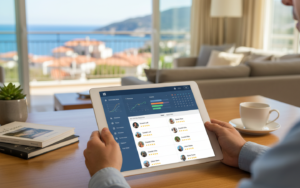
Open any vendor’s website and you’ll see a long list of modules. Reservations, messaging, tasks, payments, reports, owner portal, direct booking site, and on it goes. It reads like a menu at a restaurant with 200 dishes, and the first instinct is to want everything. Don’t. Vacation rental property management software is really a handful of core modules and a lot of extras, and which ones matter depends on how you operate. A host with six cottages and a part-time cleaner needs a very different mix from a company running sixty apartments for twenty owners. This article goes through the main modules in plain language, explains what each one should actually do for you, and suggests a way to decide what to buy now and what to leave for later, so you don’t end up paying for shelfware.
The reservation and calendar module is the heart
Everything else depends on this one, so judge it harder than anything else. You want one calendar view that shows all your units side by side, with bookings from every platform marked by source. Check how it handles real-life quirks. Owner stays and blocked dates for repairs. A guest who extends by two nights. A booking split across two units because the first one wasn’t free for the whole stay. Different rates by season, weekday and length of stay, with minimum nights you can set per date. Cleaning fees, extra guest fees and local taxes that calculate correctly on the quote. And check how quickly you can create a booking by phone, ideally in under a minute, since you’ll do that more often than any demo suggests. A property management system with a clumsy calendar will irritate you every day, however good the other modules look.
Guest communication and check-in
Messaging is where most owners feel the time savings first. A good module gives you templates with placeholders for the guest’s name, dates and door code, triggered by events like booking confirmation, the day before arrival or checkout day. It should pull messages from every platform into one inbox so you aren’t hopping between apps, and it should let a co-host or cleaner see the right threads without seeing everything. Check-in features matter too. Self check-in instructions, smart lock codes that change per stay, and a simple way to collect ID or signed house rules if your area requires it. Be a little cautious with the label “AI replies”. Some of it is genuinely helpful for the usual questions about wifi and parking. All of it needs your review at first, because a confident wrong answer to a guest costs more than a slow right one.
Operations: cleaning, maintenance and supplies
This is the module that quietly decides how stressful your week is. When a guest checks out, the system should create a cleaning task automatically, tell the right cleaner, show them the next check-in time so they know how tight the turnaround is, and let them tick off a checklist, ideally with photos. When something breaks, you want a maintenance ticket with a photo, a priority and a name next to it, not a text message that gets lost in a chat. Basic supply tracking helps as well, like linen sets and consumables. Look at how all this connects to your bookings. If a guest extends and the cleaner doesn’t find out until they arrive, the module isn’t pulling its weight. A housekeeping and maintenance module that reads straight from your reservations avoids that kind of mix-up.
Money modules, and how to choose what to buy
Money features cover payments, deposits, security holds, refunds, taxes and, for those who manage for others, accounting and owner statements. Check how guests pay and how quickly you get the money, what processing fees apply, and whether damage deposits can be held and released properly. Look at expense tracking per property and the reports you’ll genuinely need at month end, such as revenue by unit, occupancy and cost per turnover. An accounting and expense module that shares data with your reservations saves a lot of retyping. Then comes the buying decision. List the modules in three groups: must have today, would help in six months, and nice to have someday. Buy only the first group. Test each one with a real scenario from your own business, and check that the modules share data instead of keeping separate copies of every guest and booking.
How to test a module before you pay for it
Feature lists don’t tell you how a module behaves on a bad day, so build a short scenario script and run every vendor through it. Something like this. A guest books for five nights, then asks to move arrival by a day, and the cleaner is already assigned. The guest pays a deposit by card and later wants part of it refunded. A pipe leaks on the third night, so the unit has to be blocked and the next guest moved to another home. Walk each product through the whole story and watch where you have to type something twice, or where the system lets two things disagree with each other. Count the clicks, and check that the cleaner and the owner both see the right update without being told. Then try one more test that’s easy to forget: add a brand new property from scratch, with its own rates, fees and rules, and time it. Setting up the tenth home should be quicker than the first, and if it isn’t, growing will hurt. A vendor who’s happy to run all this live, with your data, usually has nothing to hide.
Modules are just tools, and the right set is the one that matches the way you already work, with room to grow. If a vendor can’t show you your messy scenarios, keep looking. Aiosell combines its property management system with a channel manager, booking engine, housekeeping and accounting modules, so you can start with the core pieces and add the others as your portfolio grows, all working from the same reservation data. Sit down with the three-group list, be strict about the first one, and you’ll save yourself months of paying for features you never open.