Hotel Software with Self-Service Kiosks
Hotels today face growing pressure to deliver faster service while managing rising labor costs and evolving guest expectations. Self-service kiosks paired with modern hotel management software offer a practical solution. These systems allow guests to check in, access room keys, and manage bookings without waiting in line. For hoteliers, the technology reduces front desk workload and improves operational efficiency. This guide explores how hotel software with self-service kiosks works, why it matters in 2026, and what you should consider when choosing a system for your property.
Understanding Hotel Self-Service Kiosks
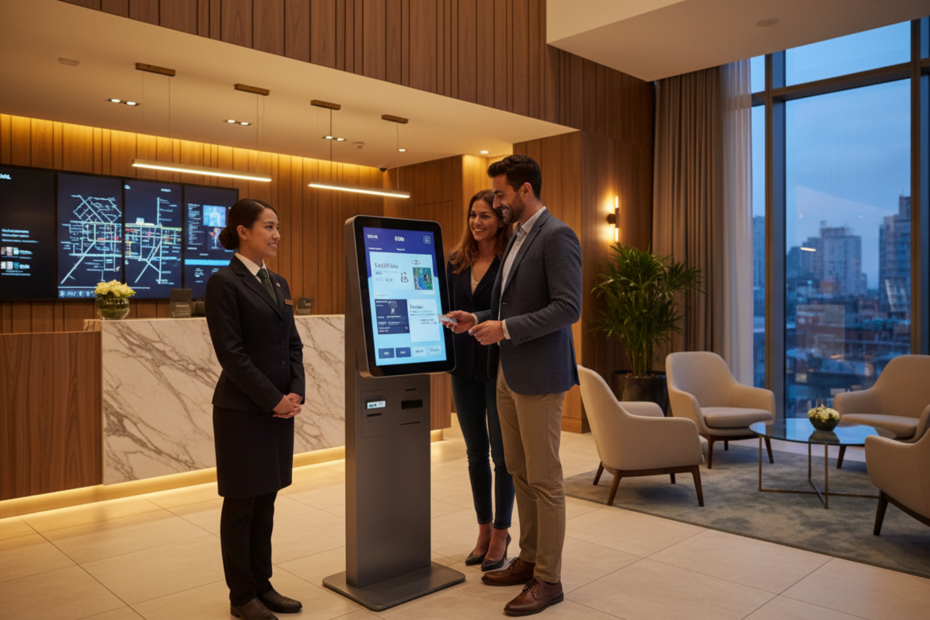
Hotel self-service kiosks are interactive touchscreen terminals that connect directly to your property management system. Guests use them to complete check-in and check-out tasks independently. The kiosk reads identification documents, processes payments, and dispenses physical or digital room keys. Most systems integrate with existing hotel management software, pulling reservation data in real time. This connection ensures accuracy and reduces manual data entry errors that can occur at traditional front desks.
Modern kiosks support multiple languages and payment methods, making them accessible to international travelers. They also capture guest preferences and special requests during the self-service process. The hardware typically includes a card reader, passport scanner, receipt printer, and key encoder. Some advanced models feature biometric authentication for added security. The software backend manages the workflow, validates guest information, and updates room status instantly across all hotel systems, creating a seamless experience from arrival to departure.
Key Benefits of Hotel Front Desk Automation
Automating front desk operations through self-service kiosks delivers measurable advantages for both guests and staff. Wait times drop significantly because multiple guests can check in simultaneously rather than queuing for a single receptionist. This speed matters especially during peak arrival hours when lobby congestion frustrates travelers. Staff members freed from repetitive check-in tasks can focus on personalized service, handling complex requests, and building guest relationships. Labor cost savings become substantial over time, particularly for properties struggling to fill front desk positions.
Guest satisfaction typically improves when travelers control their own check-in pace and avoid social interaction after long journeys. Data security strengthens because kiosks reduce the number of people handling sensitive guest information. The technology also collects valuable analytics about guest behavior, preferences, and service usage patterns. These insights help hoteliers optimize staffing schedules and identify upselling opportunities. Properties using systems like Aiosell report increased operational efficiency and higher guest satisfaction scores within months of implementation, demonstrating the tangible return on investment.
Choosing the Right Hospitality Management System
Selecting hotel software with self-service kiosks requires careful evaluation of your property’s specific needs and existing technology infrastructure. Start by assessing integration capabilities with your current property management system. The kiosk software must communicate seamlessly with your reservation system, payment processor, and door lock technology. Compatibility issues create operational headaches and undermine the efficiency gains you expect. Look for vendors offering proven integrations with major hotel management platforms and willing to demonstrate live connections during the evaluation process.
Consider the total cost of ownership beyond the initial hardware purchase. Factor in software licensing fees, maintenance contracts, payment processing rates, and staff training expenses. Evaluate the user interface from a guest perspective by requesting demo access or visiting properties already using the system. The check-in flow should feel intuitive even for travelers unfamiliar with self-service technology. Vendor support quality matters significantly because technical issues can leave guests stranded without room access. Review service level agreements, response times, and available support channels before committing to a long-term contract.
Implementation Best Practices for Self-Service Technology
Successful deployment of hotel self-service kiosks depends on thorough planning and staff preparation. Begin by mapping your current check-in process and identifying pain points the technology should address. Position kiosks in highly visible, accessible locations near the main entrance but away from congestion points. Adequate lighting and clear signage help guests locate and use the terminals confidently. Train all front desk staff on the system before launch so they can assist guests and troubleshoot common issues. Staff buy-in proves critical because resistant employees can undermine adoption by directing guests back to traditional check-in.
Plan a phased rollout rather than switching entirely to self-service overnight. Offer kiosks as an option while maintaining staffed check-in for the first several weeks. This approach lets you identify technical problems and refine workflows before full deployment. Monitor usage rates and gather guest feedback through brief surveys at the kiosk or via email. Use this data to adjust the interface, add languages, or modify the check-in sequence. Aiosell and similar platforms provide analytics dashboards that track kiosk performance, error rates, and completion times, helping you
Future Trends in Hotel Automation Technology
The evolution of hotel software with self-service kiosks continues to accelerate as artificial intelligence and mobile integration reshape guest expectations. Biometric authentication using facial recognition is becoming more common, eliminating the need for physical key cards entirely. Mobile check-in apps now complement kiosks, letting guests complete most steps on their smartphones before arrival and using the kiosk only for key retrieval. Voice-activated interfaces are emerging for accessibility, helping guests with visual impairments or language barriers navigate the check-in process independently.
Integration with smart room technology represents the next frontier. Guests will soon use kiosks to customize room settings like temperature, lighting, and entertainment preferences before reaching their accommodations. Predictive analytics will help hotels anticipate guest needs based on past behavior and automatically offer relevant services during self-service interactions. Contactless payment methods continue expanding, with digital wallets and cryptocurrency options appearing in premium properties. These advances promise even greater efficiency and personalization, making self-service kiosks an essential component of competitive hotel operations in 2026 and beyond.
Conclusion
Hotel software with self-service kiosks transforms front desk operations by reducing wait times, lowering labor costs, and improving guest satisfaction. The technology integrates with existing hospitality management systems to automate check-in while freeing staff for higher-value interactions. Choosing the right solution requires evaluating integration capabilities, total ownership costs, and vendor support quality. Successful implementation depends on strategic placement, thorough staff training, and phased rollout strategies. As mobile integration and biometric authentication advance, self-service kiosks will remain central to efficient, guest-focused hotel operations.