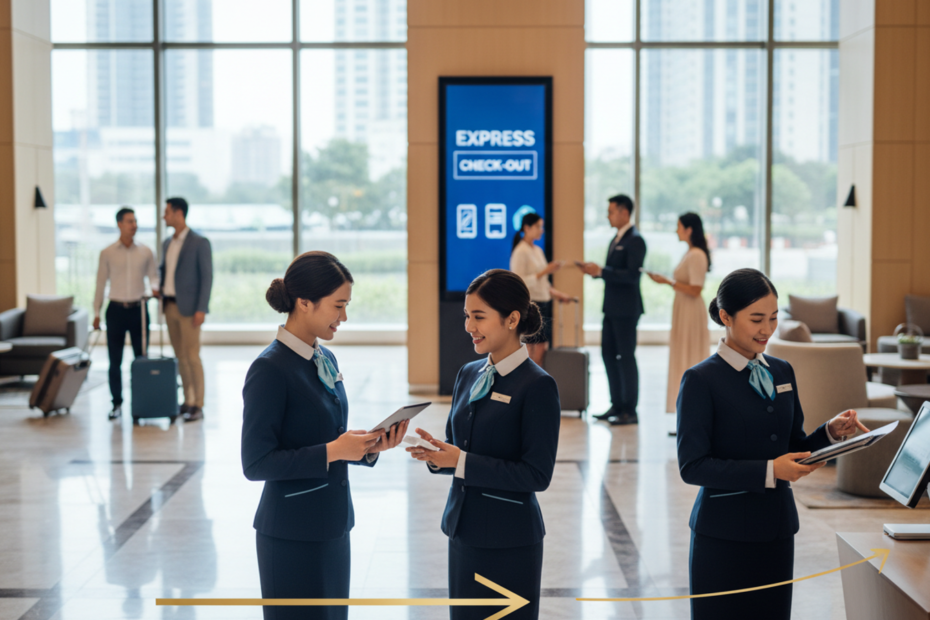
A group booking arrives at 2 p.m. Several families reach the lobby together. Rooms are still being checked, guests ask about early check-in, and the phone keeps ringing. Without preparation, a busy arrival period quickly creates long queues and avoidable errors.
Training front-office teams for high-volume arrival days helps hotels manage guest arrivals with clear roles, accurate information and consistent service. Training front-office teams for high-volume arrival days should include a shared arrival plan, access to current room information and a clear method for handling exceptions.
Why High-Volume Arrival Days Need a Different Approach
On a regular day, reception staff often manage arrivals one guest at a time. During peak periods, several tasks happen together:
Individual guests and groups arrive within a short window.
Housekeeping updates room readiness while reception handles check-ins.
Guests request early check-in, room preferences or booking changes.
Staff verify payments, identification and reservation details.
The front desk answers calls while managing the lobby queue.
These demands place pressure on staff and systems. A structured approach reduces confusion and helps every team member understand the next action.
Prepare the Team Before the Arrival Rush
Preparation should begin with the arrival forecast. The front-office manager should review expected arrivals, group bookings, VIP guests, special requests, early arrivals and pending payments.
Share a short briefing with the team before each peak shift. Cover:
Expected arrival count and busiest time window.
Group names, room allocations and authorised contacts.
Rooms marked ready, inspected or still under preparation.
Outstanding balances and payment instructions.
Guest requests requiring coordination with another department.
Staff positions, break timings and escalation contacts.
Use one current arrival list. Avoid separate versions shared across personal messages or printed sheets. When details change, assign one person to update the working record and inform the relevant staff.
Assign Clear Roles at the Front Desk
A high-volume shift needs clear ownership. One employee should not handle every task while guests wait.
A practical role split includes:
Welcome and Queue Management
A team member greets arriving guests, confirms the purpose of the visit and directs them to the correct counter. For groups, this person checks the group name and guides the authorised organiser to the designated process.
Check-In and Verification
Reception staff verify the reservation, guest details, identification requirements and payment status. They should explain any pending step in plain language and avoid making promises about room readiness before checking the latest status.
Room-Status Coordination
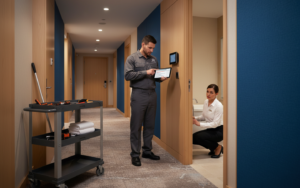
A designated employee follows up with housekeeping on rooms awaiting cleaning or inspection. The employee shares accurate updates with reception and records changes in the property system.
Guest Requests and Issue Handling
Assign one person to track special requests, room preferences and arrival-related complaints. This prevents requests from being lost while other staff process check-ins.
Small hotels with fewer employees might combine roles. The manager should still name who owns each task during the busiest period.
Train Staff on the Standard Arrival Sequence
Every employee should follow the same core process. A consistent sequence helps the team work faster without skipping important checks.
Welcome the guest and confirm the reservation name.
Locate the booking and verify the stay details.
Check identification and required registration information.
Confirm payment status, deposit and any outstanding amount.
Verify room readiness before issuing access.
Explain key property information, such as breakfast timing and Wi-Fi access.
Update the reservation and guest record after check-in.
Direct the guest to the room or arrange assistance with luggage.
Use role-play sessions to practise the sequence. Include walk-in enquiries, booking discrepancies, early arrivals, late arrivals, group check-ins and guests whose rooms are not ready. Ask trainees to explain each step aloud, then repeat the exercise until they follow the process without missing checks.
Front-Office Teams for High-Volume Arrival Days Checklist
Use this checklist during shift preparation and the arrival period.
Review the arrival forecast and group bookings.
Identify VIP guests, special requests and early arrivals.
Confirm room status with housekeeping.
Check payment notes and booking discrepancies.
Assign welcome, check-in and coordination responsibilities.
Prepare registration materials and required equipment.
Confirm system access and printer availability.
Set a clear escalation contact for unusual cases.
Keep the lobby queue organised and communicate wait times.
Update guest and room records as each check-in is completed.
Conduct a handover for pending arrivals and unresolved requests.
The manager should review the list before the rush begins. Staff should report incomplete items early rather than waiting until guests reach the counter.
Best Practices for Managing Peak Arrivals
For front-office teams for high-volume arrival days, the aim is to keep each step clear, consistent and easy to follow, even when several guests arrive together.
Use a Pre-Arrival Communication Process
Where booking details and guest contact permissions allow, send arrival information before the stay. Share check-in timings, directions, required documents and a contact number for questions. For group bookings, coordinate key details with the organiser in advance.
Keep Room Status Accurate
Reception staff need reliable updates on rooms awaiting cleaning, inspection or maintenance. Agree on status terms with housekeeping. Update the room record as soon as the status changes. Do not tell a guest a room is ready until the responsible team confirms readiness.
Prepare for Group Arrivals
For a large group, confirm the rooming list, arrival time, payment arrangement and organiser details before the date. Prepare the check-in sequence and clarify how room keys will be distributed. Keep individual guest verification in line with hotel policy and applicable requirements.
Practise Calm, Clear Guest Communication
When a room is not ready, explain the status and give a realistic update. Avoid uncertain promises. If a wait is expected, explain the available next step, such as luggage storage or a suitable waiting area, where the hotel offers these facilities.
Review Shift Coverage and Breaks
Schedule experienced staff during expected arrival peaks. Stagger breaks so the front desk keeps adequate coverage. Keep a manager or senior employee available for payment disputes, booking issues and service recovery decisions.
Use Hotel Technology to Support the Workflow
Technology supports the process when staff keep records accurate and follow agreed procedures. A connected hotel management system helps teams view reservation details, guest information and room status in one working environment, depending on the system’s features and integrations.
Aiosell supports hotel operations through connected reservation, front-desk and revenue management functions. Hotels should train employees on the specific screens and workflows they use during check-in. Training should include finding a booking, checking reservation notes, updating guest details and recording the completed arrival.
Do not treat software training as a substitute for service training. Employees still need to verify details, communicate clearly and follow hotel procedures. Aiosell should form part of the practical training plan alongside supervised front-desk exercises.
Measure Arrival-Day Performance
Review a small set of measures after each busy period. Use the results to identify training gaps and process delays.
Measure | What It Tells the Manager |
Average check-in time | How long guests spend completing arrival formalities |
Queue waiting time | Whether staffing and counter allocation match demand |
Room-ready delays | How often room preparation affects check-in |
Check-in corrections | Frequency of errors in guest or reservation records |
Guest complaints at arrival | Common service issues during the arrival process |
Pending arrival requests | Whether staff close or hand over guest requests correctly |
Compare similar days, such as weekends, public holidays and group-arrival dates. Review the reasons behind delays before changing staffing levels or procedures.
Conclusion
Busy arrival periods require preparation, clear responsibilities and reliable communication between reception and other departments. Train staff through briefings, role-play and supervised shifts. Review performance after each peak day and update the process where delays or errors repeat.
With a consistent workflow and suitable technology, hotels give staff a clearer way to manage arrivals and give guests a more organised welcome. Aiosell supports connected hotel operations through reservation, front-desk and revenue management functions.
FAQs
How Should Hotels Prepare Front-Office Staff for a Busy Check-In Day?
Review the arrival forecast, confirm room status, assign staff roles and brief the team on groups, special requests and payment issues. Practise common check-in situations before the shift.
What Should Front-Office Training Include?
Training should cover reservation verification, guest registration, payment checks, room-status coordination, guest communication, system updates and escalation procedures.
How Do Hotels Manage Group Check-Ins?
Confirm the rooming list, organiser details, arrival time and payment arrangement in advance. Assign a team member to coordinate the group while reception staff complete individual checks.
How Should Staff Handle Guests Whose Rooms Are Not Ready?
Staff should check the latest room status, explain the delay clearly and provide a realistic update. They should follow hotel policy for luggage storage or waiting arrangements.
How Often Should Hotels Review Arrival-Day Procedures?
Review procedures after major peak periods, group arrivals and recurring service issues. Short monthly reviews also help managers identify patterns and refresh staff training.