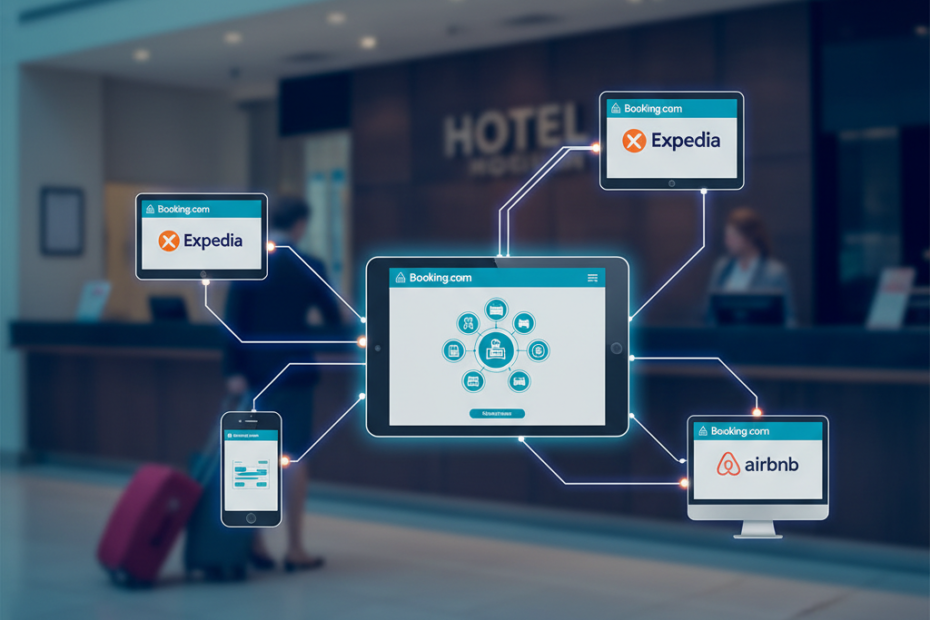
Managing room inventory across multiple booking platforms can quickly become overwhelming for hoteliers. A channel manager automates this process, ensuring your availability and rates stay synchronized in real time. This tool has become essential for modern hotels that want to maximize bookings while avoiding costly overbookings and manual errors. Understanding how a channel manager works helps you make smarter decisions about your property management technology and revenue strategy.
What Is a Hotel Channel Manager?
A channel manager is software that connects your property management system (PMS) to multiple online travel agencies (OTAs) and booking platforms. It acts as a central hub that distributes your room inventory, rates, and availability across all connected channels automatically. When a guest books a room on Booking.com, Expedia, or your direct website, the channel manager instantly updates availability across every platform. This prevents double bookings and saves hours of manual updates each day.
The system works through API connections that link your PMS with various distribution channels. These connections allow two-way communication, sending updates from your system to the OTAs and pulling reservation data back into your PMS. Modern channel managers support dozens or even hundreds of booking platforms, giving hotels broad market reach without additional workload.
The Step-by-Step Process of How Channel Manager Works
Initial Setup and Integration
Setting up a channel manager starts with connecting it to your property management system. You configure your room types, rate plans, and inventory allocations within the channel manager interface. Then you connect each OTA and booking channel you want to distribute through. The system maps your room categories to match how each platform categorizes accommodations. This one-time setup typically takes a few hours but establishes the foundation for automated distribution.
Real-Time Inventory Synchronization
Once configured, the channel manager continuously monitors your inventory status. When a guest books a room through any connected channel, the system immediately reduces available inventory by one unit. Within seconds, this update pushes to every other connected platform. If you have 10 rooms available and receive a booking on Expedia, all other channels instantly show 9 rooms remaining. This real-time synchronization happens 24/7 without manual intervention.
Rate and Restriction Management
Channel managers also distribute rate changes and booking restrictions across all platforms simultaneously. When you adjust your weekend rates or set a minimum stay requirement, you update it once in the channel manager. The system then pushes these changes to every connected OTA. This ensures rate parity across channels and lets you respond quickly to market conditions. You can also set channel-specific rates if your distribution strategy requires different pricing for different platforms.
Reservation Data Flow
When guests complete bookings on external channels, the reservation details flow back through the channel manager into your PMS. Guest information, booking dates, room type, rate, and special requests all transfer automatically. Your front desk staff sees these reservations in your PMS alongside direct bookings. This creates a single source of truth for all reservations, regardless of booking source. The automated data flow eliminates manual entry errors and ensures your team has complete, accurate information.
Key Benefits of Using a Channel Manager
The primary advantage is time savings. Hotels using channel managers report saving 5 to 15 hours per week on manual updates. Staff can focus on guest service instead of logging into multiple extranet systems. The risk of overbookings drops dramatically because inventory updates happen instantly. Revenue often increases because hotels can confidently distribute across more channels without fear of inventory conflicts.
Channel managers also provide better visibility into performance across different booking sources. You can compare which OTAs generate the most revenue, track commission costs, and adjust your distribution strategy based on data. Many systems include reporting dashboards that show booking patterns, channel performance, and revenue metrics. This intelligence helps you optimize your distribution mix and negotiate better terms with OTA partners.
Choosing the Right Channel Manager for Your Property
Not all channel managers offer the same features or channel connections. Evaluate which OTAs and booking platforms matter most for your market and guest demographic. Verify the channel manager supports those connections with full two-way integration. Consider whether you need features like automatic content updates, which push property descriptions and photos to all channels when you update them once.
Integration capability with your existing PMS is critical. Some channel managers work as standalone systems, while others integrate tightly with specific PMS platforms. Cloud-based solutions offer more flexibility and easier updates compared to on-premise software. Pricing models vary, with some charging per room, others per booking, and some using flat monthly fees. Calculate total costs based on your property size and booking volume to find the best value.
Common Challenges and How to Overcome Them
The most frequent issue hotels face is mapping errors during initial setup. Room types must match correctly between your PMS and each OTA’s categorization system. Take time during setup to verify mappings are accurate. Test bookings on each channel to confirm inventory decrements properly and reservation data flows correctly into your PMS.
Another challenge involves rate parity requirements from major OTAs. Your channel manager makes it easy to maintain consistent rates, but you must actively monitor for discrepancies. Some OTAs penalize properties that offer lower rates on other channels. Use your channel manager’s rate shopping features to stay compliant while maximizing revenue opportunities.
The Future of Channel Management Technology
Channel managers continue evolving with artificial intelligence and machine learning capabilities. Modern systems now offer dynamic pricing recommendations based on market demand, competitor rates, and historical booking patterns. These intelligent features help hotels optimize revenue without constant manual adjustments. Integration with metasearch engines and alternative accommodation platforms expands distribution opportunities beyond traditional OTAs.
As of 2026, channel managers increasingly incorporate direct booking tools and marketing automation. Properties can manage their entire distribution ecosystem from a single platform, including direct website bookings, OTA channels, and guest communication. This unified approach gives hoteliers better control over their distribution costs and guest relationships. Understanding how channel manager works today prepares you to take advantage of these advanced capabilities and stay competitive in an evolving hospitality landscape.