The Shift to Visual Trust
The way guests choose hotels has changed dramatically over the last few years.
Earlier, a professionally shot image on a website or OTA listing was enough to influence a decision. Today, those same polished visuals often feel overly curated. Guests have become more skeptical of polished marketing. They want to see what a stay actually looks like, not what it is designed to look like.
That is where user-generated content, or UGC, has taken over.
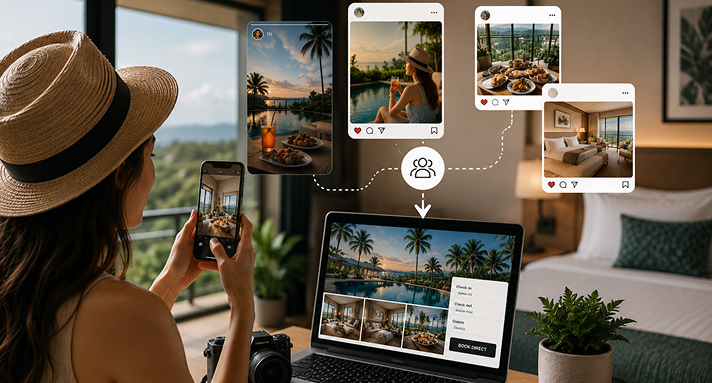
A quick Instagram Reel of a guest enjoying breakfast, a casual balcony-view video, or a short story capturing the vibe of the lobby often creates more trust than a professionally planned campaign.
UGC has quietly become your most powerful sales asset. It is created without effort from your side, but it carries authenticity that paid marketing cannot replicate. The real question is not whether UGC matters. It is whether your hotel is converting that attention into actual bookings.
Why UGC is the “New Gold” for Independent Hotels
Independent hotels and boutique properties are uniquely positioned to benefit from UGC. Unlike large chains, they offer character, personality, and experiences that guests naturally want to share.
UGC captures these moments in their raw form. It shows the stay as it is experienced, not as it is marketed. This reduces hesitation for future guests.
For properties using the best short term rental management software, UGC becomes the missing link between browsing and booking. It allows potential guests to visualize themselves in the space before they make a decision.
There is also a measurable impact on performance. Websites that feature real guest images and videos consistently outperform those that rely only on stock visuals. Conversion rates often increase by 25 to 35 percent when authentic content is visible during the booking journey.
But here is where most hotels fall short.
They treat UGC as a social media asset. It generates likes, comments, and shares. But the moment the guest leaves Instagram, the connection is lost. The booking journey starts from zero again. That gap is where conversions are lost.
3 Ways to Incentivize “Bookable” Content
The goal is not just to collect content. It is to encourage the kind of content that helps future guests make a decision.
1. Create Spaces That Invite Sharing
One effective approach is designing spaces that naturally encourage content creation. A thoughtfully styled corner in the lobby, a well-lit balcony, or a visually appealing breakfast setup can become a natural focal point. Guests do not need prompts. The environment itself encourages them to capture and share their experience.
2. Offer Subtle Social Rewards
Another method is introducing small, meaningful incentives. A complimentary drink, a late checkout, or a minor upgrade can motivate guests to post about their stay. When supported through your hotel software, these interactions can be timed and managed effortlessly, making them feel like a seamless part of the guest journey rather than an added effort.
3. Build Structured Content Touchpoints
Digital guestbooks provide a more consistent way to collect content. Encouraging guests to upload photos or short videos during their stay ensures that experiences are captured while still fresh. This content can then be reused across your website and booking pages, directly influencing future guests.
What matters most is consistency. When content collection becomes a defined process instead of a one-off effort, it starts delivering predictable and measurable results.
Integrating Social Proof into the Aiosell Booking Engine
Collecting UGC is only the first step. The real value comes from where it is used. Most hotels keep UGC limited to social platforms. The booking engine, where decisions are actually made, remains disconnected from this content. This creates a break in the user journey.
This is where Aiosell Technologies Pvt. Ltd. changes the game.
Instead of treating social content as a separate layer, Aiosell integrates it directly into the booking experience. Real guest photos and testimonials can be embedded into booking pages, allowing potential guests to see authentic experiences at the exact moment they are deciding. This reduces hesitation. The stay becomes more real, more relatable, and easier to commit to.
Another important aspect is traffic direction. Social media should not lead to a generic homepage. It should lead to a focused, high-conversion landing page. Aiosell’s hotel software enables hotels to design these journeys and guide users from content to checkout without friction.
The platform also tracks performance. Hotels can see which social content leads to actual bookings. This shifts marketing from guesswork to measurable outcomes.
UGC is no longer just content. It becomes a revenue driver.
How to Use Guest Content Without the Headache
One concern that often holds hotels back is usage rights. Many hesitate to reuse guest content because they are unsure about permissions.
In reality, the process is simple.
A quick message asking for permission is usually enough. Most guests are happy to have their content featured. It creates a sense of recognition and connection with the property. The key is to keep it consistent. Establish a simple workflow. Identify content, request approval, and store approved assets for future use.
Over time, this builds a strong library of authentic visuals. These visuals can be used across your website, booking engine, and campaigns without relying on expensive shoots. UGC becomes easier to manage once it becomes part of your system.
Conclusion
UGC has already transformed how guests discover hotels. The next step is transforming how it drives bookings. Hotels that treat guest content as a branding tool will continue to see engagement without conversion. Those that integrate it into their booking journey will see measurable growth.
The difference lies in execution.
Aiosell Technologies Pvt. Ltd. provides the infrastructure to make this shift. By connecting content, booking, and analytics into one system, it ensures that every piece of UGC contributes to revenue.
In a world where trust is built visually, the ability to convert that trust into bookings is what defines success.