Hotel Software Adoption Stories: From Manual to Cloud
Hotels across the globe are leaving behind paper logs, spreadsheets, and disconnected systems in favor of cloud hotel management software. This shift is not just about keeping up with technology trends. It is about survival in a competitive market where guest expectations rise daily and operational efficiency directly impacts profitability. The transition from manual to cloud hotel software has become a defining moment for properties that want to scale, reduce costs, and deliver seamless guest experiences. Understanding why this change matters helps hoteliers make informed decisions about their own digital transformation journey.
The Breaking Point of Manual Hotel Operations
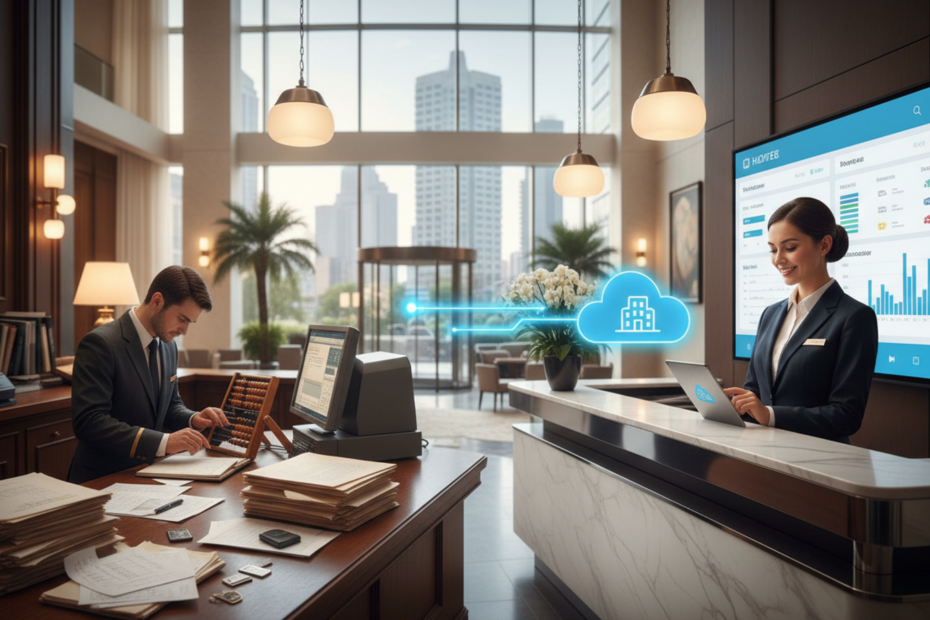
Manual hotel operations create bottlenecks that slow down every department. Front desk staff spend hours flipping through reservation books, checking availability, and manually updating guest records. Housekeeping teams rely on printed schedules that become outdated the moment a guest checks out early or extends their stay. Revenue managers struggle to adjust room rates in real time because they lack instant access to occupancy data and market trends. These inefficiencies compound during peak seasons when properties need to operate at maximum capacity.
The risk of human error multiplies with every manual entry. Double bookings happen when two staff members update separate systems without coordination. Financial discrepancies emerge when invoices are handwritten or entered into disconnected spreadsheets. Guest complaints increase when preferences noted during one stay are lost before the next visit. These problems do not just frustrate staff. They damage guest loyalty and erode profit margins in ways that many hoteliers underestimate until they calculate the true cost of manual processes.
How Cloud Hotel Management Software Transforms Daily Workflows
Cloud hotel management software centralizes every operational task into one accessible platform. Reservations, billing, housekeeping, inventory, and guest communication all sync in real time across devices. Front desk agents can check a guest in from a tablet while housekeeping receives instant room status updates on their mobile devices. Managers access performance dashboards from anywhere, making decisions based on current data rather than yesterday’s reports. This level of integration eliminates the communication gaps that plague manual systems and disconnected software.
Automation handles repetitive tasks that once consumed staff hours. The system sends booking confirmations automatically, processes payments without manual entry, and generates reports at scheduled intervals. Staff redirect their energy toward guest service instead of administrative work. Properties using hospitality management systems report faster check-in times, fewer billing errors, and improved guest satisfaction scores. The technology does not replace human touch. It frees employees to focus on interactions that create memorable experiences and drive positive reviews.
Real Stories of Hotels Making the Switch
A boutique property in California struggled with overbookings and lost revenue before adopting cloud hotel management software. Their manual reservation system could not track last-minute cancellations fast enough, leading to angry guests and compensation costs. Within three months of implementing a cloud solution, overbookings dropped to zero and revenue per available room increased by eighteen percent. The general manager credits real-time inventory updates and automated rate adjustments for the turnaround. Staff morale improved as they spent less time fixing errors and more time engaging with guests.
An independent hotel chain with five properties across Texas faced coordination nightmares when managing bookings across locations. Each property used its own spreadsheets and phone system, making it impossible to redirect guests when one location filled up. After deploying a unified hotel management system, the chain gained centralized visibility across all properties. They now move reservations between locations seamlessly, optimize staffing based on predicted occupancy, and run consolidated marketing campaigns. The owner reports that the system paid for itself within eight months through improved occupancy rates and reduced operational waste.
The Strategic Advantages That Drive Adoption
Scalability stands out as a primary reason hotels choose cloud platforms. Manual systems break down when properties expand or add new services. Cloud hotel management software grows with the business, accommodating additional rooms, locations, or revenue streams without requiring new infrastructure. Hotels can launch new properties and connect them to existing systems within days instead of months. This flexibility proves essential for brands planning aggressive growth or independent properties exploring franchise opportunities.
Data security and disaster recovery capabilities give hoteliers peace of mind that manual systems cannot match. Cloud providers invest heavily in encryption, backup systems, and compliance certifications that individual properties could never afford. When hardware fails or natural disasters strike, data remains safe and accessible from any location. Properties using solutions like Aiosell benefit from automatic updates that patch security vulnerabilities without requiring IT staff intervention. The cost of a data breach or system failure far exceeds the investment in cloud infrastructure, making this protection a business necessity rather than a luxury.
Making the Transition Smooth and Successful
Successful cloud adoption starts with clear goals and realistic timelines. Hotels should identify their biggest pain points, whether that means reducing overbookings, improving revenue management, or streamlining housekeeping coordination. Choosing software that addresses these priorities ensures immediate value and staff buy-in. Implementation teams should include representatives from every department to capture diverse needs and build cross-functional support. Vendors offering comprehensive training and responsive support make the transition less disruptive and help teams reach full productivity faster.
Change management determines whether technology adoption succeeds or stalls. Staff need time to adjust workflows and build confidence with new tools. Properties that phase implementation, starting with core functions before adding advanced features, see higher adoption rates and fewer frustrations. Regular feedback sessions help identify issues early and demonstrate that leadership values employee input. Celebrating small wins, like the first error-free week or positive guest feedback about faster service, reinforces the benefits and motivates continued engagement with the new system.
Conclusion
The shift from manual to cloud hotel software represents more than a technology upgrade. It is a fundamental reimagining of how hotels operate, compete, and serve guests. Properties that make this transition gain efficiency, accuracy, and flexibility that manual systems simply cannot deliver. As guest expectations continue rising and operational margins tighten, cloud hotel management software moves from competitive advantage to operational requirement. Hotels that embrace this change position themselves for sustainable growth in an industry where standing still means falling behind.