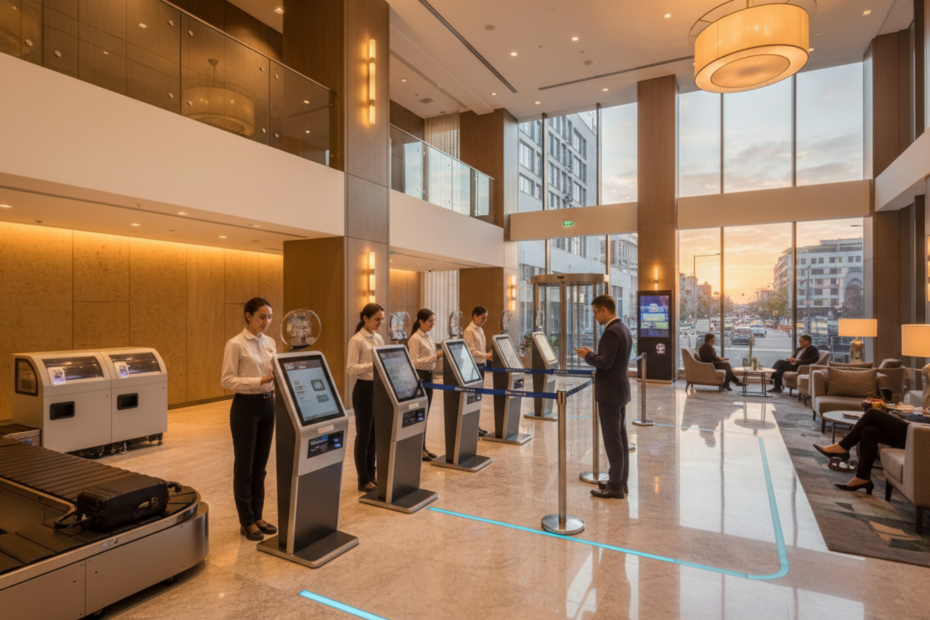
When several guests arrive at a hotel within a short period, the reception desk can quickly become busy. Staff members need to verify reservations, confirm room availability, coordinate with housekeeping, and handle payment-related activities. Managing all these tasks together can increase waiting times and put pressure on front-office teams.
For Indian hotels, this situation is common during weekends, public holidays, festive seasons, and group arrivals. Long queues can affect the guest’s first impression and make daily operations harder to manage.
Reducing check-in queues requires more than adding reception staff. Hotels need better arrival planning, clear communication between departments, and organised workflows. Here are seven practical ways to manage peak-hour check-ins more efficiently.
1. Understand Why Check-in Queues Increase During Peak Hours
Before improving the check-in process, hotel managers should identify where delays usually occur.
Several factors can contribute to longer waiting times:
Simultaneous guest arrivals: Multiple guests arriving together increase the workload at reception.
Delayed room readiness: Rooms may not be ready when guests arrive, especially during high-occupancy periods.
Manual reservation verification: Checking booking details and guest information manually can take additional time.
Billing and payment activities: Unprepared billing information can slow down the check-in process.
Limited staff coordination: Poor communication between housekeeping and reception can create unnecessary delays.
These issues are often connected. Identifying recurring problems helps hotel managers decide which processes need attention first.
2. Review Expected Guest Arrivals in Advance
Arrival planning helps reception teams prepare for busy periods instead of responding to every situation as it occurs.
Hotel managers should review upcoming reservations and identify expected arrival patterns. Weekend bookings, group reservations, and holiday arrivals may require additional preparation.
The front-office team should:
Review expected arrivals and departure schedules.
Identify group bookings and special guest requirements.
Check reservation details before guests arrive.
Highlight bookings that require additional attention.
Communicate expected arrival volumes to the relevant departments.
When the team knows what to expect, it becomes easier to distribute responsibilities and prepare for busy periods.
3. Coordinate Room Readiness with Housekeeping
Room readiness is an important part of the guest check-in process. Even when reservation details are available, guests may need to wait if their assigned rooms are not prepared.
Front-office and housekeeping teams should maintain clear communication about room status.
Hotels can improve coordination by prioritising rooms according to expected arrival times, sharing housekeeping updates, and identifying rooms that require additional preparation.
For example, if a guest is expected to arrive early, the housekeeping team can be informed in advance. Reception can also provide accurate updates if the room is not ready.
This approach helps manage guest expectations and reduces confusion between departments.
4. Organise Reservation Information Before Guest Arrival
Reservation verification becomes more difficult when staff members need to search through multiple records or enter the same information repeatedly.
Hotels should ensure that booking details are organised and accessible before expected arrival times.
Important activities include:
Checking reservation information.
Reviewing booking modifications.
Identifying missing guest details.
Verifying applicable booking arrangements.
Avoiding duplicate manual entries wherever possible.
Using a centralised hotel management system can help staff access relevant reservation information more easily.
This reduces repetitive work and allows reception teams to focus on assisting arriving guests.
5. Allocate Front-Desk Staff According to Arrival Patterns
Staff allocation should reflect the hotel’s actual operational requirements.
A hotel may experience higher arrival volumes during particular hours, even when overall occupancy remains manageable. Scheduling staff without considering these patterns can create unnecessary pressure at reception.
Hotel managers can review previous arrival trends and plan staff responsibilities accordingly.
Consider these practices:
Identify recurring peak check-in periods.
Assign clear responsibilities to reception staff.
Arrange additional support during group arrivals.
Ensure guest enquiries are handled without interrupting every check-in.
Brief the team before anticipated busy periods.
A clear division of responsibilities helps staff manage multiple activities without unnecessary overlap.
6. Introduce Pre-Arrival Guest Communication
Some check-in delays can be reduced through communication before guests reach the hotel.
Sharing relevant information in advance helps guests understand what to expect and allows hotel staff to prepare accordingly.
Hotels can communicate:
Booking confirmation details.
Expected arrival and check-in timings.
Identification documents required at check-in.
Payment arrangements and applicable policies.
Information about special requests.
For group bookings, advance communication is particularly useful because several guests may arrive together.
Clear instructions reduce avoidable questions at reception and help create a more organised arrival experience.
7. Prepare Billing and Payment Information in Advance
Billing-related activities can add to reception workloads when payment details are not organised.
Hotel staff should review applicable room charges, payment status, outstanding amounts, and billing requirements before expected arrivals.
This preparation helps identify issues that may otherwise need to be resolved while guests are waiting at the reception desk.
Hotels should also establish clear procedures for handling different booking types, including prepaid reservations, direct bookings, and corporate reservations.
Organised billing processes make it easier for front-office staff to handle guest transactions without unnecessary delays.
How Hotel Management Software Improves Front-Office Workflows
Managing reservations, guest information, and hotel operations through disconnected systems can increase manual work.
Hotel management software helps bring important operational information together. Depending on the system and its integrations, it can support centralised reservation management, improve access to booking information, and reduce repetitive data entry.
For hotel owners and general managers, better access to operational information also helps with planning and decision-making.
Technology does not replace the need for trained reception staff or good housekeeping coordination. Instead, it supports teams by simplifying routine activities and reducing unnecessary manual effort.
How Aiosell Supports Better Hotel Operations
Managing a hotel involves coordinating several activities while keeping daily operations simple and organised. Aiosell focuses on bringing hotel management functions together through an integrated software approach.
Its technology is designed to help hotel owners manage operations, reduce manual work, and improve efficiency through connected systems and automation.
For hotels looking to simplify their operational processes, an integrated approach can reduce dependency on disconnected tools and help teams spend more time on important responsibilities.
The objective is straightforward: less manual work, better operational control, and more time to focus on guests.
Peak-Hour Check-in Management Checklist for Hotels
Hotel owners and operations managers can use this checklist before anticipated busy arrival periods:
Review expected guest arrivals and reservation details.
Identify group bookings and special requirements.
Confirm room readiness with housekeeping.
Ensure booking information is accessible.
Prepare billing and payment details.
Allocate sufficient front-office staff.
Share arrival instructions with guests.
Review recurring delays and improve workflows.
Regular preparation helps hotels manage busy periods with greater consistency.
Frequently Asked Questions
1. How can hotels reduce check-in queues during peak arrival hours?
Hotels can reduce waiting times by reviewing expected arrivals, preparing rooms in advance, organising reservation information, allocating staff effectively, and communicating with guests before arrival.
2. What causes long waiting times at hotel reception desks?
Common causes include simultaneous guest arrivals, delayed room readiness, manual reservation verification, billing-related activities, and poor coordination between front-office and housekeeping teams.
3. How does hotel management software help improve the check-in process?
Hotel management software can centralise reservation information, reduce repetitive data entry, and improve access to operational details. These capabilities help reception teams manage their responsibilities more efficiently.
4. How should Indian hotels prepare for peak check-in periods?
Hotels should review weekend and holiday bookings, identify group arrivals, coordinate room readiness with housekeeping, prepare reservation information, and allocate staff according to expected arrival patterns.
5. Why is coordination between housekeeping and reception important?
Housekeeping teams manage room preparation, while reception teams handle guest arrivals. Timely room-status updates help reception provide accurate information, manage expectations, and avoid unnecessary check-in delays.
Conclusion
Reducing check-in queues requires consistent preparation across different hotel departments. Reviewing expected arrivals, coordinating room readiness, organising reservation information, and allocating staff effectively can improve front-office workflows.
For Indian hotels managing busy weekends and seasonal arrivals, these practices provide a practical starting point. Combining organised processes with suitable hotel management technology can further reduce manual work and support a better guest arrival experience.