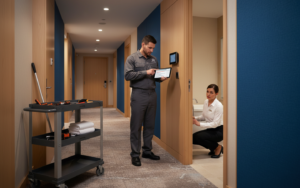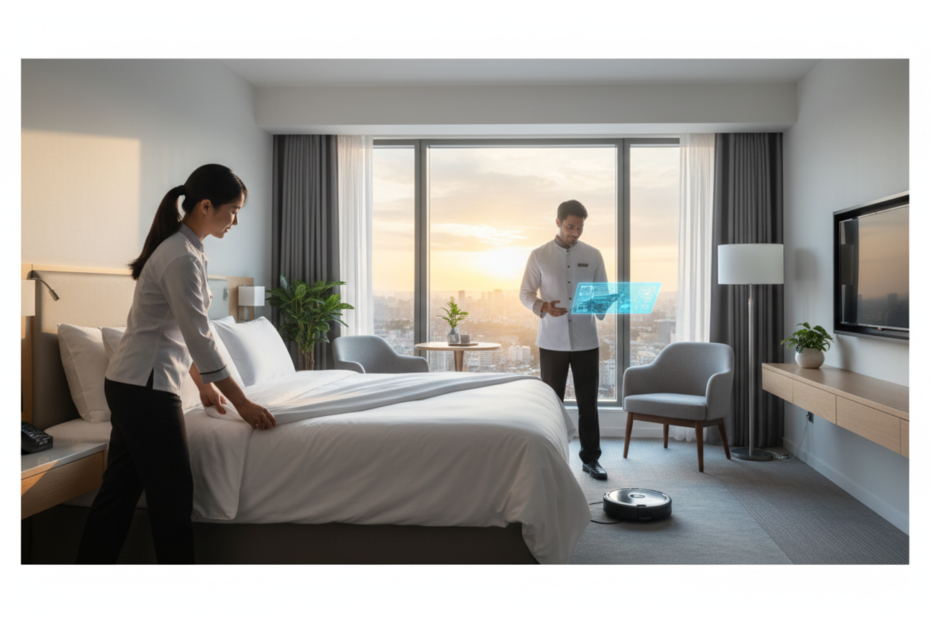
A guest checks out at 10 a.m. Another guest expects to check in at noon. Housekeeping must clean the room, replace linen, replenish supplies and complete the final inspection within a limited period. A delay in any step affects room availability and front-desk operations.
Managing room turnaround time between check-out and check-in requires clear task allocation, accurate room-status updates and coordination between housekeeping, maintenance and reception. Hotel managers should establish a standard process so every department knows when to act and how to report completion.
Why Room Turnaround Time Matters
The period between guest departure and the next arrival involves several connected tasks. Housekeeping needs access to the room, maintenance might need to address defects, and supervisors must confirm cleanliness before the room becomes ready.
Poor coordination often leads to:
Delayed room availability.
Long guest waiting times at reception.
Confusion about room-cleaning priorities.
Missed housekeeping tasks.
Repeated communication between departments.
Last-minute pressure on housekeeping employees.
A structured process helps hotels use available staff and time more effectively. It also gives managers better visibility into room readiness.
Understand the Steps in the Room Turnaround Process
Before improving the process, managers should map each activity from check-out to the next check-in.
1. Confirm Guest Check-Out
Reception should update the room status after completing the check-out process. Housekeeping needs prompt information about vacant rooms so employees know which rooms require attention.
2. Assign Housekeeping Tasks
The housekeeping supervisor assigns rooms based on occupancy, expected arrivals, room category and available staff. Prioritise rooms with confirmed incoming reservations and early-arrival requests.
3. Complete Room Cleaning
Housekeeping employees remove used linen, clean the bathroom, dust surfaces, sanitise high-touch areas and replenish guest supplies. Staff should follow the hotel’s approved cleaning standards.
4. Report Maintenance Issues
Employees should report problems such as leaking taps, damaged furniture, faulty lights or air-conditioning issues. The supervisor should coordinate with the responsible maintenance team and track the room’s status.
5. Inspect the Room
The supervisor checks cleanliness, linen, amenities, equipment and room presentation. Failed checks require correction and another inspection.
6. Confirm Room Readiness
After all required work and inspection checks are complete, housekeeping updates the room status. Reception should use the confirmed status when assigning rooms to arriving guests.
Room Turnaround Time Between Check-Out and Check-In Checklist
A standard checklist helps supervisors track each activity and identify delays.
Check-Out and Task Allocation
Confirm guest check-out in the hotel system.
Update the room status.
Notify housekeeping about the vacant room.
Review incoming reservations and arrival priorities.
Assign the room to a housekeeping employee.
Identify early-arrival requests and special requirements.
Cleaning and Preparation
Remove used linen and waste.
Clean and sanitise the bathroom.
Replace bedsheets, pillow covers and towels.
Dust furniture and clean surfaces.
Clean floors, mirrors and windows.
Replenish guest amenities.
Check room equipment and lighting.
Report maintenance defects.
Inspection and Final Approval
Inspect the bedroom and bathroom.
Verify linen and guest supplies.
Check furniture and equipment condition.
Confirm maintenance work is complete where required.
Correct failed inspection items.
Complete the final inspection.
Update the room status.
Inform reception about confirmed readiness.
Managers should adapt the checklist to room categories and hotel service standards. Each task should have a clear owner.
Best Practices to Reduce Room Turnaround Delays
Reducing room turnaround time between check-out and check-in requires more than asking housekeeping employees to work faster. Managers should identify process delays and remove avoidable coordination gaps.
Prioritise Rooms Based on Arrival Schedules
Not every vacant room needs immediate attention. Review expected arrivals and prioritise rooms with confirmed bookings, early check-in requests or group arrivals.
Share the priority list with housekeeping before the shift begins. Update the list when reservations or guest plans change.
Assign Clear Responsibilities
Each room should have an assigned housekeeping employee. Supervisors should track task progress and identify rooms awaiting inspection.
Avoid unclear instructions such as asking several employees to handle the same room without assigning responsibility. Clear ownership reduces missed tasks and repeated work.
Coordinate Housekeeping and Maintenance
Maintenance issues often delay room readiness. Establish a reporting process for housekeeping employees to record defects as soon as they identify them.
Managers should define:
Who receives maintenance reports.
Who assigns the repair task.
Who confirms completion.
Who approves the room after the repair.
How reception receives the final update.
Do not mark a room ready while an unresolved defect affects guest use or hotel standards.
Standardise Cleaning Procedures
Use room-specific cleaning procedures for standard rooms, suites and other categories. Employees should follow the same sequence and quality requirements.
Supervisors should demonstrate the expected standard during training. Regular inspections help identify missed steps and recurring cleaning issues.
Review Staffing During Peak Periods
Room-cleaning demand changes with occupancy and check-out patterns. Review the number of departing rooms, expected arrivals and available housekeeping employees before each busy shift.
Schedule staff according to workload. Assign experienced employees to rooms with early arrivals or more complex preparation requirements.
Track Delays Instead of Relying on Estimates
Record when a room becomes vacant, when cleaning begins, when inspection takes place and when final approval is given.
These timestamps help managers identify where delays occur. For example, a room might take a short time to clean but remain pending for inspection because the supervisor handles several rooms at once.
Common Room Turnaround Problems and Their Solutions
Common Problem | Operational Impact | Recommended Action |
Delayed check-out updates | Housekeeping starts late | Update room status immediately after check-out |
Unclear task allocation | Duplicate or missed work | Assign one employee to each room |
Missing cleaning supplies | Work interruptions | Check supplies before the shift |
Maintenance defects | Room remains unavailable | Report and track defects promptly |
Delayed inspections | Clean rooms wait for approval | Schedule inspection coverage |
Outdated room status | Reception assigns rooms incorrectly | Share updates as soon as status changes |
Repeated cleaning errors | Additional work and delays | Provide targeted staff training |
Managers should review these problems during regular housekeeping meetings. Focus on recurring causes instead of treating every delay as an individual employee issue.
Use Hotel Technology to Improve Room Coordination
Accurate room information helps reception and housekeeping work from the same operational picture. A connected hotel system supports reservation and front-desk workflows, depending on available features and integrations.
Aiosell supports hotel operations through connected reservation, front-desk and revenue management functions. Hotels should review how their system handles room-status updates and reservation information before designing the workflow.
Train employees to update records promptly and follow the agreed status process. Managers should also define who verifies room readiness and who communicates the final update to reception.
Aiosell should support the wider operating process rather than replace housekeeping procedures. Clear responsibilities, staff training and supervisor inspections still determine whether rooms meet hotel standards.
Measure Room Turnaround Performance
Managers need consistent measurements to understand whether process changes improve room readiness.
KPI | What It Measures |
Average room turnaround time | Time from guest check-out to final room approval |
Cleaning completion time | Time taken by housekeeping to complete assigned work |
Inspection waiting time | Time between cleaning completion and supervisor inspection |
Reinspection rate | Percentage of rooms requiring corrections |
Maintenance-related delays | Time rooms remain pending due to reported defects |
Early check-in readiness | Number of early-arrival rooms ready by the agreed time |
Room-readiness accuracy | Whether room status matches the actual room condition |
Compare results across weekdays, weekends, room categories and high-occupancy periods. Use the findings to adjust task allocation, staffing and inspection coverage.
Conclusion
Reducing room preparation delays requires a consistent process from guest check-out to final room approval. Hotels should assign clear responsibilities, prioritise incoming arrivals, coordinate maintenance and inspect every room before confirming readiness.
Review turnaround records regularly to identify recurring delays and improve staff allocation. With accurate room information and coordinated workflows, Aiosell supports the connected hotel operations required to manage reservations and front-desk activities effectively.
FAQs
What Is Room Turnaround Time in a Hotel?
Room turnaround time refers to the period required to prepare a room after guest check-out and confirm readiness for the next guest. The process includes cleaning, replenishment, maintenance follow-up and inspection.
How Do Hotels Reduce Room Preparation Delays?
Hotels should update check-out status promptly, assign clear housekeeping responsibilities, prioritise incoming arrivals and coordinate maintenance work. Supervisors should also track inspection delays.
Who Is Responsible for Room Readiness?
Housekeeping employees complete cleaning tasks, supervisors inspect rooms and maintenance staff address reported defects. Reception uses the confirmed room status when assigning rooms.
How Should Hotels Prioritise Rooms During Busy Check-In Periods?
Managers should review expected arrivals, early check-in requests, group bookings and room categories. Housekeeping should prioritise rooms based on confirmed arrival requirements.
Which KPIs Help Measure Room Turnaround Performance?
Useful measures include average turnaround time, cleaning completion time, inspection waiting time, reinspection rate, maintenance-related delays and early check-in readiness.