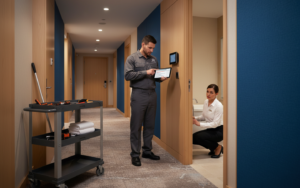
A VIP guest arrives after a long flight, but the room lacks the requested amenities. Another guest staying for three weeks finds insufficient storage and no clear housekeeping schedule. Both situations affect the guest experience and create avoidable work for hotel teams.
Preparing rooms for VIP and long-stay guests requires advance planning, accurate guest information and coordination between departments. Housekeeping, front desk and operations teams should follow clear procedures for room preparation, special requests and follow-up checks.
A consistent process helps hotels meet different guest expectations while maintaining daily room-readiness standards.
Understand the requirements of each guest
VIP and long-stay guests often have different room requirements. Hotels should identify these needs before assigning rooms or starting preparation.
VIP guest requirements
VIP preparation often focuses on personal preferences, arrival arrangements and room presentation. Requirements might include:
Preferred room location or floor.
Specific bedding or pillow preferences.
Welcome amenities approved by the hotel.
Dietary or minibar preferences, where offered.
Additional privacy arrangements.
Special arrival or departure coordination.
Accessibility requirements, where requested.
The front desk should record confirmed preferences and share relevant details with the responsible teams. Avoid assumptions based on a guest’s status or previous visits.
Long-stay guest requirements
Guests staying for several days or weeks often need practical arrangements for daily living. These might include:
Adequate wardrobe and luggage storage.
A suitable work area.
Laundry service information.
Kitchenette or dining facilities, where available.
Regular housekeeping frequency.
Additional linen and towel arrangements.
Clear information about hotel services.
The hotel should confirm which facilities and services are available before promising them.
Create a room preparation process
Rooms for VIP and long-stay guests should follow a documented preparation process. The process should cover guest requirements, room selection, cleaning, inspection and final confirmation.
1. Review guest preferences before arrival
The front-desk team should review reservation notes and confirmed requests. Share relevant details with housekeeping and other responsible departments before the guest arrives.
Record preferences in a clear format. Separate confirmed requests from pending enquiries so teams do not treat assumptions as instructions.
2. Select a suitable room
Choose a room based on the guest’s reservation, preferences and available inventory. Consider location, room category, accessibility, noise exposure and required facilities.
For long-stay bookings, check storage, workspace and available facilities. For VIP bookings, confirm the agreed room category and special arrangements.
3. Complete housekeeping preparation
Assign the room to a trained attendant or supervisor. Follow the hotel’s standard cleaning procedure and check guest-specific requirements.
Review the following areas:
Bed linen, pillows and mattress condition.
Bathroom cleanliness and fittings.
Furniture, flooring and surfaces.
Lighting, switches and air-conditioning.
Curtains, windows and room ventilation.
Toiletries, towels and approved amenities.
Storage areas and work surfaces.
4. Coordinate special requests
Housekeeping should confirm which requests fall within its responsibility. Other requirements should go to the relevant department.
For example, maintenance should check a faulty air-conditioning unit. Food and beverage staff should handle approved welcome refreshments. Front-desk staff should coordinate arrival details.
5. Inspect before releasing the room
A supervisor should check the room against the hotel’s inspection standards. Confirm special arrangements and record any pending item.
The room should be marked ready only after the required cleaning, maintenance and inspection checks are complete.
Rooms for VIP and long-stay guests checklist
Use this checklist before releasing a room:
Reservation details and guest preferences reviewed.
Suitable room selected and confirmed.
Special requests shared with responsible departments.
Room cleaned according to hotel standards.
Bed linen and bathroom supplies checked.
Furniture, lighting and equipment inspected.
Storage and workspace checked for long-stay bookings.
Approved welcome amenities arranged for VIP arrivals.
Maintenance issues resolved or escalated.
Supervisor inspection completed.
Front desk informed of room readiness.
Pending requests recorded for follow-up.
Keep the checklist specific to the room category and guest requirements. Avoid adding services the hotel does not provide.
Best practices for VIP and long-stay guest room preparation
Maintain accurate guest preference records
Record preferences in the reservation notes or the hotel’s approved guest information system. Include only details relevant to service delivery.
Update records when guests change their preferences. Share information with authorised employees who need the details to prepare the room.
Plan long-stay housekeeping schedules
Agree on cleaning frequency and suitable service times with the guest. Explain the hotel’s linen replacement, laundry and housekeeping arrangements.
A consistent schedule helps attendants plan workloads and gives guests a clear understanding of available services.
Coordinate across departments
Hold a short pre-arrival review for guests with confirmed special requirements. The front desk should share relevant information with housekeeping, maintenance and other departments.
Assign responsibility for each request. Record completion so teams avoid duplicate work or missed arrangements.
Protect guest privacy
Respect privacy preferences and follow the hotel’s room-entry procedures. Train staff to check the correct room status before entering. Record requests for privacy or specific service times in the approved system.
Prepare for changes during the stay
Long-stay guests might request additional linen, room changes or maintenance support. VIP guests might update arrival times or room preferences.
Keep the responsible teams informed and update records when arrangements change.
Review room quality after arrival
Follow up through the hotel’s standard guest-service process. Ask whether the room meets the guest’s confirmed requirements. Record concerns and assign corrective action to the relevant department.
How hotel technology supports room preparation
Accurate reservation information helps teams plan room assignments and pre-arrival tasks. A hotel property management system supports reservation and room-availability workflows. Hotels should review how guest notes and room-status information move between departments.
A hotel front-desk management system also supports reservation handling and arrival coordination. Staff should confirm room readiness before communicating check-in arrangements.
Aiosell provides connected hotel technology for reservations, front-desk operations and revenue management. Hotels evaluating hotel management software should review how available features support their reservation workflows, guest information processes and room-availability requirements.
Aiosell also supports revenue management workflows. Occupancy and booking information helps managers plan room availability and operational requirements. Hotels should confirm the available integrations and retain clear departmental procedures for special requests, housekeeping assignments and room inspections.
Technology supports coordination, but employees still need clear responsibilities and documented service standards.
Measure room preparation performance
Managers should review room preparation through practical operational measures.
KPI | What to monitor |
Pre-arrival room readiness | Percentage of priority rooms ready before the planned arrival |
Special request completion | Requests completed before guest arrival |
Room inspection pass rate | Rooms meeting inspection standards on the first check |
Preparation delays | Time lost due to cleaning, maintenance or coordination issues |
Guest complaints | Issues linked to room preparation or unmet requests |
Follow-up completion | Guest concerns resolved within the hotel’s service target |
Review results weekly or monthly, depending on booking volume. Look for recurring problems and assign corrective actions to the relevant department.
Conclusion
Consistent room preparation starts with accurate guest information and clear departmental responsibilities. VIP arrivals need attention to confirmed preferences, while long-stay bookings require practical arrangements and a planned housekeeping schedule.
Hotels should use a standard checklist, inspect rooms before release and review guest feedback after arrival. Aiosell supports connected reservation, front-desk and revenue workflows, helping hotel teams work with organised operational information.
Frequently asked questions
How should hotels prepare rooms for VIP guests?
Hotels should review confirmed preferences, select a suitable room, arrange approved amenities and complete a supervisor inspection. Share special requirements with the relevant departments before arrival.
What should hotels provide for long-stay guests?
Hotels should review practical requirements such as storage, workspace, laundry information, housekeeping schedules and available facilities. Confirm the services included in the booking before making commitments.
Who coordinates VIP room preparation?
The front-desk or guest-relations team should coordinate confirmed guest requirements. Housekeeping prepares and inspects the room, while maintenance and other departments handle tasks within their responsibilities.
How often should housekeeping service long-stay rooms?
The schedule depends on hotel policy, booking terms and guest preference. Explain the available frequency and agree on suitable service times with the guest.
How do hotels maintain consistent room quality?
Use documented cleaning procedures, room-specific checklists and supervisor inspections. Record guest requests and review complaints to identify recurring preparation gaps.