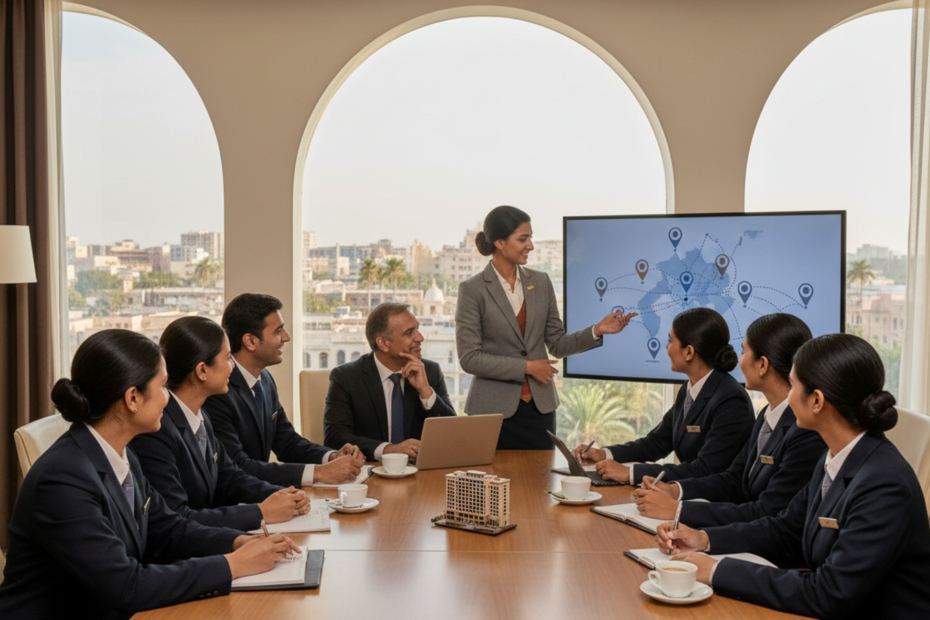
A hotel group operating properties in Bengaluru, Mumbai, Jaipur and Goa faces a common challenge. Each property needs employees who follow the same service standards while responding to local guest expectations.
Different managers, department structures and employee experience levels often lead to inconsistent training. A structured approach to staff training for multi-property hotel groups helps HR managers maintain common standards without ignoring individual property requirements.
For Indian hotel groups, training should cover guest service, department procedures, workplace safety, cultural awareness and property-specific operations. A clear training framework also helps department heads track employee progress across locations.
Why Multi-Property Hotel Groups Need Standardised Training
Hotel groups often operate properties with different room categories, facilities, guest profiles and service requirements. A business hotel in Mumbai might focus on corporate arrivals and meeting facilities. A resort in Goa might handle leisure guests, recreational activities and longer stays.
Despite these differences, employees should follow consistent brand standards.
Standardised training helps hotel groups:
Maintain consistent guest service across properties.
Prepare new employees for their department responsibilities.
Reduce errors during check-in, housekeeping and food service.
Support transfers between properties.
Help department heads identify employee skill gaps.
Maintain clear records of completed training.
Prepare teams for seasonal demand and occupancy changes.
Without a shared framework, each property might develop separate training materials. Employees then receive different instructions for similar responsibilities.
Build a Group-Wide Training Framework
The first step is to establish common training standards for every property. HR teams should work with department heads to identify the skills and procedures every employee needs.
Define Core Training Areas
Group-wide training should cover topics relevant to employees across locations.
Training area | Key learning objectives |
Brand standards | Understand service expectations, communication and guest interaction |
Guest service | Handle requests, complaints and service recovery |
Workplace safety | Follow property safety procedures and emergency instructions |
Data protection | Handle guest information responsibly |
Communication | Coordinate with colleagues and explain information clearly |
Workplace conduct | Follow professional behaviour and reporting procedures |
Technology | Use approved systems relevant to assigned responsibilities |
Each property should receive the same core learning materials. Department heads should add local procedures where property facilities or operating conditions differ.
Create Department-Specific Training Plans
Employees need practical training based on their responsibilities.
Front office: Reservation handling, check-in, check-out, guest requests and payment procedures.
Housekeeping: Room-cleaning standards, linen handling, inspection procedures and room readiness.
Food and beverage: Service sequence, menu knowledge, hygiene procedures and guest communication.
Maintenance: Equipment checks, maintenance reporting and escalation procedures.
Sales: Property information, enquiry handling and coordination with reservations.
Security: Access procedures, incident reporting and emergency response.
Training should combine classroom sessions, demonstrations and supervised workplace practice.
Separate Group Standards From Property Procedures
Not every operating procedure should be identical across locations. A city hotel, heritage property and beach resort have different facilities and guest requirements.
HR teams should divide training materials into two categories:
Group-wide standards that apply to every property.
Property-specific procedures based on facilities, location and operating requirements.
This approach maintains consistency while allowing local managers to address practical differences.
Create a Training Plan for Each Employee Stage
A structured learning plan should support employees from joining through ongoing development.
New Employee Induction
Every new employee should receive an introduction to the hotel group, property, department and role.
The induction process should include:
Hotel group background and service standards.
Department responsibilities.
Reporting relationships.
Attendance and workplace policies.
Guest communication expectations.
Emergency contacts and safety procedures.
Relevant systems and equipment.
HR should provide a clear induction schedule and confirm completion with the employee’s manager.
Role-Based Training
After induction, employees should receive training specific to their positions. A new front office associate needs supervised practice with guest arrivals and reservation procedures. A housekeeping employee needs practical demonstrations of room preparation and inspection standards.
Department heads should define the expected skills for each role and record employee progress.
Refresher Training
Training should continue after onboarding. Hotels should schedule refresher sessions when procedures change, recurring errors appear or employees move into new responsibilities.
Group HR teams should coordinate refresher topics across properties. Local managers should identify additional training needs based on guest feedback and operational reviews.
Staff Training for Multi-Property Hotel Groups Checklist
A consistent staff training for multi-property hotel groups checklist helps HR managers and department heads coordinate learning activities across locations.
Before Training
Identify training needs for each department.
Review employee experience and skill gaps.
Confirm group-wide service standards.
Prepare approved learning materials.
Assign trainers and department supervisors.
Set training dates for each property.
Identify language or accessibility requirements.
During Training
Explain the purpose of each session.
Demonstrate procedures in practical settings.
Give employees opportunities to practise.
Use examples from actual hotel operations.
Record attendance and completion.
Check employee understanding through demonstrations or assessments.
After Training
Collect feedback from employees and trainers.
Record assessment results.
Identify employees who need additional support.
Share completion updates with HR.
Schedule follow-up sessions.
Review whether the training improved workplace performance.
HR teams should maintain a common checklist across properties. Each hotel should update the checklist when local procedures require additional training.
Coordinate Training Across Different Indian Locations
Multi-property hotel groups often operate across states with different languages, local hiring conditions and guest profiles. Training plans should account for these differences.
Support Regional Language Requirements
Employees might be more comfortable learning in Hindi, Kannada, Tamil, Telugu, Bengali, Marathi or another regional language.
Hotels should use clear language and translated support materials where appropriate. Important safety instructions and workplace procedures should remain consistent across versions.
Plan Around Occupancy and Shift Patterns
Hotels operate throughout the day, and employees work different shifts. Removing several employees from a department for training might affect guest service.
Managers should schedule sessions during suitable periods and rotate employee attendance. Short training modules, shift-based sessions and supervised practice help reduce disruption.
Prepare for Seasonal Demand
Properties in destinations such as Goa, Jaipur, Kerala and hill stations often experience seasonal changes in guest demand.
Managers should plan training before peak periods. Topics might include guest handling, room readiness, food service coordination and department communication.
Use Property-Level Trainers
Each property should appoint department trainers or experienced supervisors to support learning. Group HR should provide standard materials and monitor consistency.
Local trainers should follow approved content rather than creating separate procedures without review.
Best Practices for Consistent Training
Effective staff training for multi-property hotel groups depends on clear ownership, regular reviews and practical learning.
Indian hotel groups should follow these practices:
Maintain a central library of approved training materials.
Assign a training coordinator at each property.
Define role-based learning requirements.
Use practical demonstrations instead of relying only on presentations.
Schedule training around occupancy and employee shifts.
Record attendance, assessments and refresher sessions.
Review guest feedback for recurring service gaps.
Share successful training methods across properties.
Update materials when operating procedures change.
Review employee progress with department heads.
Group HR should also compare training completion across properties. A location with lower completion rates might need additional trainer support or a revised schedule.
Measure Training Effectiveness
Training attendance alone does not show whether employees have learned the required skills. Managers should evaluate how training affects daily hotel operations.
Useful measures include:
Metric | What managers should review |
Training completion | Percentage of employees completing assigned sessions |
Assessment results | Employee understanding of procedures |
Service complaints | Recurring issues linked to employee knowledge |
Operational errors | Mistakes involving reservations, billing or department procedures |
Guest feedback | Comments about staff service and communication |
Employee progress | Improvement in role-specific skills |
Refresher requirements | Employees or departments needing additional support |
HR teams should compare results across properties and review changes over time. Managers should also consider differences in property size, occupancy and employee experience before comparing performance.
How Hotel Technology Supports Training Coordination
Hotel technology supports connected operations across multiple properties. HR teams should assess how existing systems fit into the wider training process.
Hotel management software supports hotel management activities and helps teams coordinate relevant operational information. Hotels should verify available features before relying on a platform for employee training records, assessments or learning management.
Aiosell provides technology for reservations, front-desk operations and revenue management. Hotel groups should review the available functions and integrations when selecting systems for their properties.
Connected operational information also helps managers understand demand patterns. Revenue management supports revenue-related decisions, while staffing plans should account for expected arrivals and department workloads.
A front-desk management system supports front-office operations. Managers should separately establish training procedures for employees who use these systems.
Aiosell should form part of the wider hotel technology evaluation. Training ownership, learning materials and employee assessments still require clear HR and department-level processes.
Conclusion
Consistent employee training helps Indian hotel groups maintain service standards across different properties. HR managers should establish shared learning materials, role-based training plans and clear methods for measuring employee progress.
A structured approach to staff training for multi-property hotel groups also helps local managers address regional requirements without losing group-wide consistency. Regular reviews, practical demonstrations and coordinated training schedules support stronger hotel operations across locations.
Frequently Asked Questions
1. Why do multi-property hotel groups need a standardised training plan?
A standardised plan helps every property follow common service expectations, workplace procedures and role requirements. Local managers can add property-specific training where needed.
2. What should staff training for multi-property hotel groups include?
Training should include brand standards, guest service, department procedures, workplace safety, communication, technology and role-specific skills. Hotels should also provide induction and refresher sessions.
3. How should Indian hotel groups manage training across different locations?
Groups should maintain central training materials, appoint local trainers and schedule sessions around property occupancy. They should also provide suitable language support and account for regional operating requirements.
4. How do hotel managers measure employee training effectiveness?
Managers should review completion rates, assessment results, guest feedback, operational errors and employee progress. These measures help identify departments that need further training.
5. How often should hotel employees receive refresher training?
Hotels should schedule refresher training when procedures change, employees take on new responsibilities or performance reviews identify skill gaps. Managers should also review training needs regularly.