If you run a hotel or manage hospitality properties in India, you’ve probably heard the terms “hotel management software” and “PMS” used interchangeably. But are they really the same thing? This question matters because choosing the right technology stack can make or break your operational efficiency, guest satisfaction, and bottom line. As India’s hospitality sector continues its rapid digital transformation, understanding the difference between hotel management software and PMS is crucial for making smart investment decisions.
What Is a Property Management System (PMS)?
A Property Management System, or PMS, is the core operational software that hotels use to manage front-office tasks. Think of it as the digital nerve center of your property. A PMS handles reservations, check-ins, check-outs, room assignments, billing, and housekeeping coordination. It’s the system your front desk staff interact with dozens of times each day.
Most modern PMS platforms operate in the cloud, which means you can access them from anywhere with an internet connection. This cloud-based approach has become the standard in India since 2024, replacing older on-premise systems that required expensive servers and IT maintenance. A good PMS streamlines daily operations and reduces manual errors that can frustrate guests and staff alike.
What Is Hotel Management Software?
Hotel management software is a broader term that encompasses all the digital tools a hotel uses to run its business. This includes the PMS, but it also covers revenue management systems, channel managers, booking engines, customer relationship management (CRM) tools, point-of-sale (POS) systems for restaurants and bars, and business intelligence platforms.
In other words, hotel management software is the complete technology ecosystem. It connects every department, from housekeeping to sales to finance. Some vendors offer all-in-one platforms that bundle these features together, while others focus on best-of-breed solutions that integrate with each other through APIs.
The Key Difference Between Hotel Management Software and PMS
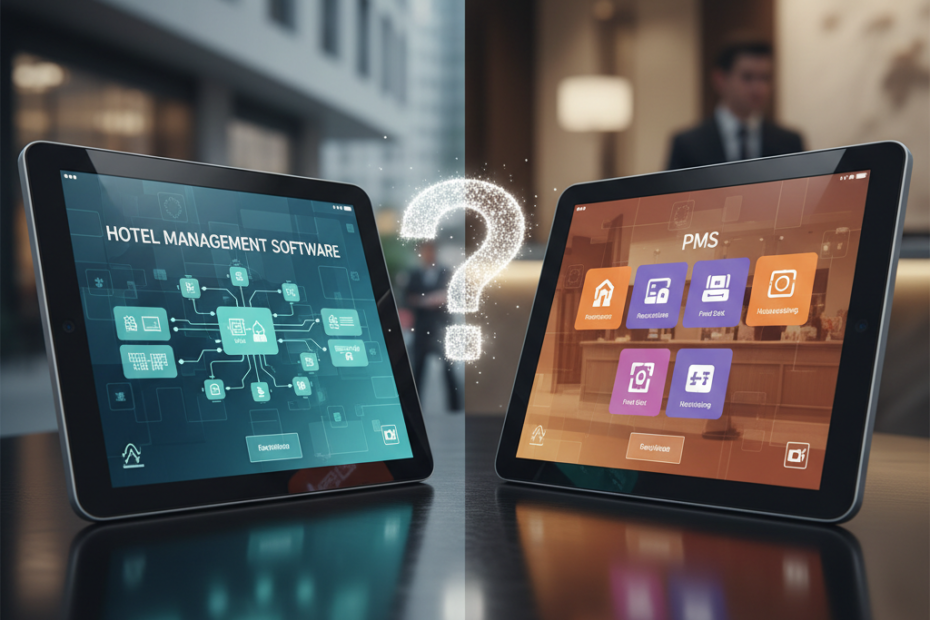
The core distinction is scope. A PMS is a specific type of hotel management software focused on property operations. Hotel management software, on the other hand, covers the entire spectrum of technology your hotel needs. Every PMS is hotel management software, but not every piece of hotel management software is a PMS.
Think of it this way: if your hotel were a car, the PMS would be the engine. It’s essential and powerful. Hotel management software would be the entire vehicle, including the engine, transmission, wheels, dashboard, and entertainment system. You need all the parts working together to reach your destination efficiently.
Why the Confusion Exists
Many people use these terms interchangeably because historically, PMS platforms were the only significant software hotels used. In the past, properties managed revenue, distribution, and guest communication manually or through separate, disconnected systems. As technology evolved, vendors began adding more features to their PMS offerings, blurring the lines between a pure PMS and comprehensive hotel management software.
Today, platforms like Aiosell and other modern solutions offer integrated suites that combine PMS functionality with channel management, booking engines, and analytics. This integration has made the terminology even more confusing for hoteliers trying to evaluate their options.
What Indian Hoteliers Need
The Indian hospitality market has unique requirements that influence software selection. Hotels here need systems that handle multiple payment gateways, support GST compliance, integrate with popular OTAs like MakeMyTrip and Goibibo, and offer multilingual interfaces for diverse staff and guests.
Most properties in India benefit from comprehensive hotel management software rather than a standalone PMS. Why? Because guest expectations have risen dramatically. Travelers now expect seamless online booking, instant confirmation, mobile check-in, personalized communication, and integrated loyalty programs. Delivering these experiences requires multiple connected systems working together.
Integration Is the Game Changer
The real power of modern hotel management software lies in integration. When your PMS talks to your channel manager, you avoid overbookings. When your CRM connects to your booking engine, you can offer returning guests personalized rates. When your POS system syncs with your PMS, billing becomes automatic and error-free.
Aiosell addresses this need by offering unified solutions built for the Indian market. These systems reduce the complexity of managing multiple vendor relationships and eliminate the technical headaches of maintaining integrations between different software products.
Making the Right Choice for Your Property
When evaluating hotel management software in India, start by assessing your actual needs. A small boutique hotel with 15 rooms might do well with a robust PMS and a few add-on tools. A 100-room business hotel in Bangalore or Mumbai will likely need a full-featured hotel management platform with advanced revenue management and distribution capabilities.
Look for solutions that offer scalability. Your property might be small today, but if you plan to expand or add locations, you’ll want software that grows with you. Cloud-based systems typically offer this flexibility better than traditional on-premise solutions.
Consider the total cost of ownership, not just the monthly subscription fee. Factor in implementation time, training requirements, integration costs, and ongoing support. Some vendors charge extra for features that others include as standard, so compare carefully.
Conclusion
Hotel management software and PMS are not the same, though they’re closely related. A PMS is a critical component of hotel management software, focused specifically on property operations. Hotel management software is the broader ecosystem of tools your property needs to compete effectively. For most Indian hoteliers, the question isn’t whether to choose one or the other, but rather which comprehensive hotel management platform offers the right balance of features, integration, ease of use, and value. Understanding this distinction helps you ask better questions, evaluate vendors more effectively, and ultimately select technology that truly supports your business goals.