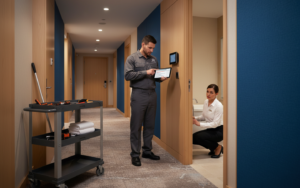
Hotel staffing requirements change with occupancy levels, guest arrivals, departures and seasonal demand. A hotel running at 40% occupancy needs a different staffing arrangement from one operating at 90% occupancy.
When managers follow fixed staffing schedules throughout the year, teams often face two problems. During busy periods, employees struggle to manage workloads. During quieter periods, hotels might schedule more staff than daily operations require.
Forecasting hotel staffing needs around occupancy patterns helps HR managers and department heads plan shifts based on expected demand. A structured approach supports better workload distribution, service consistency and control over labour costs.
Why Occupancy-Based Staffing Matters
Occupancy provides a useful starting point for workforce planning. It indicates how many rooms hotels expect to sell, but managers should also consider arrivals, departures, group bookings and service requirements.
For example, a hotel with 80% occupancy and many same-day check-outs might need additional housekeeping support. A property with similar occupancy but fewer room changes might require a different arrangement.
Occupancy-based staffing helps hotels:
Match employee availability with expected guest demand.
Plan housekeeping workloads around room turnover.
Prepare front desk teams for arrival and departure peaks.
Arrange food service staff based on expected covers.
Reduce last-minute shift changes.
Review labour requirements across different seasons.
Hotel managers should use occupancy as one planning input rather than the only measure of staffing demand.
Analyse Historical Occupancy Patterns
Start by reviewing occupancy data from previous months and comparable periods. Historical records help managers identify recurring demand patterns.
For example, a business hotel might experience higher occupancy during weekdays, while a leisure property might receive more bookings during weekends and holidays.
HR managers should review:
Daily and monthly occupancy rates.
Weekday and weekend booking patterns.
Seasonal demand changes.
Group bookings and corporate reservations.
Average length of stay.
Check-in and check-out volumes.
Compare similar periods rather than relying on annual averages. A monthly occupancy figure might hide busy weekends and quieter weekdays.
Connect Occupancy Forecasts With Department Workloads
Each hotel department responds differently to changes in occupancy. Managers should translate expected room demand into practical staffing requirements.
Housekeeping
Housekeeping workload depends on occupied rooms, check-outs, stayover services and room turnaround deadlines.
Managers should review the number of rooms requiring full cleaning, the expected departure schedule and the time available before new arrivals.
A hotel expecting several group check-outs should plan housekeeping coverage accordingly. Supervisors should also consider room inspections, public-area cleaning and laundry requirements.
Front Desk
Front desk staffing depends on guest arrivals, departures, reservation changes and guest requests.
A high arrival volume within a short period might require additional reception support. Managers should review expected check-in times, group arrivals and payment or documentation requirements.
Food and Beverage
Restaurant and kitchen staffing should reflect expected meal demand, not room occupancy alone.
Managers should consider breakfast covers, event bookings, restaurant reservations and other food service requirements. A hotel with high occupancy and many guests on room-only plans might have different restaurant staffing needs from one with a full-board package.
Maintenance
Maintenance teams should account for routine inspections, open repair requests and equipment servicing. Higher occupancy might increase the need for faster response to guest room issues.
Managers should also avoid scheduling disruptive maintenance during periods of high guest activity.
Build a Staffing Forecast for Different Occupancy Levels
Hotels should create staffing plans for different demand levels. These plans give department heads a starting point when preparing weekly shifts.
The following example shows a simple planning framework. The occupancy bands are illustrative. Each hotel should set staffing levels based on property size, service standards, room configuration and employee productivity.
Occupancy level | Staffing approach | Management focus |
Below 40% | Review essential shift coverage | Control scheduled hours while maintaining service |
40% to 60% | Maintain standard department coverage | Match shifts with expected arrivals and departures |
61% to 80% | Increase coverage in busy departments | Prepare housekeeping and front desk teams |
Above 80% | Plan additional operational support | Manage peak workloads and service continuity |
Managers should also account for special events, large groups and unexpected booking changes. A property-wide occupancy figure does not always reflect demand across individual departments.
Hotel Staffing Needs Around Occupancy Patterns Checklist
Use this checklist when preparing weekly or monthly workforce plans.
Planning stage | Action |
Data review | Check historical occupancy and booking trends |
Forecasting | Review expected occupancy for the planning period |
Guest movement | Identify arrival, departure and group booking peaks |
Department review | Estimate workload for housekeeping, front desk and food service |
Shift planning | Match employee schedules with expected demand |
Leave planning | Review approved leave and employee availability |
Backup coverage | Identify employees available for approved support tasks |
Final review | Confirm staffing plans with department heads |
Monitoring | Compare actual occupancy and workload with forecasts |
Department heads should update the forecast when booking patterns change. Regular communication helps HR managers respond before staffing gaps affect guest service.
Hotel Staffing Needs Around Occupancy Patterns Best Practices
Accurate workforce planning requires regular data reviews and coordination between departments. These practices help hotels improve scheduling decisions.
Use rolling forecasts: Review expected occupancy every week and update staffing plans as new reservations arrive.
Consider room turnover: Occupied room count alone does not show housekeeping workload. Include check-outs, stayovers and expected room turnaround times.
Review event bookings: Weddings, conferences and group reservations often create additional work across front desk, food service and housekeeping.
Maintain backup coverage: Identify employees trained to support approved tasks during unexpected absences. Keep role boundaries and training requirements clear.
Track actual staffing hours: Compare scheduled hours with actual hours worked. Review differences during high-occupancy and low-occupancy periods.
Collect department feedback: Supervisors should report workload pressure, service delays and staffing gaps after each busy period.
These hotel staffing needs around occupancy patterns best practices help managers make adjustments based on operational evidence.
Monitor Forecast Accuracy and Staffing Performance
A staffing forecast should improve through regular review. Managers should compare predicted occupancy with actual occupancy and check whether staffing levels matched the workload.
Useful measures include:
Forecast occupancy versus actual occupancy.
Scheduled hours versus actual hours.
Overtime hours by department.
Housekeeping room turnaround time.
Front desk waiting time during peak arrivals.
Guest complaints linked to service delays.
Employee workload and shift feedback.
For example, if housekeeping repeatedly requires overtime during weekend departures, managers should review room turnover forecasts and shift allocation.
If front desk teams experience long queues during group arrivals, managers should examine arrival schedules and reception coverage.
Aiosell provides integrated hotel management technology that supports key hotel operations. Hotels should review how reservation and occupancy information supports workforce planning and coordination between departments.
Aiosell helps hotels reduce manual work through connected operational processes. Managers should combine relevant system information with department-level workload records when preparing staffing forecasts.
Conclusion
Hotel workforce planning works best when managers connect occupancy forecasts with actual department workloads. Historical data, guest movement, shift availability and service requirements help HR teams prepare more suitable schedules.
Forecasting hotel staffing needs around occupancy patterns gives Indian hotels a structured way to manage busy periods, quieter days and unexpected changes in demand.
Aiosell supports organised hotel operations through integrated technology. Combined with regular workforce reviews, connected operational information helps managers make informed staffing decisions and maintain consistent guest service.
Frequently Asked Questions
1. How does occupancy affect hotel staffing requirements?
Higher occupancy often increases demand for housekeeping, front desk and food service support. The actual requirement also depends on guest movement, service type and operational workload.
2. How often should hotels forecast staffing needs?
Hotels should review staffing forecasts weekly and update them when booking patterns change. Larger properties and hotels with frequent group bookings might need more frequent reviews.
3. Should hotels use occupancy alone to plan staff shifts?
No. Managers should also consider arrivals, departures, room turnover, restaurant demand, events, employee availability and service requirements.
4. Which departments need occupancy-based workforce planning?
Housekeeping, front desk, food and beverage, maintenance and reservations all benefit from demand-based planning. Each department should use workload measures relevant to its responsibilities.
5. How do hotels measure staffing forecast accuracy?
Compare forecast occupancy with actual occupancy, scheduled hours with actual hours and department workload with available staff. Review service delays and overtime to identify planning gaps.