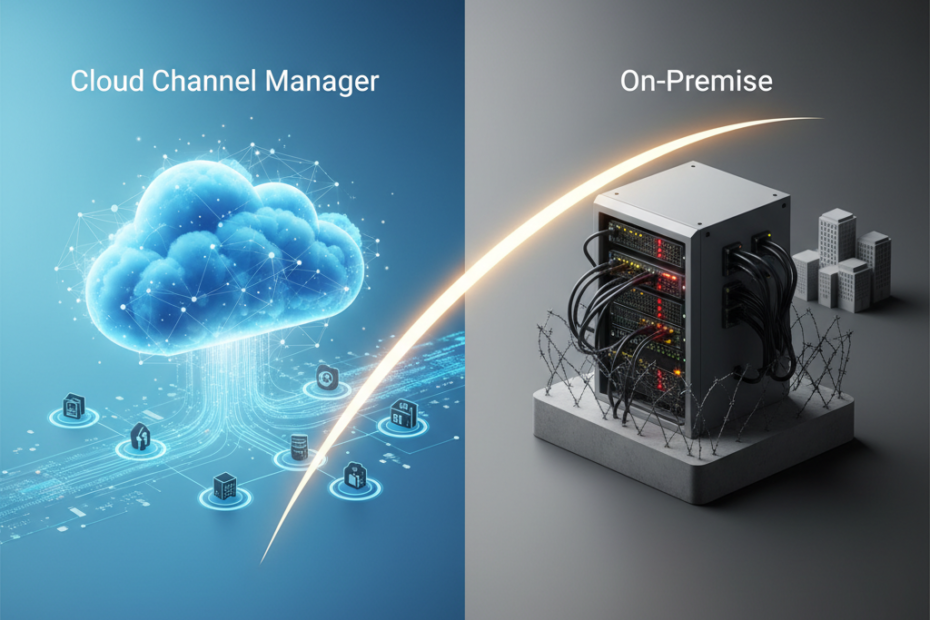
Channel partner management has reached a turning point. Businesses that rely on indirect sales networks must choose between traditional on-premise systems and modern cloud-based platforms. This decision shapes how quickly teams respond to market changes, how efficiently they scale operations, and how well they compete in 2026’s fast-paced digital economy. The cloud vs on premise channel manager debate is no longer about preference but about survival and growth in an increasingly connected marketplace.
The Shift to Cloud Channel Partner Management
Organizations across industries have moved critical operations to the cloud over the past five years. Channel management systems followed this trend as businesses recognized the limitations of legacy on-premise solutions. Cloud-based channel manager platforms now dominate new deployments, with adoption rates climbing above 70% in 2025 according to recent enterprise software surveys.
This shift reflects fundamental changes in how companies operate. Remote work, global partner networks, and real-time data needs have made location-independent access essential. On-premise systems that require VPN connections and manual updates struggle to meet these demands. Cloud platforms deliver instant access from any device, automatic updates, and seamless integration with other business tools.
Cost Efficiency and Resource Allocation
The financial case for cloud solutions stands out immediately. On-premise channel management systems demand substantial upfront investment in hardware, software licenses, and IT infrastructure. Companies must budget for server maintenance, security patches, system upgrades, and dedicated IT staff to keep everything running smoothly.
Cloud channel manager platforms flip this model entirely. Subscription-based pricing spreads costs over time and eliminates capital expenditure. Vendors handle all maintenance, security updates, and infrastructure management. Internal IT teams can focus on strategic initiatives rather than routine system administration. For mid-sized businesses especially, this shift frees up resources that drive actual revenue growth.
Hidden costs matter too. On-premise systems often require expensive customization projects, lengthy implementation timelines, and costly upgrades every few years. Cloud platforms typically include regular feature updates in the subscription price and offer faster deployment timelines measured in weeks rather than months.
Scalability and Flexibility Advantages
Business needs change rapidly. A company might add 50 new channel partners in one quarter or expand into three new markets simultaneously. On-premise systems struggle with this reality. Scaling up requires purchasing additional server capacity, installing new hardware, and reconfiguring systems. Scaling down leaves organizations paying for unused infrastructure.
Cloud platforms handle growth effortlessly. Adding users, expanding storage, or activating new features happens instantly through admin dashboards. Platforms like Aiosell demonstrate this flexibility by letting businesses adjust their channel management capabilities on demand without IT intervention. Partners in different regions can be onboarded quickly, and seasonal fluctuations in activity don’t require infrastructure changes.
This flexibility extends to integration capabilities. Modern cloud channel management systems connect easily with CRM platforms, marketing automation tools, and analytics software through APIs. On-premise systems often require custom integration projects that take months and cost tens of thousands of dollars.
Real-Time Data and Collaboration Benefits
Channel success depends on timely information. Partners need current product details, pricing updates, and promotional materials. Managers need visibility into partner performance, pipeline status, and market trends. On-premise systems create data silos and delay information flow through batch updates and manual synchronization.
Cloud platforms deliver real-time data access to all stakeholders simultaneously. When marketing launches a new campaign, partners see updated materials instantly. When a partner closes a deal, managers see pipeline updates immediately. This synchronization eliminates confusion, reduces errors, and speeds up decision-making across the entire channel ecosystem.
Collaboration features built into cloud platforms transform how teams work together. Partner portals, shared document libraries, and integrated communication tools create seamless workflows. On-premise systems require separate collaboration tools that don’t integrate well with core channel management functions.
Security and Compliance in Modern Cloud Systems
Security concerns once favored on-premise solutions. Organizations felt safer keeping data behind their own firewalls. This perception has reversed dramatically. Leading cloud providers now invest far more in security infrastructure than individual companies can afford. They employ dedicated security teams, implement advanced threat detection, and maintain certifications across multiple compliance frameworks.
Cloud channel management vendors typically offer enterprise-grade security features including encryption at rest and in transit, multi-factor authentication, role-based access controls, and detailed audit logs. They also handle compliance requirements for regulations like GDPR, SOC 2, and industry-specific standards. On-premise systems place the entire security burden on internal teams that often lack specialized expertise.
Data backup and disaster recovery present another advantage. Cloud platforms automatically replicate data across multiple geographic locations and provide point-in-time recovery options. On-premise systems require organizations to design and maintain their own backup strategies, often with significant gaps in protection.
Why Cloud Channel Wins for Future-Ready Organizations
The verdict is clear when weighing all factors. Why cloud channel wins comes down to speed, cost, flexibility, and capability. Organizations using cloud-based channel management platforms respond faster to market opportunities, scale operations efficiently, and deliver better experiences to channel partners. They avoid the technical debt and maintenance burden that drain resources in on-premise environments.
The competitive landscape reinforces this advantage. Companies still running on-premise channel systems find themselves outpaced by more agile competitors. Partners increasingly expect modern digital experiences that only cloud platforms can deliver consistently. As artificial intelligence, advanced analytics, and automation become standard channel management features, cloud platforms will extend their lead even further.
For businesses evaluating their channel management strategy in 2026, the question is not whether to move to the cloud but how quickly they can complete the transition. The gap between cloud and on-premise capabilities grows wider each year, and organizations that delay risk falling permanently behind in the race for channel partner mindshare and market share.