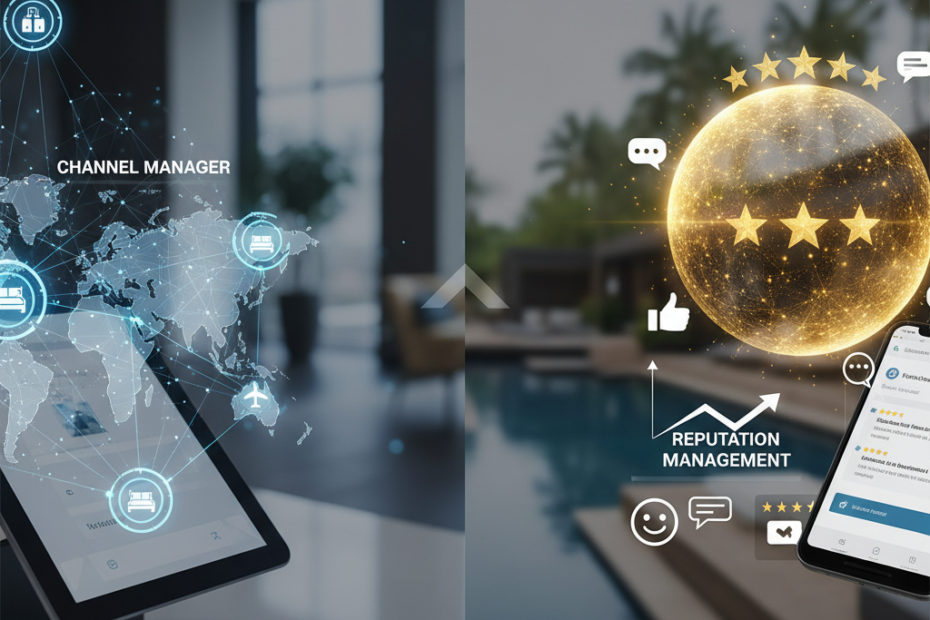
Hotels and hospitality businesses today face a dual challenge: managing room inventory across multiple booking platforms while maintaining a stellar online reputation. These two functions might seem separate, but they work hand in hand to drive bookings and revenue. A channel manager ensures your rooms appear on the right platforms at the right price, while reputation management monitors and responds to guest reviews. When you integrate both systems, you create a powerful engine that turns guest feedback into bookings and keeps your property competitive in a crowded market.
Understanding Channel Managers in Modern Hospitality
A channel manager is software that connects your property management system to online travel agencies, booking sites, and direct booking channels. It updates room availability and rates in real time across all platforms. When a guest books a room on Booking.com, the channel manager instantly removes that inventory from Expedia, your website, and every other connected channel. This automation prevents overbookings and saves hours of manual updates each day.
Modern channel managers do more than sync inventory. They provide analytics on which platforms drive the most bookings, help you adjust pricing based on demand, and track commission costs. For hotels managing five or more booking channels, a channel manager becomes essential infrastructure. Without one, you risk double bookings, lost revenue from outdated rates, and countless hours spent updating each platform manually.
The Role of Online Reputation Management
Online reputation management tracks what guests say about your property across review sites, social media, and booking platforms. It alerts you to new reviews, helps you respond quickly, and analyzes sentiment trends in guest feedback. Managing hotel reviews effectively can boost your visibility on booking sites, where properties with higher ratings and more responses typically rank higher in search results.
Reputation management tools aggregate reviews from multiple sources into one dashboard. Instead of logging into TripAdvisor, Google, Booking.com, and Expedia separately, you see all feedback in one place. This centralization makes it easier to spot recurring issues, track improvements over time, and respond promptly. Quick responses to negative reviews can often turn unhappy guests into advocates, while thanking guests for positive reviews reinforces good experiences and encourages repeat bookings.
How Channel Manager Reputation Integration Drives Results
The real power emerges when you connect channel management with reputation insights. Properties using integrated systems can push updated review scores and response rates directly to booking channels. Many online travel agencies factor review scores and management responses into their search algorithms. A property that responds to 90% of reviews within 24 hours often ranks higher than one that ignores guest feedback, even if their star ratings are similar.
Integrated platforms like Aiosell combine channel distribution with reputation monitoring, giving hoteliers a unified view of performance. When a negative review mentions a specific room type or amenity, you can cross-reference booking data to identify patterns. If guests consistently complain about noise in rooms facing the street, you can adjust pricing for those rooms or remove them from certain channels during peak periods. This data-driven approach turns subjective feedback into actionable business decisions.
Real-Time Adjustments Based on Guest Feedback
Channel manager reputation management integration allows dynamic responses to emerging trends. If several reviews mention that your breakfast service has improved dramatically, you can highlight this amenity more prominently across all booking channels. Conversely, if reviews indicate housekeeping issues, you can temporarily reduce inventory on high-visibility channels while you address the problem, protecting your overall rating.
This responsiveness extends to pricing strategy. Properties with strong recent reviews can command higher rates, while those working through reputation challenges might need to adjust pricing to maintain occupancy. Integrated systems provide the data and tools to make these adjustments quickly across all channels, maximizing revenue while protecting long-term reputation.
Best Practices for Managing Both Systems
Start by ensuring your channel manager connects to all major booking platforms relevant to your market. Include global players like Booking.com and Expedia, regional platforms popular in your area, and your direct booking engine. More channels mean more visibility, but only if you can manage them efficiently.
For reputation management, claim your profiles on all major review sites and set up automated alerts for new reviews. Respond to every review within 24 to 48 hours. Thank guests for positive feedback and address concerns raised in negative reviews with specific solutions. Avoid generic responses; personalize each reply to show you read and care about the feedback.
Create a weekly routine to review analytics from both systems. Look for correlations between booking patterns and review trends. If bookings drop after a cluster of negative reviews, you know reputation directly impacts revenue. If certain channels drive guests who leave better reviews, consider allocating more inventory there.
Training Your Team for Success
Technology only works when your team knows how to use it. Train front desk staff to mention review sites during checkout, encouraging satisfied guests to share their experiences. Teach housekeeping and maintenance teams how their work directly affects online ratings. When everyone understands the connection between daily operations and online reputation, service quality improves across the board.
Designate one person or team to monitor both systems daily. This role should have authority to make quick decisions about inventory allocation, respond to reviews, and flag issues that need management attention. Consistent monitoring prevents small problems from becoming reputation crises.
Measuring Success and ROI
Track specific metrics to measure the impact of integrated channel manager reputation management. Monitor your average review score across all platforms, response rate and time, booking conversion rates by channel, and revenue per available room. Compare these metrics before and after implementing integrated systems to quantify improvements.
Most properties see measurable results within three to six months. Review scores typically improve as response rates increase, which often correlates with higher search rankings on booking platforms. Better visibility drives more bookings, creating a virtuous cycle where improved reputation leads to more guests, more positive reviews, and stronger performance.
Conclusion
Channel managers and reputation management systems serve different functions, but they share a common goal: maximizing bookings and revenue. When you integrate these tools, you create a feedback loop where guest experiences inform distribution strategy and channel performance guides service improvements. Properties that master both systems gain a significant competitive advantage, appearing more prominently in search results while commanding higher rates through better reputations. The investment in integrated technology pays dividends through increased efficiency, better guest satisfaction, and stronger financial performance.