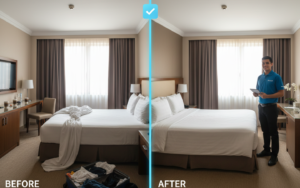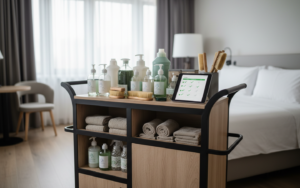
A hotel group operates several franchised properties across different US cities. Each location follows the same brand standards, but guest feedback tells a different story. One property receives consistent cleanliness ratings, while another faces repeated complaints about bathrooms, linen and room readiness.
This difference often points to gaps in training, supervision, inspection procedures or reporting. Managing housekeeping quality across franchised hotel locations requires a consistent operating framework that works across properties while allowing local teams to manage daily demands.
For hotel owners, general managers and operations leaders, the goal is to establish measurable standards, compare performance and address recurring issues before they affect guest satisfaction.
Why Housekeeping Quality Varies Across Franchised Properties
Franchised hotels operate under shared brand expectations, but daily housekeeping activities often depend on local management and staffing.
Differences in employee experience, room layouts, occupancy levels, supplier arrangements and supervisory practices affect cleaning outcomes.
Common causes of inconsistent quality include:
Different room-cleaning procedures across locations.
Inconsistent employee training.
Inspection criteria that vary between supervisors.
Delayed reporting of room defects.
Limited visibility into property-level performance.
Different approaches to handling guest complaints.
Incomplete follow-up after failed inspections.
A group-wide framework helps management identify these gaps. It also gives property managers a consistent reference for training, inspection and corrective action.
Step 1: Establish Group-Wide Housekeeping Standards
The first step is to define the minimum cleaning and room-readiness standards expected at every property.
The brand or central operations team should create a common standards document. Local managers should use the same criteria when training employees and inspecting guest rooms.
The standards should cover:
Bedroom cleanliness and presentation.
Bathroom sanitation and supplies.
Linen condition and bed presentation.
Floor and carpet cleanliness.
Furniture and fixture condition.
High-touch surface cleaning.
Waste removal and room presentation.
Reporting of maintenance concerns.
Standards should describe observable outcomes. For example, “bathroom mirrors must be free from visible marks” gives employees a clearer requirement than “clean the bathroom properly”.
Management should also identify property-specific requirements. A full-service hotel and a limited-service property might have different room features, but both should follow the relevant brand cleanliness standards.
Step 2: Create a Standardised Room Inspection Checklist
Inspection checklists help supervisors evaluate rooms using consistent criteria.
A checklist should use the same categories and scoring definitions across all franchised locations. This allows group managers to compare inspection results without relying on different local interpretations.
A standard checklist should include:
Inspection area | Quality requirement |
Bedroom | Clean surfaces, organised furniture and prepared bed |
Bathroom | Clean fixtures, sanitary surfaces and replenished supplies |
Linen | Fresh, presentable and free from visible damage |
Floors | Free from visible dirt, debris and stains |
High-touch areas | Handles, switches and frequently touched surfaces cleaned |
Room equipment | Visible defects reported for follow-up |
Final presentation | Room meets the property’s readiness standard |
Each item should have a clear pass or fail definition. Hotels should also decide whether certain failures require immediate correction before room release.
Step 3: Standardise Training Across Locations
A group-wide checklist will not produce consistent results unless employees understand how to follow it.
Central operations teams should create standard training materials for housekeeping employees and supervisors. Property managers should deliver the training using local room layouts and approved cleaning procedures.
Training should cover:
Standard room-cleaning sequences.
Correct use of approved cleaning products.
Linen handling and presentation.
Bathroom cleaning procedures.
High-touch surface requirements.
Room inspection expectations.
Reporting and escalation procedures.
Supervisors should observe employees during routine work and provide practical feedback. Refresher training should follow repeated inspection failures or changes to brand standards.
Management should also maintain training records. These records help identify properties where additional support is needed.
Step 4: Measure Housekeeping Performance at Property Level
Franchised hotel groups need comparable performance data. A shared set of key performance indicators helps central teams identify strong locations and properties requiring improvement.
Useful housekeeping measures include:
Room inspection pass rate.
Number of failed inspection items.
Repeat cleanliness complaints.
Average time to complete corrective actions.
Rooms delayed because of cleaning issues.
Guest feedback related to cleanliness.
Training completion rates.
The group should define each metric consistently. For example, every property should calculate its inspection pass rate using the same scoring method and reporting period.
Managers should review both group-wide results and individual property performance. A high average score might hide one location with repeated failures.
Step 5: Build a Consistent Corrective-Action Process
Inspection results have limited value unless teams act on failures.
When a room fails inspection, the supervisor should record the issue, assign corrective work and verify completion. Repeated failures should trigger a review of the underlying process.
A consistent corrective-action process should include:
Record the failed inspection item.
Identify the responsible team or supervisor.
Assign a correction deadline.
Complete the required action.
Reinspect the affected area.
Record the final outcome.
Escalate repeated failures to property management.
Central operations teams should review recurring issues across locations. If several properties report the same problem, the group might need to revise training, cleaning instructions or supplier standards.
Step 6: Conduct Cross-Property Quality Reviews
Local supervisors understand their properties, but central reviews provide a wider view of brand consistency.
Hotel groups should schedule periodic quality reviews across franchised locations. These reviews should use the same inspection criteria and reporting format.
Cross-property reviews help management:
Compare inspection results.
Identify recurring cleanliness failures.
Review differences in training practices.
Share effective operating procedures.
Identify locations requiring additional support.
Track progress after corrective actions.
Where practical, central teams should also review a sample of inspection records and guest feedback. This helps confirm whether local reporting reflects the actual guest experience.
Step 7: Evaluate Technology for Multi-Property Visibility
Managing several locations creates a need for reliable operational information. Hotel groups should assess whether their technology provides the reporting and access required by central and property-level teams.
When evaluating hotel management software, consider:
Multi-property access and user permissions.
Reservation and room-status visibility.
Property-level reporting.
Group-level performance comparisons.
Data access for local managers.
Integration with existing operational tools.
Aiosell provides connected hotel technology for reservations, front-desk operations and revenue management. Groups evaluating Aiosell should confirm the available multi-property reporting, access controls and integrations against their operational requirements.
A hotel property management system supports core reservation and front-desk processes, but dedicated housekeeping inspections and task tracking require confirmation. Where these functions are unavailable, groups should retain an approved checklist or separate quality-management tool.
Technology should support a clearly defined operating process. It should not replace inspection standards, supervisor accountability or employee training.
Housekeeping Quality Across Franchised Hotel Locations Checklist
Hotel groups should review the following checklist when evaluating their quality framework.
Management area | Review requirement |
Brand standards | Shared cleaning and room-readiness criteria |
Inspection process | Standard checklist and scoring method |
Employee training | Consistent training materials and records |
Performance tracking | Comparable property-level KPIs |
Corrective actions | Assigned tasks, deadlines and verification |
Quality reviews | Periodic cross-property inspections |
Technology | Suitable reporting, access and integration capabilities |
Group managers should assign an owner to each area. Regular reviews help confirm whether every property follows the same operating expectations.
Conclusion
Consistent housekeeping standards help franchised hotel groups protect brand expectations and reduce differences in guest-room quality. Shared checklists, structured training, comparable KPIs and verified corrective actions give managers a practical framework for improvement.
Managing housekeeping quality across franchised hotel locations also requires regular communication between central operations teams and property managers. Technology supports visibility when its features match the group’s requirements, while local supervisors remain responsible for daily execution.
Frequently Asked Questions
How do hotel groups maintain consistent housekeeping standards across franchised properties?
Hotel groups should establish shared cleaning standards, use standard inspection checklists, train employees consistently and review property-level performance. Regular cross-property audits help identify differences.
Which KPIs should hotel groups use to measure housekeeping quality?
Useful KPIs include room inspection pass rates, repeat cleanliness complaints, failed inspection items, corrective-action completion time, room delays and guest cleanliness feedback.
How often should franchised hotels conduct housekeeping inspections?
Hotels should conduct routine room inspections according to their operating standards and occupancy requirements. Central quality reviews should take place at planned intervals and after recurring performance issues.
How should managers address repeated housekeeping failures?
Managers should document the failed inspection, identify the cause, assign corrective action and verify completion. Repeated failures require a review of training, supervision and cleaning procedures.
What technology should hotel groups evaluate for housekeeping quality management?
Hotel groups should assess multi-property access, reporting, room-status visibility, user permissions and integrations. They should also verify whether dedicated housekeeping inspection and task-management features are available.