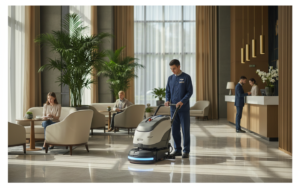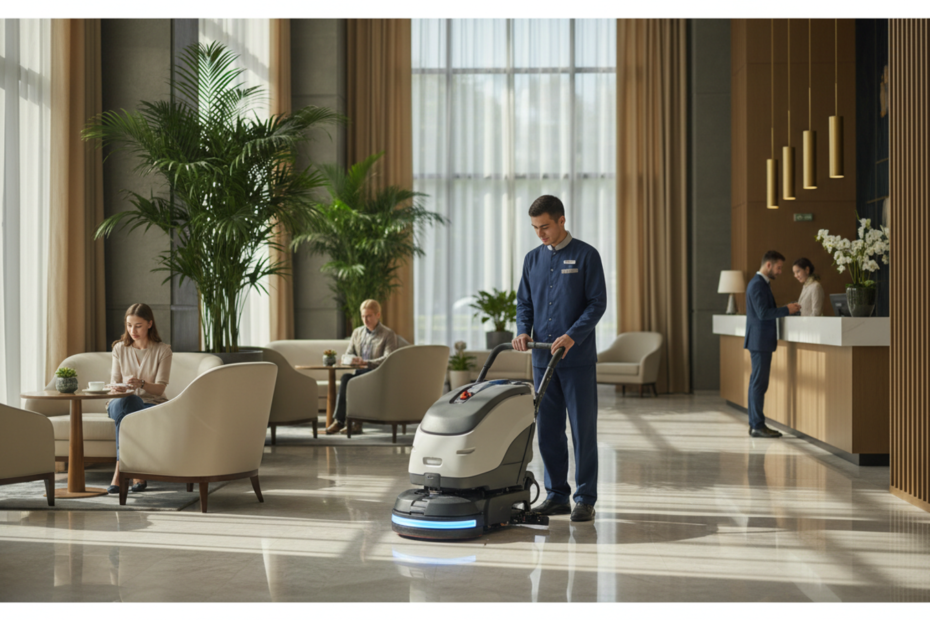
A hotel lobby becomes crowded shortly after breakfast. Guests move towards the lifts, visitors wait near reception, and housekeeping employees need to clean the floor and seating areas. Cleaning during this busy period creates disruption. Waiting too long, though, allows dirt and waste to accumulate.
Hotels need cleaning schedules that reflect how guests use shared spaces throughout the day. Scheduling public-area cleaning around hotel occupancy patterns helps housekeeping teams select suitable cleaning times, assign staff and maintain cleanliness without interrupting normal hotel activity.
For US hotel owners, general managers and operations leaders, a structured schedule also helps allocate labour efficiently and maintain consistent public-area standards.
Why Public-Area Cleaning Needs an Occupancy-Based Schedule
Public areas experience different levels of activity throughout the day. A lobby might be busiest during morning departures and evening arrivals. Restaurants, elevators and meeting spaces follow their own usage patterns.
A fixed cleaning schedule might not reflect these changes. Employees might clean busy areas at inconvenient times while quieter spaces receive unnecessary attention.
Common scheduling challenges include:
High guest movement during planned cleaning periods.
Cleaning staff shortages during peak activity.
Spills and waste between scheduled cleaning rounds.
Meeting and event schedules changing area usage.
Poor coordination between housekeeping and front desk.
Inconsistent cleaning frequency across shifts.
An occupancy-based approach helps managers plan routine cleaning around expected demand while retaining flexibility for urgent requirements.
Step 1: Identify High-Traffic Public Areas
The first step is to list the shared spaces that require regular attention.
Hotels should assess each area based on guest movement, usage frequency, cleanliness requirements and safety considerations.
Typical areas include:
Main lobby and reception.
Elevators and lift lobbies.
Corridors and staircases.
Public restrooms.
Restaurant entrances and shared dining areas.
Meeting and event spaces.
Fitness centres and waiting areas.
Each area needs a suitable cleaning frequency. Public restrooms and entrances often require more frequent checks than low-traffic corridors.
Managers should also identify surfaces and facilities requiring specific cleaning procedures. Employees should follow approved product instructions and the hotel’s hygiene standards.
Step 2: Review Hotel Occupancy and Guest Movement
Occupancy figures help managers understand demand, but room occupancy alone does not explain public-area traffic.
Hotels should review several operational indicators:
Expected arrivals and departures.
Breakfast and restaurant service periods.
Group check-ins and check-outs.
Meeting and event schedules.
Weekend and holiday patterns.
Local events affecting visitor movement.
For example, a hotel with high morning departures should schedule lobby and elevator cleaning around the expected guest flow. A property hosting an evening conference should plan additional cleaning before and after the event.
Managers should use historical patterns and current reservation information to identify busy periods. Front-desk teams and event coordinators should share relevant schedule changes with housekeeping.
Step 3: Divide the Day Into Cleaning Periods
A daily schedule should give employees clear cleaning windows while allowing supervisors to adjust assignments when activity changes.
A practical schedule might include:
Time period | Public-area activity | Cleaning focus |
Early morning | Before breakfast and departures | Restrooms, lobby and entrances |
Morning peak | Breakfast and guest departures | Spot cleaning and urgent spills |
Midday | Lower lobby traffic in many properties | Floors, seating and corridors |
Afternoon | Guest arrivals and event preparation | Reception, entrances and lift areas |
Evening | Restaurant and visitor activity | Restrooms and high-touch areas |
Overnight | Lower guest movement | Detailed cleaning and scheduled floor care |
Hotels should adapt these periods to their own operating hours. The schedule should not assume every property experiences the same traffic pattern.
Step 4: Match Cleaning Frequency to Area Usage
Not every public area needs the same cleaning frequency. Managers should set cleaning intervals based on traffic, visible conditions and hygiene requirements.
A public restroom might need several inspections during a shift. A quiet corridor might need fewer routine checks, with additional attention when required.
A frequency plan should specify:
Area or location.
Cleaning task.
Expected frequency.
Responsible employee or team.
Required inspection standard.
Reporting method for urgent issues.
Supervisors should distinguish between routine cleaning and immediate response tasks. Spills, broken glass and other hazards require prompt attention regardless of the planned schedule.
Step 5: Coordinate Cleaning With Front Desk and Other Departments
Housekeeping teams need advance information about changes in guest activity.
The front desk should communicate large arrival groups, delayed departures and unusual traffic patterns. Restaurant and event teams should share service schedules and expected attendance.
A clear coordination process should include:
Review the daily occupancy and arrival forecast.
Check restaurant, meeting and event schedules.
Identify areas likely to experience peak activity.
Assign cleaning periods and employee responsibilities.
Share schedule changes with relevant teams.
Escalate urgent cleaning and safety concerns.
Scheduling public-area cleaning around hotel occupancy patterns works best when departments share timely information. Managers should include these updates in shift briefings.
Step 6: Build Flexibility Into Staff Assignments
A fixed timetable provides structure, but public-area conditions change throughout the day. Hotels should reserve some staff capacity for urgent cleaning and unexpected traffic.
Supervisors should identify backup employees and define who handles additional assignments.
For example, if a meeting ends earlier than planned, the housekeeping supervisor should arrange a quick inspection of the affected area. If a lobby receives an unexpected group arrival, the team should prioritise visible waste and immediate safety concerns.
Managers should also consider:
Employee availability by shift.
Travel time between cleaning areas.
Equipment and supply access.
Required breaks.
Event-related workload.
Backup coverage for urgent tasks.
A balanced schedule reduces rushed work and helps employees maintain consistent standards.
Step 7: Inspect Results and Adjust the Schedule
Managers should review cleaning outcomes rather than measuring performance only by completed tasks.
Regular inspections help identify areas where the schedule does not match actual usage.
Useful performance measures include:
Public-area inspection pass rate.
Number of urgent cleaning requests.
Repeat cleanliness complaints.
Missed scheduled cleaning rounds.
Response time for reported spills.
Cleaning issues during peak periods.
Employee workload by shift.
If the lobby repeatedly becomes untidy before evening arrivals, managers should review the timing and frequency of cleaning rounds. If public restrooms receive repeated complaints, the property might need more frequent checks or a different staffing allocation.
Scheduling public-area cleaning around hotel occupancy patterns should remain a flexible process. Managers should review results regularly and update schedules when occupancy, events or guest behaviour changes.
Scheduling Public-Area Cleaning Around Hotel Occupancy Patterns Checklist
Hotel managers should use this checklist when reviewing their cleaning schedule.
Planning area | Required action |
Area mapping | Identify public spaces and their cleaning needs |
Occupancy review | Check arrivals, departures and expected traffic |
Time planning | Set suitable cleaning periods |
Frequency | Match cleaning intervals to area usage |
Department coordination | Share event and guest-flow updates |
Staff allocation | Assign primary and backup employees |
Urgent response | Define procedures for spills and hazards |
Performance review | Track inspections, complaints and missed rounds |
The housekeeping supervisor should review the schedule with employees at the start of each shift. Managers should also update the plan when event timings or occupancy forecasts change.
How Hotel Technology Supports Cleaning Schedule Coordination
Public-area cleaning depends on accurate operational information and communication between departments. Hotels should assess whether their technology supports access to reservation data, occupancy information and relevant reports.
Aiosell provides connected hotel technology for reservations, front-desk operations and revenue management. Hotels evaluating Aiosell should confirm the available reporting features and integrations before relying on the platform for occupancy-based housekeeping schedules.
A hotel management software platform should support the hotel’s wider operational information needs. Dedicated public-area cleaning assignments, inspection records and automated task alerts require separate feature verification. Where these functions are unavailable, hotels should maintain an approved cleaning schedule and task register.
Aiosell supports core hotel operations through connected technology. Housekeeping supervisors should continue to manage cleaning assignments, inspections and staff accountability through the property’s approved procedures.
Conclusion
Public-area cleaning schedules should reflect guest movement, occupancy trends and the daily activity of each hotel. Managers should identify high-traffic areas, set suitable cleaning frequencies and coordinate schedules with front-desk, restaurant and event teams.
Scheduling public-area cleaning around hotel occupancy patterns helps housekeeping teams use staff time effectively while maintaining shared-space standards. Regular inspections and schedule reviews help hotels respond to changing guest activity across US properties.
Frequently Asked Questions
How should hotels schedule public-area cleaning?
Hotels should review guest movement, occupancy, arrivals, departures and event schedules. Managers should assign cleaning periods based on area usage and retain capacity for urgent tasks.
Which public areas require the most frequent cleaning?
Hotel lobbies, public restrooms, entrances, elevators and restaurant areas often need frequent attention because of regular guest movement. Each property’s schedule should reflect actual usage.
How does hotel occupancy affect housekeeping schedules?
Occupancy influences arrivals, departures and guest movement. Managers should use these patterns to plan cleaning periods and assign employees where demand is highest.
How should hotels handle urgent public-area cleaning?
Hotels should define an immediate reporting process for spills, hazards and unexpected cleanliness issues. Supervisors should assign available employees and verify completion.
Which KPIs help evaluate public-area cleaning schedules?
Hotels should track inspection pass rates, urgent cleaning requests, missed rounds, repeat complaints and response times. These measures help managers identify scheduling gaps.