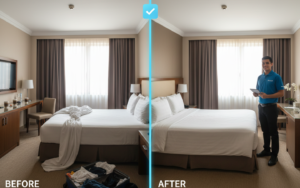
A guest checks into a limited-service hotel after a long journey. The room looks tidy, but the bathroom has leftover hair, the desk has dust and the towels are not properly arranged. Small oversights like these affect guest satisfaction and lead to complaints.
Housekeeping teams need clear inspection criteria to deliver consistent results across every room. Without defined standards, employees might judge cleanliness differently. Supervisors also struggle to identify recurring problems and measure room readiness.
Room-cleanliness audit standards for US limited-service hotels help managers set measurable expectations, inspect rooms consistently and address failures before guest arrival.
Why Limited-Service Hotels Need Consistent Room Audits
Limited-service hotels often operate with lean housekeeping teams and defined room-service routines. Employees must prepare rooms within scheduled turnaround times while maintaining consistent cleanliness.
A standard audit process helps managers:
Set the same cleanliness expectations across all rooms.
Identify missed cleaning tasks before check-in.
Reduce repeat housekeeping complaints.
Track recurring issues by room or task.
Support employee training and accountability.
Maintain consistent room presentation across shifts.
A room audit should assess visible cleanliness, hygiene, room condition and readiness. Managers should separate cleaning failures from maintenance defects because each requires a different corrective action.
Establishing Room-Cleanliness Audit Standards for US Limited-Service Hotels
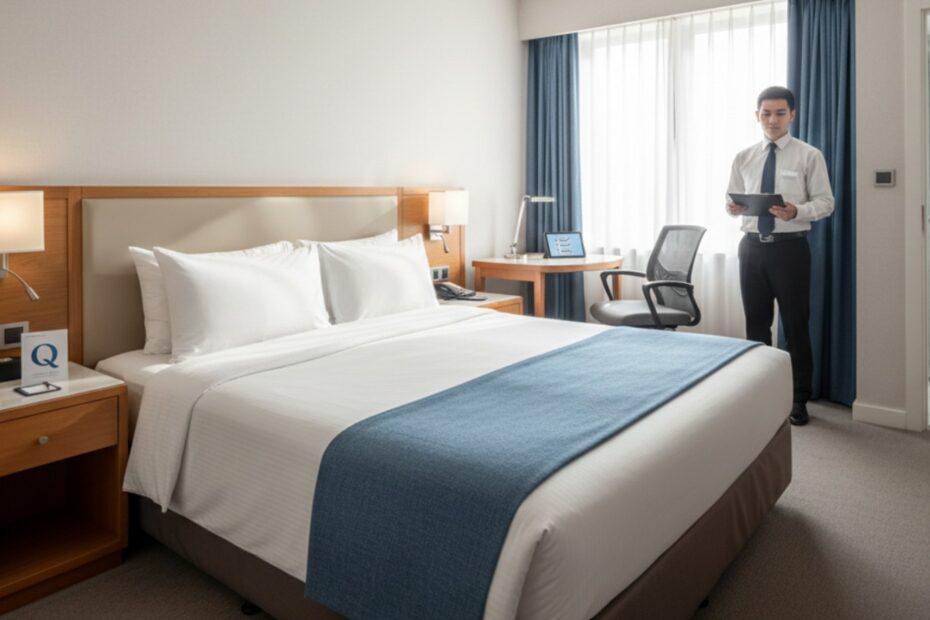
Start with a written inspection standard. Define what a clean and guest-ready room looks like in each area.
1. Set bedroom cleanliness criteria
The bedroom should look clean, organised and ready for guest use.
Inspect the following:
Bed linen is clean, dry and free from visible stains.
Pillows and bedding follow the hotel’s presentation standard.
Bedside tables and lamps have no visible dust.
Desks, chairs and other furniture have clean surfaces.
Floors and carpets have no visible dirt or debris.
Waste bins are empty and clean.
Windows and mirrors have no visible marks.
Drawers and storage areas are free from leftover guest items.
Include photographs in the inspection guide where visual examples help employees understand the expected result.
2. Define bathroom hygiene requirements
Bathrooms require close attention because guests notice visible hygiene problems quickly.
Check:
Toilets, sinks and shower areas are clean.
Taps and fixtures have no visible residue.
Mirrors and glass surfaces are free from watermarks.
Floors and corners have no hair or debris.
Towels are clean, dry and arranged correctly.
Soap and other approved amenities are replenished.
Drains are clear and free from unpleasant odours.
Waste bins are empty.
Supervisors should report leaks, damaged fixtures and other maintenance concerns separately.
3. Inspect high-touch surfaces
High-touch areas need consistent cleaning because guests frequently handle them.
Include:
Door handles and locks.
Light switches.
Remote controls.
Telephone handsets.
Desk surfaces.
Thermostat controls.
Drawer handles.
Frequently used furniture surfaces.
Specify the approved cleaning products and procedures. Employees should follow manufacturer instructions and hotel hygiene policies.
4. Check room equipment and presentation
Cleanliness audits should also identify visible problems affecting room readiness.
Inspect air-conditioning controls, televisions, lamps, charging points and other guest-facing equipment. Confirm the room has the required amenities and operating instructions.
Record damaged or non-functioning equipment for maintenance follow-up. A clean room should not pass the full readiness inspection when an essential guest facility remains unusable.
A Room-Cleanliness Audit Checklist for Housekeeping Teams
Use a consistent checklist for every inspected room. A simple pass, fail and not-applicable format helps supervisors record results.
Inspection area | Standard to check | Result |
Bedding | Clean linen, no visible stains, correct presentation | Pass / Fail |
Furniture | Dust-free surfaces and clean drawers | Pass / Fail |
Floors | No visible dirt, hair or debris | Pass / Fail |
Bathroom | Clean toilet, sink, shower and fixtures | Pass / Fail |
Mirrors | Free from visible marks and water spots | Pass / Fail |
Towels | Clean, dry and correctly arranged | Pass / Fail |
High-touch areas | Clean handles, switches and controls | Pass / Fail |
Waste bins | Empty and clean | Pass / Fail |
Amenities | Required items replenished | Pass / Fail |
Equipment | Guest-facing equipment checked for visible defects | Pass / Fail |
Add a room number, inspection date, employee name and supervisor details to each completed audit.
For failed items, record the exact problem and assign corrective action. Avoid general comments such as “room not clean.” Specific observations help employees understand what needs attention.
Best Practices for Conducting Room Cleanliness Audits
Use the same inspection process across shifts
Every supervisor should follow the same checklist and scoring rules. This reduces differences between individual inspection styles.
Train supervisors with sample rooms and practical demonstrations. Review inspection results together before introducing the standards across the property.
Define pass and fail criteria
A vague cleanliness standard creates inconsistent results.
For example, define whether visible dust on a bedside table counts as a failure. Specify the acceptable condition of bathroom fixtures, floors and bedding.
Set clear rules for critical failures. A room with an unhygienic bathroom or visibly soiled bedding should not receive approval for guest occupancy until the issue is corrected.
Set an inspection frequency
Managers should decide how often supervisors inspect completed rooms.
A practical approach includes:
Inspecting a sample of rooms each day.
Reviewing rooms after repeat guest complaints.
Checking rooms handled by newly trained employees.
Increasing inspections during high-occupancy periods.
Reviewing recurring failures by room and cleaning task.
The inspection sample should reflect room volume, staffing levels and previous audit results.
Record failures and corrective actions
An audit provides value only when employees act on the findings.
For every failed item, document the issue, assign responsibility and set a completion deadline. Reinspect the room before approving guest readiness when the failure affects cleanliness or hygiene.
Review repeat failures during housekeeping briefings. Use the findings to update training and cleaning procedures.
Track measurable performance indicators
Managers should monitor results over time instead of relying on occasional observations.
Useful housekeeping measures include:
Room inspection pass rate.
Number of failed items per inspection.
Repeat cleanliness complaints.
Average time to correct failed items.
Rooms requiring re-cleaning.
Recurring failures by room or cleaning task.
Use these measures to identify training gaps and improve daily housekeeping routines.
How Hotel Technology Supports Housekeeping Standards
Consistent room inspections depend on clear communication between housekeeping, front desk and management. Teams need accurate room status information to coordinate cleaning, inspection and guest arrivals.
A suitable hotel management software platform helps hotels organise reservation and front-desk information. Managers should confirm whether a platform offers dedicated housekeeping inspection features before relying on the system to record audit results or assign cleaning tasks.
Aiosell provides connected hotel technology for reservation management, front-desk operations and revenue management. Hotels evaluating Aiosell should review its available integrations and workflows alongside their housekeeping requirements.
A hotel property management system also supports room-related operational coordination through the features available in the selected platform. Hotels should maintain a separate approved checklist or inspection tool when dedicated audit functionality is unavailable.
Technology supports coordination, while written standards and supervisor checks maintain cleaning quality.
Conclusion
Consistent room inspections help limited-service hotels maintain cleanliness across every shift. Clear criteria also give housekeeping employees a practical reference for completing and correcting their work.
Set measurable standards for bedrooms, bathrooms, high-touch surfaces and guest-facing equipment. Use one inspection checklist, record failed items and review recurring problems regularly.
With defined responsibilities and suitable hotel management software, Aiosell supports organised front-desk and reservation operations while hotel teams maintain their housekeeping standards.
Frequently Asked Questions
1. What should a hotel room-cleanliness audit include?
A room-cleanliness audit should cover bedding, furniture, floors, bathrooms, mirrors, high-touch surfaces, towels, amenities and guest-facing equipment. Supervisors should record failed items and required corrective actions.
2. How often should limited-service hotels inspect guest rooms?
Hotels should set inspection frequency according to room volume, staffing and previous audit results. Daily sample inspections and additional checks after repeat complaints help identify recurring problems.
3. Who should conduct hotel room-cleanliness audits?
Housekeeping supervisors or trained inspection staff should conduct audits. Managers should train inspectors to follow the same checklist and scoring criteria.
4. What happens when a room fails a cleanliness inspection?
The supervisor should record the failed item, assign corrective work and arrange a reinspection. Rooms with unresolved hygiene or cleanliness failures should not receive guest-ready approval.
5. Which metrics help hotels measure housekeeping quality?
Hotels should track inspection pass rates, repeat cleanliness complaints, re-cleaning frequency, failed items and corrective-action completion time. These measures help managers identify recurring issues and training needs.