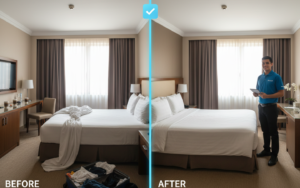
At 2:00 AM, a guest reports a room issue while another guest arrives for a late check-in. The night employee also needs to review pending payments, update reservation records and prepare the morning handover. Without clear procedures, important tasks compete for attention.
Overnight teams often work with fewer employees than daytime shifts. They still handle guest requests, reservation updates, safety concerns and essential administrative duties.
Standardising overnight operations at 24-hour US lodging properties helps hotels maintain consistent service across every shift. A written process gives night employees clear priorities, responsibilities and escalation steps.
Why Overnight Operations Need Standard Procedures
Night shifts have different operational demands from daytime shifts. Fewer employees might be available, but guests continue to expect reliable service.
Common overnight responsibilities include:
Processing late arrivals and departures.
Responding to guest complaints and requests.
Reviewing reservations and room assignments.
Handling approved payments and billing questions.
Monitoring unresolved maintenance issues.
Completing night audit procedures.
Preparing reports for morning teams.
Escalating safety and security concerns.
When employees follow different methods, hotels face inconsistent records, delayed responses and incomplete handovers.
A standard operating procedure (SOP) defines how employees complete recurring tasks. It also identifies who handles exceptions and when managers need to intervene.
A Checklist for Standardising Overnight Operations at 24-Hour US Lodging Properties
A structured checklist helps night teams complete essential work without overlooking guest needs.
1. Prepare a clear shift handover
The incoming night employee should receive a summary of outstanding tasks before the previous shift ends.
The handover should cover:
Expected late arrivals.
Pending guest requests.
Room changes and unresolved complaints.
Maintenance concerns.
Payment or billing issues requiring follow-up.
Group bookings and special arrangements.
Safety incidents or manager instructions.
Record important details in the hotel’s approved system or handover log. Avoid relying on verbal updates alone.
2. Establish late check-in procedures
Late arrivals need a consistent check-in process, even when the hotel has limited overnight staffing.
Employees should:
Confirm the guest’s reservation reference.
Verify the guest’s identity under hotel policy.
Check room assignment and availability.
Review outstanding payment requirements.
Provide access information and essential property details.
Record the completed check-in.
Define a process for walk-in guests and reservations with missing or conflicting details. Employees should know when manager approval is required.
3. Standardise guest request handling
Guest requests continue throughout the night. A consistent process helps employees prioritise urgent issues.
Classify requests by urgency. For example, an access problem or safety concern needs faster attention than a routine amenity request.
For each request, record:
Guest room or reservation reference.
Request details.
Time received.
Employee responsible.
Action taken.
Pending follow-up.
Provide guests with a realistic response time. If another department needs to act during the morning, include the request in the handover.
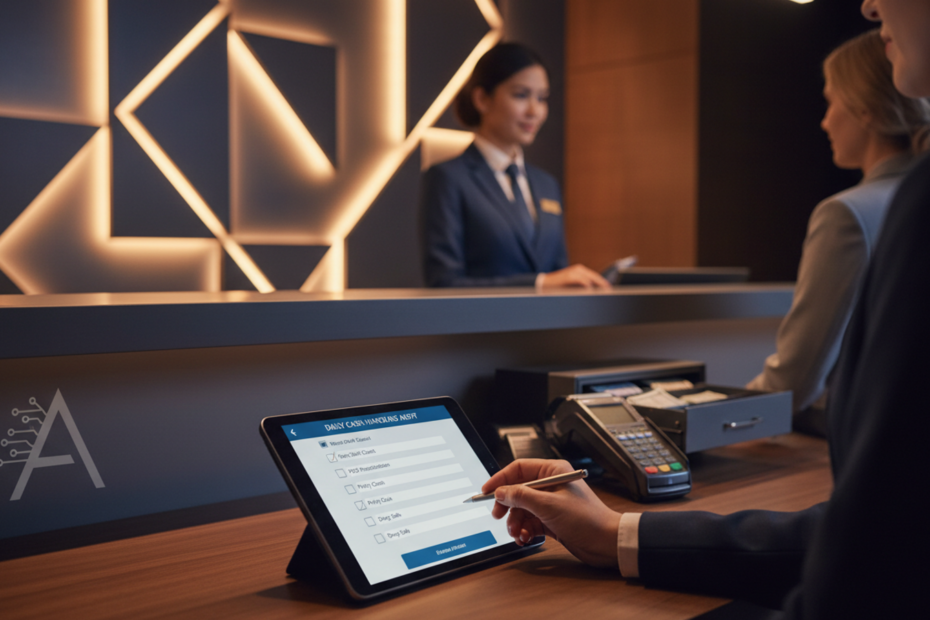
4. Define night audit responsibilities
Night audit activities help hotels review daily transactions and prepare records for the next business day.
The exact procedure depends on the hotel’s accounting practices and property management system.
A typical checklist includes:
Reviewing the day’s completed transactions.
Checking room charges and payment postings.
Identifying unsettled balances.
Reviewing reservation and occupancy records.
Checking discrepancies that need investigation.
Completing approved end-of-day procedures.
Preparing required reports.
Employees should follow the hotel’s approved accounting controls. They should not make unsupported adjustments to resolve unexplained differences.
5. Create a process for maintenance and safety concerns
A room issue reported overnight might require immediate attention or a morning follow-up.
Define which situations require urgent escalation. Examples include water leaks, electrical hazards, broken entry locks and conditions affecting guest safety.
For non-urgent issues, record the room number, reported problem, time and action taken. Notify the relevant department through the hotel’s approved communication process.
Night employees should never delay escalation when a situation presents an immediate risk.
6. Prepare a structured morning handover
The morning team needs accurate information about unresolved work.
Before ending the shift, employees should review pending guest requests, room status concerns, billing discrepancies and incidents.
Use a standard handover format with clear ownership. Include the next action and responsible department rather than writing vague entries such as “follow up required.”
Best Practices for Managing Overnight Hotel Teams
Set clear priorities
Employees need to know which responsibilities take priority when several requests arrive together.
A practical priority order might be:
Immediate guest safety and security concerns.
Urgent access and room-related problems.
Guest arrivals and departures.
Time-sensitive payment or reservation issues.
Routine administrative work.
Morning preparation and reporting.
Managers should adapt the order to the property’s staffing, facilities and operating procedures.
Create written procedures for common exceptions
Standard procedures should explain how employees handle situations outside the normal workflow.
Examples include:
A guest arrives without a reservation.
A booking does not appear in the system.
A payment fails during check-in.
A guest disputes a charge.
A room becomes unavailable.
An employee receives a safety complaint.
Include escalation contacts and approval limits. Employees should not make policy exceptions without the required authority.
Use consistent shift logs
A standard shift log gives employees a shared record of overnight activity.
Use clear language and factual descriptions. Record the action taken, current status and next step.
Avoid unnecessary personal information about guests. Keep sensitive details within approved systems and restrict access to authorised employees.
Train employees across recurring tasks
Night employees should understand the procedures they are expected to perform.
Training should cover check-in, guest communication, reservation records, night audit, emergency escalation and shift handovers.
Use scenario-based practice. For example, ask employees how they would handle a late arrival when the assigned room is unavailable.
Review overnight performance regularly
Managers should review overnight operations to identify recurring delays and incomplete tasks.
Useful measures include:
Pending tasks at shift end.
Late check-in issues.
Unresolved guest complaints.
Night audit discrepancies.
Repeated room or maintenance concerns.
Handover completion rates.
Use these findings to update procedures and provide targeted staff training.
How Hotel Technology Supports Overnight Operations
Night employees often work with limited staffing and several competing responsibilities. Access to accurate reservation and guest information helps them make informed decisions.
A suitable hotel management software platform supports reservation records, front-desk workflows and access to relevant operational information.
Aiosell provides connected hotel technology for reservation management, front-desk operations and revenue management. Hotels evaluating Aiosell should review its available integrations and workflows against their overnight operating requirements.
A hotel property management system also helps staff access reservation and room information during late check-ins. Managers should confirm the available reporting, user permissions and night audit functions before relying on a platform for specific tasks.
Technology supports daily coordination. Clear procedures, trained employees and manager oversight still determine how consistently overnight teams handle exceptions.
Conclusion
Overnight teams handle essential guest and administrative responsibilities while working with limited staffing. Unclear procedures increase the risk of missed requests, inaccurate records and incomplete handovers.
Standardise recurring tasks with written checklists, defined escalation rules and consistent shift logs. Review overnight performance regularly and update procedures when recurring issues appear.
With suitable hotel management software and clear staff responsibilities, Aiosell supports organised front-desk and reservation operations across every shift.
Frequently Asked Questions
1. What are the main responsibilities of an overnight hotel team?
Overnight teams typically handle late check-ins, guest requests, reservation updates, approved payment tasks, night audit procedures, safety escalations and morning handovers.
2. What should an overnight hotel shift checklist include?
A checklist should cover shift handover, late arrivals, guest requests, reservation records, night audit tasks, maintenance concerns, safety procedures and morning reporting.
3. How should hotels manage guest complaints during night shifts?
Employees should assess the urgency, record the complaint, take action within their authority and escalate unresolved or serious concerns. Pending issues should appear in the morning handover.
4. Why is a morning handover important for hotel operations?
A morning handover informs the incoming team about unresolved guest requests, room concerns, billing issues and incidents. Clear ownership helps prevent missed follow-ups.
5. How does hotel management software support overnight teams?
Hotel management software helps employees access reservation details and front-desk information. Hotels should verify available reporting, integrations and night audit functions before selecting a platform.