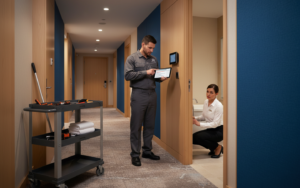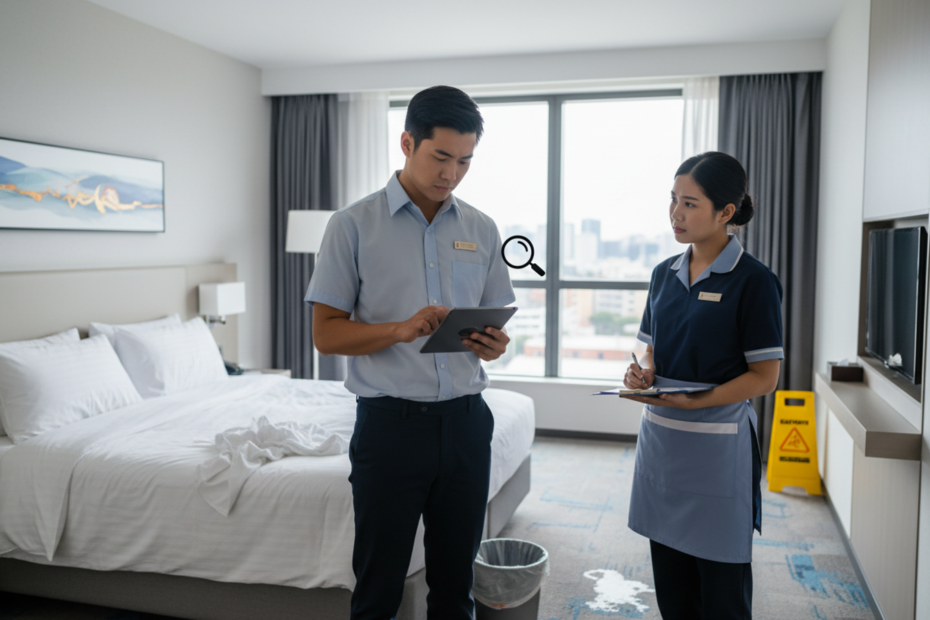
A hotel outsources housekeeping to manage daily room cleaning and staffing requirements. After a few weeks, managers notice inconsistent room inspections, delayed room releases and repeated guest complaints. The service provider submits attendance reports, but these reports do not explain the quality problems.
Hotels need a structured way to review outsourced housekeeping performance. Audits should examine cleaning quality, staffing, service-level commitments, reporting accuracy and guest feedback. A clear evaluation process helps hotel owners and operations leaders identify gaps, hold vendors accountable and protect room-readiness standards.
Why hotels should audit outsourced housekeeping
Outsourcing transfers specific housekeeping responsibilities to a service provider. The hotel still needs to monitor service quality and ensure the agreed standards are met.
Regular audits help hotels:
Check whether the vendor meets agreed service levels.
Verify staff attendance and deployment.
Maintain consistent room-cleaning standards.
Identify repeated inspection failures.
Review guest complaints linked to housekeeping.
Check whether the vendor follows hotel procedures.
Assess the value received against the contract cost.
An audit should assess actual service delivery rather than relying only on vendor reports. Managers should compare records with room inspections, staff observations and guest feedback.
Define the audit scope and service-level standards
Before starting an audit, define what the vendor is responsible for. The scope should match the signed contract and the hotel’s operating requirements.
Review these areas:
Cleaning responsibilities
List the tasks included in the agreement. These might cover checkout-room cleaning, stayover servicing, public-area cleaning, bathroom sanitation, linen handling and replenishment.
Separate included services from additional work. This avoids disputes over tasks outside the vendor’s agreed scope.
Staffing and attendance
Check the agreed staffing levels for each shift. Compare attendance records with actual deployment on floors and in assigned areas.
Review replacement arrangements for absenteeism, weekly offs and peak occupancy periods.
Quality requirements
Document room-cleaning procedures and inspection criteria. Include standards for bathrooms, linen, furniture, flooring, dusting, amenities and room presentation.
Reporting and escalation
Specify how the vendor reports cleaning completion, staff shortages, guest complaints and operational issues. Define who receives escalations and how quickly the vendor should respond.
Outsourced housekeeping performance checklist
Use this checklist during scheduled vendor reviews and sample inspections.
Contract scope and service-level commitments reviewed.
Vendor staffing levels checked against agreed requirements.
Attendance records compared with actual deployment.
Staff uniforms and grooming checked against hotel standards.
Room-cleaning procedures followed.
Bathroom and linen standards inspected.
Cleaning supplies and equipment checked.
Room inspection failures recorded.
Repeat cleaning and guest complaints reviewed.
Staff training records checked.
Safety and hygiene procedures reviewed.
Open corrective actions assigned with deadlines.
Vendor performance report verified against hotel records.
Record the date, inspection area, finding, evidence and responsible person for every audit. This creates a consistent record for vendor discussions.
How to conduct a housekeeping vendor audit
1. Review the contract and service-level agreement
Start with the signed contract. Check the agreed scope, staffing commitments, cleaning frequency, quality requirements, reporting process and escalation terms.
Identify measurable commitments. For example, if the vendor must provide a specified number of attendants per shift, compare the commitment with actual attendance and deployment.
2. Check staffing and shift deployment
Review attendance registers, shift rosters and replacement records. Conduct sample checks during different shifts.
Compare the planned staffing level with the actual number of employees present. Note whether shortages affect room cleaning, public-area maintenance or inspection schedules.
3. Inspect completed rooms
Select a sample of cleaned rooms across different floors and room categories. Use the hotel’s standard inspection checklist.
Check visible cleanliness, bathroom condition, linen presentation, dusting, amenities and room setup. Record defects with photographs where permitted by hotel policy.
Avoid relying only on rooms selected by the vendor. Independent sampling gives managers a more accurate view.
4. Review guest complaints and repeat work
Group complaints by issue type, such as bathroom cleanliness, linen quality, dust, missing amenities or delayed servicing.
Check whether the vendor corrected the problem and whether the same issue appeared again. Repeated complaints often point to gaps in training, supervision or work procedures.
5. Verify vendor reports
Compare the vendor’s daily reports with hotel records. Check room counts, attendance, cleaning completion and reported incidents.
Investigate differences before approving performance reports or monthly invoices.
6. Record findings and corrective actions
Classify audit findings by severity. Assign each issue to the vendor or hotel department responsible for correction.
Set a deadline and agree on evidence required for closure. Review unresolved issues during the next vendor meeting.
Best practices for outsourced housekeeping performance reviews
Use a consistent scoring method
Apply the same audit criteria across shifts and inspection periods. A simple scoring system helps managers compare results over time.
For example, score each inspection area against a defined standard:
Score | Assessment |
5 | Meets the required standard |
4 | Minor issue, no repeat work needed |
3 | Corrective action required |
2 | Significant quality gap |
1 | Serious failure requiring escalation |
Define each score clearly. Train internal supervisors to apply the same criteria.
Conduct both announced and unannounced checks
Scheduled audits help vendors prepare records and discuss performance. Unannounced sample inspections show how teams perform during normal operations.
Use both methods. Follow hotel policy when conducting staff checks and handling employee information.
Review performance with evidence
Use inspection records, photographs, attendance data and complaint logs during vendor meetings. Avoid general feedback such as “cleaning quality is poor” without examples.
Discuss the issue, its frequency, its impact and the required correction.
Separate vendor and hotel responsibilities
Some problems result from hotel-side delays, such as late room release, unavailable linen or unclear work instructions. Record the source of each issue before assigning responsibility.
A fair audit helps both parties correct the right problem.
Link payments and renewals to agreed terms
Review service delivery against the contract before approving invoices or considering renewal. Apply deductions or penalties only where the agreement permits them.
Use audit findings to support contract discussions and future vendor selection.
Technology and reporting for vendor performance
Accurate room and reservation information helps managers compare housekeeping activity with hotel operations. A hotel property management system supports reservation and room-availability workflows. Managers should review how room-status updates fit into the hotel’s vendor reporting process.
A hotel front-desk management system also supports arrival and reservation coordination. When room availability information stays current, managers have a clearer view of rooms awaiting cleaning or inspection.
Aiosell provides connected hotel technology for reservations, front-desk operations and revenue management. Hotels evaluating hotel management software should assess how available features support their existing operational reporting and integrations.
Aiosell does not replace a dedicated vendor audit process. Hotels should maintain suitable records for attendance, inspection findings, corrective actions and contract compliance. Confirm the platform’s available features before relying on any system for a specific housekeeping or vendor-management task.
KPIs to measure outsourced housekeeping performance
Managers should track a balanced set of indicators. Review quality, staffing, timeliness and guest experience together.
KPI | What to measure |
Room inspection pass rate | Percentage of inspected rooms meeting standards |
Staff attendance rate | Actual attendance against agreed deployment |
Room cleaning completion | Rooms completed against assigned workload |
Repeat cleaning rate | Rooms requiring another cleaning round |
Guest complaint rate | Housekeeping complaints over a defined period |
Corrective action closure | Audit findings resolved by the agreed deadline |
Room release delays | Delays linked to housekeeping completion |
Set targets based on the service agreement and the hotel’s operating conditions. Compare similar shifts and occupancy periods to avoid misleading conclusions.
Conclusion
Outsourced housekeeping requires regular checks, clear service standards and accurate performance records. Hotels should review staffing, room quality, guest complaints and corrective actions instead of relying only on vendor reports.
A consistent audit process helps managers identify service gaps and make informed vendor decisions. Aiosell supports connected hotel reservation, front-desk and revenue workflows, while hotels should maintain clear housekeeping audit procedures and vendor accountability records.
Frequently asked questions
How often should hotels audit outsourced housekeeping?
Hotels should review daily operational records and conduct formal audits at planned intervals. Weekly checks help identify immediate gaps, while monthly reviews support vendor performance discussions.
What should a housekeeping vendor audit include?
Review contract compliance, staffing, attendance, cleaning quality, room inspections, guest complaints, safety procedures and corrective actions. Compare vendor reports with independent hotel records.
How do hotels measure outsourced housekeeping quality?
Use room inspection pass rates, repeat cleaning records, guest complaints and supervisor observations. Apply consistent inspection criteria across room categories and shifts.
Who should conduct the housekeeping vendor audit?
The housekeeping head or operations manager should lead the audit with input from relevant supervisors. Finance or procurement teams should review contract and invoice compliance where required.
What should hotels do when a vendor repeatedly fails audits?
Document the findings, issue corrective actions and set deadlines. Review the vendor’s response against contract terms. Escalate repeated failures through the agreed service-level and contract process.