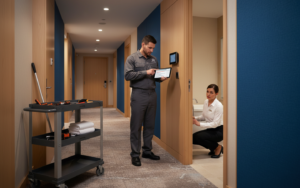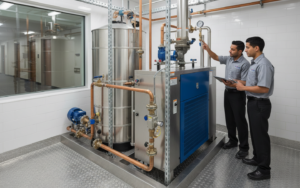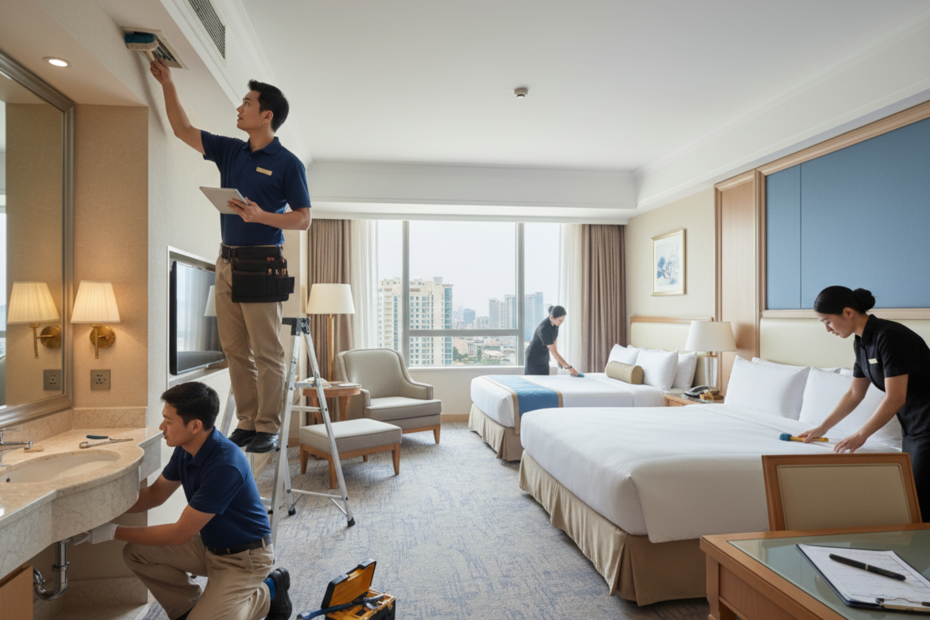
A guest reports that the air conditioner is not cooling properly. During the inspection, the maintenance team also finds a loose bathroom fitting and a damaged electrical switch. The room needs multiple repairs, and the hotel must delay its next booking assignment.
Unplanned repairs affect room availability, staff schedules and guest satisfaction. A preventive maintenance calendar for guest rooms helps hotel teams schedule routine checks before small defects turn into larger problems.
Hotel owners and operations leaders should use a planned maintenance process to inspect equipment, record defects and assign responsibility. The schedule should reflect room usage, equipment condition, manufacturer guidance and the hotel’s operating requirements.
Why guest rooms need preventive maintenance
Guest rooms contain several fixtures and systems that require regular inspection. Air conditioners, plumbing, electrical fittings, furniture, bathroom fixtures and doors experience repeated use.
Without scheduled checks, teams often depend on guest complaints or visible failures to identify problems. This reactive approach increases disruption and makes repair planning harder.
A planned maintenance process helps hotels:
Identify defects before they affect guest stays.
Reduce unexpected equipment failures.
Plan repairs during suitable occupancy periods.
Track recurring problems by room and equipment type.
Manage maintenance costs and spare parts.
Keep guest rooms in a consistent condition.
Improve coordination between maintenance and housekeeping.
Preventive maintenance does not remove every repair requirement. Regular inspections help teams identify risks earlier and plan corrective work.
How to create a preventive maintenance calendar for guest rooms
A useful calendar should define what to inspect, how often to inspect, who owns each task and how teams record completion.
1. Prepare a room asset inventory
Start by listing the main equipment and fixtures in each guest room. Include the room number, asset type, model where relevant, installation date and current condition.
Common items include:
Air-conditioning units and thermostats.
Lights, switches and electrical sockets.
Bathroom taps, showers and drainage.
Water heaters and related fittings.
Doors, locks and hinges.
Windows, curtains and tracks.
Furniture, wardrobes and drawers.
Televisions and room appliances.
Plumbing connections and visible pipework.
Use a standard inventory format across room categories. Record differences between room types where equipment or layouts vary.
2. Identify inspection frequency
Not every asset needs the same inspection frequency. Set schedules according to equipment instructions, usage, condition and maintenance history.
For example, housekeeping might check visible defects during daily room servicing. Maintenance staff might perform more detailed inspections monthly or quarterly, depending on the equipment and hotel requirements.
Avoid using one frequency for every asset. Follow manufacturer recommendations and applicable safety requirements.
3. Assign responsibility
Every calendar task should have a responsible person or department.
Housekeeping staff often identify visible issues during room cleaning. Maintenance technicians handle technical inspections and repairs. Supervisors review completion records and escalate overdue tasks.
Define who reports defects, who approves repair work and who confirms completion.
4. Schedule work around occupancy
Plan routine maintenance during lower-demand periods or when rooms are vacant. Review expected arrivals, departures and room availability before blocking inventory.
For larger repairs, coordinate with the front desk to avoid assigning affected rooms to arriving guests.
5. Record completion and follow-up
Maintain a maintenance register for every scheduled task. Include the room number, asset, inspection date, findings, assigned technician, action taken and completion status.
If an inspection identifies a defect, create a repair request and assign a deadline based on severity. Keep the task open until the responsible supervisor confirms completion.
A preventive maintenance calendar for guest rooms checklist
Use this checklist when preparing or reviewing the hotel’s maintenance schedule.
Guest-room asset inventory prepared.
Equipment details and condition recorded.
Inspection frequency defined for each asset category.
Manufacturer guidance reviewed.
Daily visual checks assigned to housekeeping.
Technical inspections assigned to maintenance staff.
Room access and occupancy requirements considered.
Maintenance tasks assigned to named employees.
Defects recorded with room and asset details.
Repair priorities and deadlines defined.
Completed work checked by a supervisor.
Overdue tasks reviewed during team meetings.
Recurring defects included in maintenance planning.
The checklist should reflect the hotel’s actual room inventory and maintenance responsibilities.
Sample preventive maintenance schedule for hotel rooms
The following table provides a starting structure. Adjust the frequency according to equipment requirements, usage and inspection findings.
Frequency | Suggested maintenance activity |
Daily | Report visible leaks, damaged fittings, faulty lights and unusual equipment noise |
Weekly | Review reported defects and inspect selected high-use fixtures |
Monthly | Check air-conditioning performance, plumbing fittings, electrical fixtures and door hardware |
Quarterly | Conduct detailed inspections of room equipment, furniture and bathroom fittings |
Half-yearly | Review recurring defects, equipment condition and planned replacement needs |
Annually | Assess major assets and prepare longer-term repair or replacement plans |
This is a planning example, not a universal technical standard. Electrical, fire-safety and other regulated inspections should follow qualified professional guidance and applicable requirements.
Best practices for maintaining guest-room assets
Prioritise repairs by risk and guest impact
Classify defects based on safety, room usability and service impact.
A water leak or electrical fault requires prompt attention. A loose drawer handle might be scheduled for routine repair. Define escalation rules so staff know when to restrict room use.
Combine housekeeping observations with technical inspections
Housekeeping staff spend time in guest rooms and often notice early signs of damage. Train attendants to report defects, but do not assign technical repair work to employees without the required training.
Maintenance teams should verify reported issues and record the corrective action.
Track recurring equipment problems
Review maintenance records by room number and asset type. Repeated air-conditioning failures in one room might indicate a larger equipment issue. Frequent tap leaks might point to a fitting or installation problem.
Use these patterns to plan inspections, repairs and replacements.
Keep essential spare parts available
Review maintenance history to identify commonly used parts. Maintain suitable stock for routine repairs, based on equipment requirements and procurement lead times.
Record spare-part usage so managers understand maintenance costs and avoid unnecessary purchases.
Coordinate maintenance with room cleaning
Schedule technical work before final cleaning when repairs produce dust, debris or water residue. Housekeeping should complete the required follow-up cleaning after technicians finish.
The supervisor should confirm room readiness before the front desk receives the final status.
Review the calendar regularly
Update the schedule after equipment replacement, major repairs, room renovation or repeated failures. A calendar should reflect current asset conditions rather than remain unchanged throughout the year.
How hotel technology supports maintenance planning
Accurate room and reservation information helps managers plan maintenance without creating unnecessary booking conflicts. A hotel property management system supports reservation and room-availability workflows. Hotels should review how room-status updates fit with their maintenance procedures.
A hotel front-desk management system also supports arrival planning and reservation coordination. Front-desk teams need current information about rooms blocked for repairs and rooms ready for guest use.
Aiosell provides connected hotel technology for reservations, front-desk operations and revenue management. Hotels evaluating hotel management software should assess how available features support room information, operational reporting and integrations with existing maintenance tools.
Aiosell does not replace a dedicated preventive maintenance or work-order management system. Hotels should maintain a separate maintenance calendar or use a suitable asset-management tool for inspection schedules, technical assignments and repair records. Confirm available integrations before selecting a platform.
KPIs to measure preventive maintenance performance
Managers should review maintenance activity through a small set of operational measures.
KPI | What to measure |
Scheduled task completion rate | Percentage of planned inspections completed on time |
Overdue maintenance tasks | Tasks past their agreed completion date |
Repeat defect rate | Issues recurring in the same room or asset |
Unplanned repair frequency | Repairs reported outside the planned schedule |
Room downtime | Time rooms remain unavailable due to maintenance |
Maintenance cost per room | Maintenance spending across guest-room inventory |
Review results monthly. Identify rooms with repeated failures and assets requiring replacement. Use the findings to update the next maintenance cycle.
Conclusion
A structured maintenance calendar helps hotels manage guest-room assets, reduce unexpected repairs and plan work around occupancy. Start with an asset inventory, assign inspection responsibilities and record every completed task.
Review maintenance findings regularly and update schedules when equipment condition or operating requirements change. Aiosell supports connected reservation, front-desk and revenue workflows, while hotels should use suitable maintenance processes and tools to manage technical inspections and repairs.
Frequently asked questions
What should a hotel preventive maintenance calendar include?
Include room assets, inspection tasks, maintenance frequency, assigned employees, completion dates, defect records and follow-up actions. Add repair priorities and escalation rules for urgent issues.
How often should hotels inspect guest rooms?
Visible defects should be reported during routine room servicing. Technical inspections should follow equipment guidance, usage and hotel maintenance policy. Different assets require different inspection intervals.
Who is responsible for guest-room preventive maintenance?
The maintenance team should handle technical inspections and repairs. Housekeeping staff should report visible defects during room servicing. Supervisors should review records and confirm completion.
How does preventive maintenance reduce room downtime?
Scheduled inspections help teams identify defects before equipment failure disrupts a guest stay. Planned repairs also give managers more control over room availability and staff schedules.
Should hotels use software to manage preventive maintenance?
A dedicated maintenance or asset-management tool helps track inspection dates, work orders, assignments and repair history. Hotels should check system features and integrations before choosing a solution.