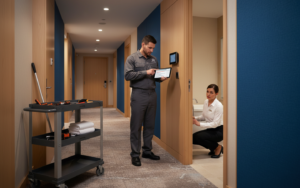
Front-office employees shape a guest’s first impression of a hotel. They manage check-ins, reservations, guest queries, payments and service requests. The role requires clear communication, patience and the ability to handle several tasks during busy shifts.
Frequent employee exits create pressure on the remaining team. Hotels need to recruit replacements, conduct training and adjust shift schedules. New employees also need time to understand property procedures and guest expectations.
Reducing employee turnover in front-office roles requires attention to workload, management support, training, career development and workplace communication. Hotel HR managers and department heads should address these factors through consistent workforce practices.
Why Front-Office Employees Leave Hotel Jobs
Front-office teams often work rotating shifts and handle demanding guest interactions. During peak check-in periods, employees might manage queues, booking changes, payment questions and guest complaints at the same time.
When hotels do not provide adequate support, daily pressure affects employee satisfaction.
Common reasons for front-office employee exits include:
Frequent night shifts and unpredictable schedules.
High workloads during peak occupancy.
Limited career growth opportunities.
Inadequate training for guest complaints.
Unclear responsibilities between departments.
Lack of recognition for good performance.
Limited support from supervisors.
Repeated staffing shortages and overtime.
HR managers should avoid assuming every resignation has the same reason. Exit interviews and employee feedback help identify specific workplace issues.
Build Fair and Predictable Shift Schedules
Front-office operations require coverage across different shifts. Poor scheduling often creates fatigue and dissatisfaction, especially when employees receive frequent last-minute changes.
Department heads should prepare rosters in advance and communicate shift expectations clearly.
Practical scheduling measures include:
Publish shift schedules with reasonable notice.
Distribute night and weekend shifts fairly.
Review overtime across the front-office team.
Avoid repeated last-minute shift changes.
Plan leave coverage before peak periods.
Follow applicable working-hour and rest requirements.
Managers should also review staffing levels during high-occupancy periods. Understaffing often increases pressure on reception employees and affects guest service.
Provide Structured Training for Front-Office Employees
New employees need clear guidance before handling guest interactions independently. Without proper training, they might struggle with hotel systems, reservation changes, billing questions and complaint handling.
A structured induction programme should cover:
Hotel check-in and check-out procedures.
Reservation and room allocation processes.
Payment and billing procedures.
Guest communication standards.
Complaint escalation methods.
Emergency and security procedures.
Coordination with housekeeping and other departments.
Training should continue after induction. Supervisors should review common mistakes, explain updated procedures and provide practical guidance.
A trained employee often feels better prepared to handle daily responsibilities. This reduces uncertainty during busy shifts.
Create Clear Career Growth Opportunities
Front-office employees need to understand how their roles can develop over time. When hotels offer no clear progression, experienced employees might look for opportunities elsewhere.
HR managers should define possible career paths within hotel operations.
For example, employees might progress from front-office associate to senior associate, shift supervisor, front-office executive and front-office manager, depending on experience and hotel requirements.
Hotels should support career development through:
Regular performance discussions.
Training for supervisory responsibilities.
Opportunities to handle additional approved tasks.
Exposure to reservation and guest relations processes.
Internal promotion reviews.
Clear promotion criteria.
Managers should communicate available opportunities honestly. Career discussions should include specific skills and experience required for the next role.
Improve Supervisor Support and Team Communication
Front-office employees regularly handle guest concerns and unexpected operational issues. Supervisors should provide guidance instead of leaving employees to manage difficult situations alone.
Regular team discussions help identify problems before they lead to employee dissatisfaction.
Department heads should:
Conduct short shift briefings.
Explain policy and procedure changes.
Review recurring guest complaints.
Encourage employees to raise concerns.
Recognise good service and teamwork.
Provide private feedback when performance needs improvement.
Managers should also coordinate with housekeeping, maintenance and reservations. Poor communication between departments often leaves front-office employees handling complaints caused by issues outside their control.
Recognise Employee Contributions
Recognition helps employees understand how their work contributes to hotel performance. Hotels do not need complex reward programmes to acknowledge good work.
Simple practices include recognising positive guest feedback, appreciating employees who support colleagues and discussing strong performance during team meetings.
Recognition should be fair and based on clear criteria. Managers should avoid rewarding only sales or upselling performance while ignoring service quality, teamwork and operational accuracy.
Employee Turnover in Front-Office Roles Checklist
Use this checklist to review workforce practices and identify areas requiring attention.
Area | Review action |
Shift planning | Check roster fairness and last-minute changes |
Workload | Review staffing during peak check-in periods |
Training | Confirm induction and refresher training |
Supervision | Schedule regular employee discussions |
Career growth | Communicate promotion and development paths |
Recognition | Review employee appreciation practices |
Feedback | Conduct stay interviews and exit interviews |
Retention data | Track resignations and turnover trends |
HR managers should review the checklist with front-office supervisors. Assign an owner and target date for each improvement.
Employee Turnover in Front-Office Roles Best Practices
Hotels need consistent workforce practices to retain experienced employees. These employee turnover in front-office roles best practices help managers address common causes of dissatisfaction.
Conduct stay interviews: Speak with current employees about what supports their work and what creates frustration. Use feedback to identify improvements.
Review exit interview findings: Group resignation reasons by themes such as scheduling, workload, management support and career opportunities.
Monitor overtime: Regular overtime might indicate staffing gaps or poor shift allocation. Review the causes before asking employees to cover additional shifts.
Train supervisors: Front-office supervisors should learn how to provide feedback, manage conflict and support employees during difficult guest interactions.
Set clear performance expectations: Employees should understand their responsibilities, service standards and escalation procedures.
Review employee progress: Discuss performance and development needs at regular intervals. Employees should know what skills they need to progress.
These practices help HR teams address retention issues through measurable workplace improvements.
Use Workforce Data to Identify Retention Problems
Managers should track employee turnover instead of relying only on informal feedback. Workforce records help identify departments, shifts or periods with higher resignation rates.
Useful measures include:
Monthly front-office resignations.
Average employee tenure.
New employee retention after 90 days.
Overtime hours by shift.
Absence patterns.
Exit interview reasons.
Training completion rates.
For example, if several employees leave after completing their first three months, managers should review induction quality, supervisor support and actual job expectations.
If night-shift employees show higher resignation rates, HR should review shift distribution, transport arrangements where relevant and workload during those hours.
Aiosell provides integrated hotel management technology designed to reduce manual work across key hotel operations. Hotels should assess how connected operational processes support front-office coordination and reduce avoidable administrative pressure.
Aiosell supports hotel teams through its integrated platform. Managers should combine suitable technology with clear workforce policies, effective supervision and regular employee feedback.
Conclusion
Front-office employee retention requires consistent attention from hotel HR managers and department heads. Fair schedules, practical training, supervisor support and clear career opportunities help create a more stable working environment.
Reducing employee turnover in front-office roles also requires regular review of workforce data and employee feedback. Hotels should identify recurring problems and assign clear responsibility for improvements.
Aiosell supports organised hotel operations through integrated technology. Combined with effective workforce practices, connected systems help hotel teams manage daily responsibilities with better coordination.
Frequently Asked Questions
1. Why is front-office employee turnover a concern for hotels?
Frequent exits increase recruitment and training requirements. They also affect shift coverage, team experience and consistency in guest interactions.
2. How do hotels improve front-office employee retention?
Hotels should review shift schedules, provide structured training, support career development and maintain regular communication between employees and supervisors.
3. How often should HR managers conduct employee feedback sessions?
Hotels should schedule regular feedback discussions and hold additional conversations when employees raise concerns. Stay interviews and exit interviews provide useful information about retention issues.
4. Which metrics help hotels track front-office turnover?
Useful measures include resignation rates, average tenure, 90-day retention, overtime hours, absence patterns and exit interview findings.
5. Does technology help reduce front-office employee turnover?
Technology supports operational coordination and reduces some manual tasks. Retention also depends on fair scheduling, training, management support and career development.