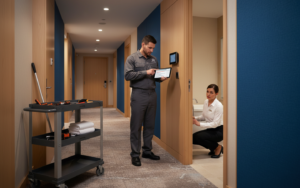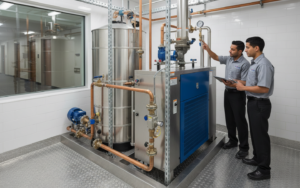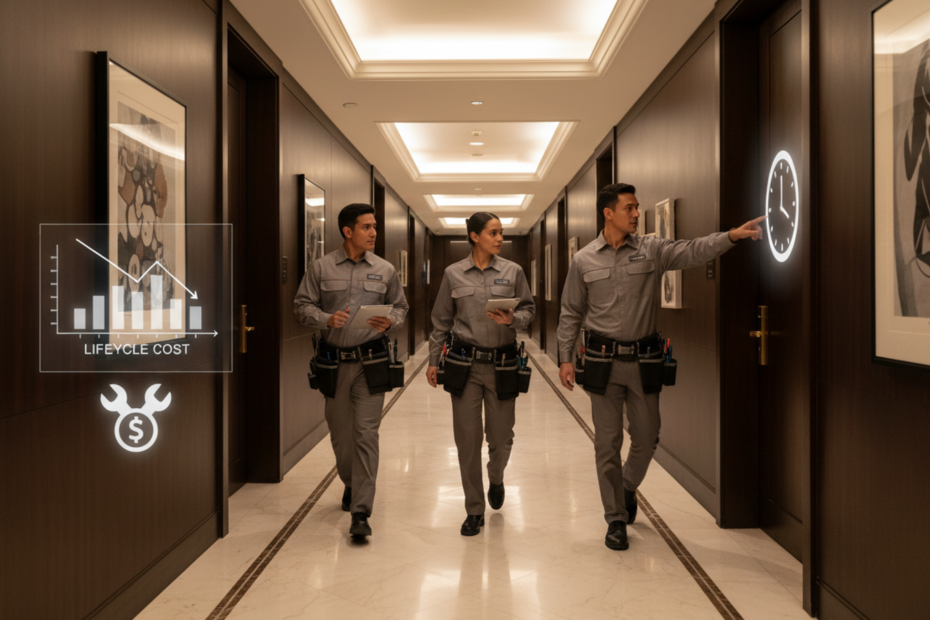
A guest reports an air conditioning problem. The kitchen team notices a refrigeration issue. Meanwhile, housekeeping reports a leaking bathroom tap in an occupied room. All three requests reach the engineering department within a short period.
Hotel engineering teams handle maintenance requests with different levels of urgency. Without clear response expectations, technicians might spend time on routine repairs while critical issues remain unattended.
Setting response-time targets for engineering teams helps hotels prioritise maintenance requests, assign responsibilities and monitor service performance. For Indian properties, a structured approach also helps management handle increased workloads during weekends, holidays and peak occupancy periods.
Why Do Hotels Need Engineering Response-Time Targets?
Engineering response times influence guest comfort, equipment performance and daily hotel operations. Delayed maintenance often creates additional work for other departments.
Clear targets help hotel management address common operational challenges.
1. Reduce Maintenance Delays
When employees know how quickly to acknowledge and attend to maintenance requests, teams follow a more organised process.
Defined response expectations help engineering managers identify delayed tasks and allocate technicians according to priority.
2. Improve Guest Experience
A faulty air conditioner, blocked bathroom drain or electrical problem affects guest comfort.
Timely attention helps hotels address these concerns before they develop into larger complaints.
3. Improve Staff Accountability
Response-time targets establish clear expectations for engineering employees.
Managers can track who received a request, when work started and whether the team completed the task within the expected timeframe.
4. Support Better Resource Allocation
Not every maintenance request requires immediate attention.
A priority-based system helps engineering managers allocate technicians according to equipment criticality, guest impact and available resources.
How to Set Response-Time Targets for Engineering Teams
Hotels should establish response expectations based on the severity of maintenance requests and their operational impact.
The following steps provide a practical framework.
1. Classify Maintenance Requests by Priority
Start by dividing maintenance requests into different priority levels.
Critical priority
These issues involve immediate safety concerns or major disruptions to essential hotel operations.
Examples include:
Electrical hazards.
Major water leakage.
Fire-safety system faults.
Elevator entrapment.
Critical equipment failures affecting essential services.
High priority
These issues affect guest comfort or important hotel services.
Examples include:
Air conditioning failures in occupied rooms.
Plumbing problems.
Kitchen refrigeration issues.
Hot water supply interruptions.
Medium priority
These requests affect normal operations but do not require immediate intervention.
Examples include:
Minor lighting problems.
Faulty room fittings.
Furniture repairs.
Non-critical equipment issues.
Low priority
These involve cosmetic improvements and routine maintenance.
Examples include:
Minor painting work.
Decorative fixture repairs.
Non-urgent adjustments.
2. Define Acknowledgement and Attendance Targets
Hotels should distinguish between acknowledging a maintenance request and physically attending to the issue.
Acknowledgement confirms that the engineering team received the request. Attendance means a technician has started assessing the problem.
The following table provides illustrative internal targets. Hotels should adjust these according to property size, staffing and operational requirements..
3. Set Resolution-Time Expectations
Response time and resolution time measure different activities.
A technician might attend a problem within 10 minutes, but resolving the issue might require replacement parts or external technical support.
Hotels should establish separate resolution expectations based on repair complexity.
For example:
Minor lighting repairs might require less time.
Plumbing repairs depend on the extent of the problem.
HVAC repairs might require specialised technicians.
Major equipment failures might require supplier assistance.
Record the reason for delays and communicate revised completion estimates to relevant departments.
4. Assign Clear Departmental Responsibilities
Maintenance requests often originate from housekeeping, front desk, food and beverage or security teams.
Each department should follow a consistent reporting process.
Front desk: Report guestroom complaints and urgent guest requests.
Housekeeping: Report damaged fittings, plumbing issues and equipment problems.
Food and beverage: Report kitchen and refrigeration equipment failures.
Security: Report electrical hazards and safety-related concerns.
Engineering: Receive, prioritise, assign and update maintenance requests.
Clear responsibilities reduce communication gaps and duplicate reporting.
5. Review Staffing and Shift Coverage
Response-time expectations should reflect actual engineering staff availability.
A hotel operating around the clock needs suitable coverage across different shifts.
Management should consider:
Number of occupied rooms.
Property size and number of facilities.
Number of engineering employees.
Technician skill sets.
Weekend and holiday workloads.
Availability of external service providers.
Targets should remain realistic during night shifts and periods of high occupancy.
Response-Time Targets for Engineering Teams Checklist
Hotel owners and engineering managers should review these points before implementing response-time targets.
Evaluation Area | What to Establish |
Request classification | Critical, high, medium and low priorities |
Acknowledgement | Time allowed to confirm a request |
Attendance | Expected technician arrival time |
Resolution | Expected completion time |
Staff allocation | Responsible technician or department |
Shift coverage | Engineering availability across shifts |
Escalation | Procedure for delayed critical requests |
Communication | Updates to front desk and housekeeping |
Reporting | Daily and monthly performance reviews |
Improvement | Review recurring delays and operational gaps |
Following a response-time targets for engineering teams checklist helps hotels maintain consistent expectations across departments.
Best Practices for Managing Engineering Response Times
Setting targets is only the first step. Hotel management should regularly monitor performance and improve processes.
Use a Centralised Maintenance Request System
Manual communication through phone calls and informal messages makes tracking difficult.
A centralised system helps teams record requests, assign technicians and monitor pending work.
Monitor Unresolved Requests
Engineering managers should review open maintenance requests during every shift handover.
Critical and high-priority issues require clear ownership until resolution.
Track Performance Metrics
Hotels should monitor practical indicators such as:
Average acknowledgement time.
Average attendance time.
Average resolution time.
Percentage of requests completed within target.
Number of overdue requests.
Repeat maintenance complaints.
These measurements help management identify operational gaps.
Train Employees on Request Prioritisation
Front desk and housekeeping employees should understand how to report maintenance issues accurately.
Training should cover request categories, equipment locations and escalation procedures.
Review Targets Regularly
Actual maintenance performance should guide future target adjustments.
If technicians consistently miss targets because of staffing shortages or equipment availability, management should address the underlying problem rather than repeatedly changing deadlines.
How Technology Supports Engineering Team Coordination
Hotel engineering teams need accurate information to manage maintenance requests and coordinate with other departments.
When employees depend on disconnected communication channels, requests might remain unnoticed or lose priority during shift changes.
Aiosell provides integrated hotel management solutions designed to simplify reservations, front desk activities and revenue management.
By reducing repetitive administrative work across hotel operations, Aiosell helps management teams focus more attention on service delivery and operational planning.
Hotels evaluating response-time targets for engineering teams should also consider how their existing technology supports communication, task visibility and departmental coordination.
Conclusion
Engineering response times influence guest comfort, equipment reliability and everyday hotel operations.
Hotels should classify maintenance requests, establish acknowledgement and attendance targets, assign clear responsibilities and monitor unresolved tasks.
A structured approach to response-time targets for engineering teams helps Indian properties manage maintenance workloads and improve coordination between departments.
Combining realistic performance targets with organised hotel management processes helps engineering teams respond more consistently and supports better operational control.
Aiosell supports hotels in simplifying everyday management activities, allowing teams to focus on operational priorities and guest experience.
Frequently Asked Questions
1. What are response-time targets in hotel engineering?
Response-time targets define how quickly engineering teams should acknowledge and attend to maintenance requests based on urgency and operational impact.
2. How should hotels prioritise engineering requests?
Hotels should classify requests into critical, high, medium and low priority categories. Safety concerns and failures affecting essential services should receive immediate attention.
3. What is the difference between response time and resolution time?
Response time measures how quickly a technician acknowledges or attends to a request. Resolution time measures how long the team takes to complete the repair.
4. Which metrics should hotel engineering managers monitor?
Managers should track acknowledgement time, attendance time, resolution time, overdue requests, repeat complaints and the percentage of tasks completed within target.
5. How do response-time targets improve hotel operations?
Clear targets improve task allocation, staff accountability and communication between departments. They also help management identify delays and improve maintenance planning.