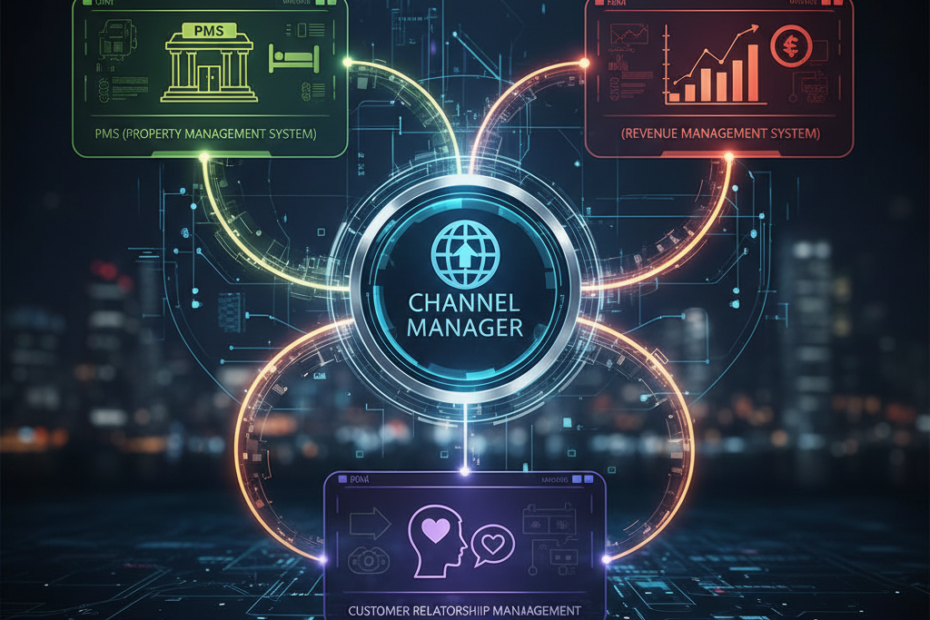
Modern hotels face a complex challenge: managing room inventory, rates, and guest data across dozens of online booking platforms while keeping internal systems in sync. A channel manager solves part of this puzzle, but its true power emerges when you connect it with your property management system (PMS), revenue management system (RMS), and customer relationship management (CRM) software. These integrations transform disconnected tools into a unified engine that drives revenue, cuts manual work, and delivers better guest experiences. In 2026, seamless channel manager integrations are no longer optional for competitive properties.
What Channel Manager Integrations Actually Do
A channel manager distributes your room availability and pricing to online travel agencies (OTAs), global distribution systems (GDS), and direct booking channels. Without integration, your team manually updates each system separately, creating gaps where overbookings, rate mismatches, and lost reservations hide. Channel manager integrations automate this flow, pushing and pulling data between your core hotel operations software in real time.
When you integrate a channel manager with your PMS, every reservation made on Booking.com, Expedia, or your own website instantly appears in your property system. Room counts adjust automatically. Guest details populate your front-desk software. Your housekeeping schedule updates without a single manual entry. This two-way sync keeps your inventory accurate across every sales channel, every minute of the day.
How PMS Integration Streamlines Daily Operations
Your PMS is the operational heart of your hotel. It handles check-ins, check-outs, room assignments, billing, and housekeeping workflows. Integrating your channel manager with your PMS creates a single source of truth for room availability. When a guest books a room through an OTA, the channel manager sends that reservation to your PMS immediately. The system blocks the room, records the guest name, and logs the rate. Your front desk sees the booking within seconds.
This integration eliminates the risk of double bookings. Before integration, a room could sell on Expedia while your front desk manually books the same room for a walk-in guest. With a connected system, the moment one channel sells a room, all other channels reflect that change. You also save hours each week. Staff no longer copy reservation details from emails or OTA extranets into your PMS. Errors drop, efficiency rises, and your team focuses on guest service instead of data entry.
Real-Time Inventory Management
Real-time updates mean your channel manager and PMS talk constantly. When a guest checks out early, your PMS updates the room status. The channel manager immediately opens that room for sale across all connected channels. If you take a room offline for maintenance, your PMS tells the channel manager, which blocks the room on every OTA. This instant communication prevents revenue loss and guest frustration.
RMS Integration for Smarter Pricing Decisions
A revenue management system analyzes demand patterns, competitor rates, and booking pace to recommend optimal pricing. When you integrate your RMS with your channel manager, those price recommendations push to all your sales channels automatically. You set dynamic pricing rules in your RMS, and the channel manager distributes the new rates to Booking.com, Airbnb, your website, and every other connected platform within minutes.
Without integration, revenue managers export rate sheets from the RMS, then manually upload them to the channel manager or each OTA individually. This process takes hours and introduces errors. Rates go live at different times across channels, creating price discrepancies that confuse guests and hurt your brand. Integrated systems update every channel simultaneously, ensuring rate parity and maximizing revenue.
The RMS also benefits from integration. It pulls booking data from the channel manager to refine its forecasts. It sees which channels drive the most revenue, which rate plans convert best, and how far in advance guests book. This feedback loop sharpens your pricing strategy over time, helping you capture more revenue during high-demand periods and fill rooms during slow seasons.
CRM Integration for Personalized Guest Experiences
Your CRM stores guest preferences, booking history, loyalty program status, and communication records. Integrating your channel manager with your CRM ensures every reservation enriches your guest database. When a repeat guest books through an OTA, your CRM recognizes them and flags their preferences. Your front desk knows they prefer a high floor, extra pillows, and late checkout before the guest even arrives.
This integration also powers targeted marketing. Your CRM segments guests by booking behavior, spend level, and visit frequency. You send personalized offers to past guests, encouraging direct bookings that skip OTA commissions. The channel manager tracks which campaigns drive reservations, feeding performance data back to your CRM. You refine your messaging, improve conversion rates, and build stronger guest relationships.
Integration also streamlines post-stay follow-up. After checkout, your PMS sends stay details to your CRM. The CRM triggers a thank-you email, a review request, or a special offer for the guest’s next visit. This automated workflow keeps your property top of mind and turns one-time visitors into loyal repeat guests.
How to Integrate Your Channel Manager with PMS, RMS, and CRM
Most modern hotel operations software uses application programming interfaces (APIs) to share data. When you choose a channel manager, verify it supports API integrations with your existing PMS, RMS, and CRM. Solutions like Aiosell Channel Manager offer pre-built connectors for popular hotel systems, simplifying setup and reducing technical headaches.
Start by integrating your channel manager with your PMS. This connection forms the foundation. Once PMS integration is stable, add your RMS to automate pricing updates. Finally, connect your CRM to close the loop on guest data. Work with your software vendors to map data fields correctly. Ensure reservation details, rate codes, and guest information flow accurately between systems. Test the integration thoroughly before going live. Book test reservations on each channel and confirm they appear correctly in your PMS, RMS, and CRM.
Monitor your integrations regularly. Set up alerts for sync failures or data mismatches. Most channel managers provide dashboards showing connection status for each system. Address issues immediately to prevent booking errors or inventory discrepancies. Keep your software updated. Vendors release patches and improvements that enhance integration performance and security.
The Business Impact of Seamless Integration
Hotels with fully integrated channel manager, PMS, RMS, and CRM systems report significant operational gains. Manual data entry drops by 70% or more, freeing staff for guest-facing tasks. Overbookings and rate errors decline sharply, protecting revenue and guest satisfaction. Dynamic pricing becomes practical at scale, lifting average daily rates by 5% to 15% in competitive markets.
Conclusion
Channel manager integrations with PMS, RMS, and CRM systems form the backbone of efficient, profitable hotel operations in 2026. These connections automate tedious tasks, eliminate costly errors, and unlock revenue opportunities hidden in your data. Whether you run a boutique inn or a large resort, investing in robust integrations pays dividends in staff productivity, guest satisfaction, and financial performance. Choose systems built for integration, test thoroughly, and monitor continuously. Your hotel will run smoother, sell smarter, and serve guests better.