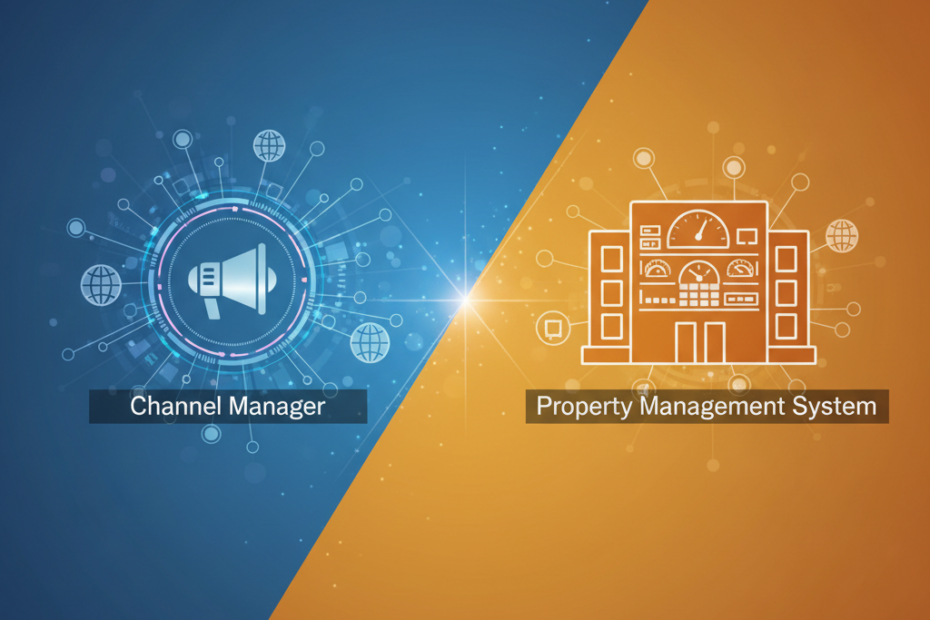
If you run a hotel, guesthouse, or vacation rental, you’ve probably heard the terms “channel manager” and “property management system” tossed around. Both tools promise to make your life easier, but they serve very different purposes. Understanding the difference between a
channel manager vs PMS can save you time, prevent double bookings, and help you grow your business. In this guide, we’ll break down what each system does, how they work together, and which one (or both) you actually need.
What Is a Property Management System (PMS)?
A
property management system is the central hub of your hotel operations. Think of it as the brain that controls everything from check-ins and check-outs to housekeeping schedules and guest billing. A PMS stores all your guest information, room inventory, and reservation data in one place. It helps your front desk staff manage daily tasks, track room availability, and process payments.
Modern PMS solutions go beyond basic booking management. They often include features like automated invoicing, reporting and analytics, staff task management, and guest communication tools. Some systems even integrate with door locks, point-of-sale systems, and accounting software. The goal is to streamline your internal operations so your team can focus on delivering great guest experiences instead of juggling spreadsheets.
Core Functions of a PMS
A typical property management system handles reservations made directly through your website or front desk. It tracks which rooms are occupied, which need cleaning, and which are ready for new guests. The system generates invoices, processes payments, and maintains detailed records of every transaction. Many PMS platforms also offer reporting tools that show you occupancy rates, revenue trends, and other key metrics.For smaller properties, a PMS might be all you need if most of your bookings come through direct channels. However, as soon as you start listing your property on multiple online travel agencies (OTAs) like Booking.com, Expedia, or Airbnb, managing everything manually becomes nearly impossible. That’s where a channel manager comes in.
What Is a Channel Manager?
A
channel manager is a specialized tool that connects your property to multiple booking platforms at once. Instead of logging into each OTA separately to update prices and availability, a channel manager lets you control everything from a single dashboard. When someone books a room on Booking.com, the channel manager automatically updates your availability on Expedia, Airbnb, and all your other connected channels.This real-time synchronization prevents double bookings, one of the biggest headaches for property managers. Without a channel manager, you’d need to manually update each platform every time you receive a reservation. That process is time-consuming and leaves plenty of room for human error. A good channel manager eliminates that risk by instantly pushing updates across all your distribution channels.
Key Benefits of Using a Channel Manager
The main
advantage of a channel manager is distribution efficiency. You can list your property on dozens of OTAs without multiplying your workload. When you want to run a promotion or adjust your rates based on demand, you make the change once and it applies everywhere. This centralized control helps you maximize your reach and revenue.
Channel managers also provide valuable data about which platforms generate the most bookings and revenue. You can see which OTAs are worth the commission fees and which ones aren’t delivering results. This insight helps you make smarter decisions about where to invest your marketing efforts and how to allocate your inventory.
Channel Manager vs Property Management System: The Key Differences
The fundamental difference between a
channel manager vs property management system comes down to scope and function. A PMS manages your internal operations, while a channel manager handles your external distribution. Your PMS is where you run your day-to-day business. Your channel manager is how you connect that business to the outside world.Think of it this way: if your property is a store, your PMS is the inventory system and cash register, while your channel manager is the network of salespeople promoting your products across different marketplaces. Both are essential, but they serve distinct roles. A PMS without a channel manager limits your distribution. A channel manager without a PMS leaves you without proper operational control.
Do They Work Together?
The best setup involves both systems working in harmony. Most
modern PMS platforms offer built-in channel manager functionality or integrate seamlessly with standalone channel managers. When these systems connect, your PMS becomes the single source of truth for your inventory. The channel manager then distributes that information across all your booking channels.This integration creates a powerful workflow. A guest books through Expedia. The channel manager receives that booking and sends it to your PMS. Your PMS updates the room inventory and notifies housekeeping. The channel manager instantly updates availability on all other platforms. Your front desk staff sees the reservation in the PMS and can prepare for the guest’s arrival. Everything happens automatically, without any manual data entry.
Which One Do You Actually Need?
The answer depends on your business model and distribution strategy. If you’re a small property that only takes direct bookings through your website or phone, a PMS alone might be sufficient. You’ll get all the tools you need to manage reservations, billing, and operations without the added complexity of multi-channel distribution.However, if you list your property on even two or three OTAs, a channel manager becomes essential. The time savings and reduction in booking errors quickly justify the investment. For most properties in 2026, the question isn’t really “
channel manager vs PMS” but rather “which PMS with channel manager integration should I choose?”
Integrated Solutions: The Best of Both Worlds
Many
hospitality software providers now offer all-in-one platforms that combine
PMS and channel manager functionality. These integrated solutions eliminate compatibility issues and reduce the number of vendors you need to manage. You get a single login, unified reporting, and seamless data flow between your operations and distribution channels.When evaluating integrated platforms, look for systems that support the OTAs most relevant to your market. Check whether the channel manager updates in real time or uses batch processing (real time is better). Ask about the quality of customer support and the frequency of software updates. The best systems grow with your business, adding new channels and features as your needs evolve.
Making the Right Choice for Your Property
Start by
assessing your current distribution strategy and operational pain points. Are you spending too much time updating multiple OTA accounts? That’s a clear sign you need a channel manager. Are you struggling to track guest information and manage your front desk? A robust PMS should be your priority. Most likely, you need both, either as separate tools that integrate or as an all-in-one solution.