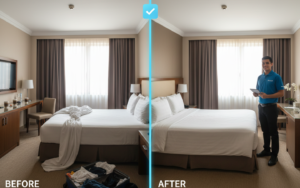
A guest arrives at 11:30 p.m. after a long journey. The front desk confirms the reservation, but housekeeping has not released the assigned room. The night team contacts the housekeeping supervisor, who is no longer on duty. Without a clear escalation procedure, the guest waits while employees try to find someone who can resolve the issue.
Late check-ins require coordination between the front desk, housekeeping and management. A room-readiness escalation process for late check-ins gives employees clear instructions when a reserved room is not ready by the expected arrival time.
For US hotel owners, general managers and operations leaders, a documented process helps reduce guest waiting time, clarify staff responsibilities and prevent unresolved room-status issues during overnight shifts.
Why Hotels Need a Late Check-In Escalation Process
Room delays happen for several reasons. A previous guest might request a late checkout, housekeeping might face staffing shortages, or an inspection might identify a cleaning issue.
The problem becomes harder to manage when the delay occurs outside normal housekeeping hours.
Common challenges include:
No confirmed room status before the guest arrives.
Delayed communication between housekeeping and front desk.
No manager available to approve an alternative.
Unclear responsibility for urgent room inspections.
Limited information about available replacement rooms.
Inconsistent guest updates during the delay.
A written procedure helps employees respond consistently instead of making decisions without clear authority.
Step 1: Define Room-Readiness Statuses
Every department should use the same room-status definitions. Employees need to understand whether a room is occupied, vacant, being cleaned, awaiting inspection or ready for assignment.
Hotels should define their own approved status labels and ensure staff use them consistently.
A practical room-status structure includes:
Room status | Meaning | Required action |
Occupied | Guest currently uses the room | Confirm expected departure |
Vacant, dirty | Guest has departed, cleaning is pending | Assign housekeeping |
Cleaning in progress | Housekeeping is preparing the room | Monitor progress |
Inspection pending | Cleaning is complete, approval is pending | Arrange supervisor inspection |
Ready | Room meets release standards | Confirm availability |
Out of service | Room is unavailable due to an unresolved issue | Arrange an alternative |
The front desk should not treat a vacant room as ready without confirmation. Room availability and room readiness are separate operational conditions.
Step 2: Set a Room-Readiness Monitoring Schedule
Hotels should identify reservations with late arrival times and monitor their assigned room status before the expected check-in.
The front desk and housekeeping supervisor should agree on when to review pending arrivals. The schedule should account for occupancy, expected departures and housekeeping staffing.
A monitoring process should include:
Review expected late arrivals at the start of the shift.
Identify rooms still awaiting cleaning or inspection.
Confirm the estimated completion time with housekeeping.
Flag reservations at risk of delay.
Notify the duty manager when the expected readiness time is missed.
Update the front desk when the room becomes ready.
Hotels should define specific internal escalation deadlines. For example, a property might notify the duty manager when a room remains unready 30 minutes before the guest’s expected arrival. Each hotel should set the timing according to staffing and operating needs.
Step 3: Establish Clear Escalation Roles
Employees should know who takes responsibility at each stage. A late-night delay should not depend on finding an available manager through informal messages.
A responsibility structure might look like this:
Role | Responsibility |
Front-desk agent | Identify the delay and inform the supervisor |
Housekeeping supervisor | Confirm cleaning progress and estimated completion |
Duty manager | Decide on escalation and guest arrangements |
General manager | Review serious or recurring operational failures |
Night manager | Coordinate unresolved issues during overnight hours |
Hotels should maintain an updated contact list for each shift. The list should include escalation contacts, backup contacts and the level of authority assigned to each role.
Staff should also know which decisions require manager approval, such as room changes, compensation or changes to the guest’s reservation.
Step 4: Create a Response for Different Delay Types
Not every room-readiness delay needs the same response. The escalation procedure should distinguish between cleaning delays, inspection failures, maintenance issues and room-assignment problems.
Cleaning delay
The housekeeping supervisor should confirm the remaining work and provide a realistic completion estimate. The front desk should update the guest if the delay affects the expected check-in time.
Inspection failure
The supervisor should identify the failed inspection items and arrange corrections. The room should not be released until the required standards are met.
Maintenance issue
The employee should report the issue through the hotel’s approved maintenance process. Management should assess whether the room remains suitable for occupancy.
Room-assignment problem
The front desk should review available room inventory and confirm whether another suitable room meets the reservation requirements.
A room-readiness escalation process for late check-ins should give employees a clear response for each situation. The procedure should also explain when to contact the next manager.
Step 5: Prepare Alternative Guest Arrangements
If the assigned room will not be ready within a reasonable period, the duty manager should review available alternatives.
The front desk should check room availability, reservation details and any guest requirements before offering another room.
Possible arrangements include:
Assigning another suitable ready room.
Providing a realistic waiting estimate.
Offering an approved waiting area.
Arranging assistance with luggage.
Applying the hotel’s approved compensation policy when appropriate.
Employees should avoid promising an alternative before confirming availability. They should also record any room changes or service arrangements in the reservation record.
Guest communication should remain direct. Staff should explain the delay, provide the next update time and avoid blaming another department.
Step 6: Document Every Escalation
A room delay should create a clear operational record. Documentation helps managers understand what happened and identify repeated problems.
The escalation record should include:
Guest reservation reference.
Assigned room number.
Expected arrival time.
Original room status.
Time the delay was identified.
Reason for the delay, when confirmed.
Employees and managers notified.
Estimated completion time.
Alternative arrangements offered.
Final room-release time.
Hotels should use an approved system or register for these records. Access should follow the property’s internal data and privacy procedures.
Managers should review records during shift handovers so unresolved issues do not disappear between teams.
Step 7: Review Performance and Improve the Process
A written procedure needs regular review. Hotel managers should track how often room delays occur and how quickly teams resolve them.
Useful performance measures include:
Number of late check-ins affected by room delays.
Average waiting time after guest arrival.
Rooms released after the expected readiness time.
Number of escalations by delay category.
Frequency of inspection failures.
Number of room changes caused by readiness problems.
Guest complaints related to delayed check-in.
Management should compare results across shifts and review recurring causes. If delays regularly occur after late departures, the hotel might need better departure forecasting or a different housekeeping allocation.
Room-Readiness Escalation Process for Late Check-Ins Checklist
Hotel managers should use this checklist when creating or reviewing their procedure.
Area | Required action |
Room status | Define clear room-readiness labels |
Arrival monitoring | Identify late arrivals and pending rooms |
Escalation timing | Set deadlines for notifying managers |
Staff responsibility | Assign primary and backup contacts |
Delay response | Define actions for cleaning, inspection and maintenance issues |
Guest arrangements | Establish approved alternatives |
Documentation | Record delays, decisions and final room status |
Performance review | Track delays and identify recurring causes |
Managers should share the procedure with front-desk and housekeeping employees. Include the escalation contacts in shift handover documents and review them whenever staffing responsibilities change.
How Hotel Technology Supports Room-Readiness Coordination
Late check-ins depend on accurate reservation information and timely communication. Hotel teams need a reliable view of guest arrivals, assigned rooms and current operational status.
Aiosell provides hotel management software for connected reservation and front-desk operations. Hotels evaluating Aiosell should confirm the available room-status controls, reservation information and reporting features against their late check-in requirements.
A hotel property management system supports core reservation and front-desk processes. Hotels should verify whether the selected platform also supports dedicated housekeeping task assignments, inspection updates and escalation alerts. If these functions are unavailable, a separate approved checklist or task register should support the process.
Aiosell supports connected hotel operations through reservation and front-desk technology. Clear escalation rules and staff accountability should guide room-readiness decisions alongside the software.
Conclusion
Late check-in delays require quick decisions, accurate room information and clear responsibility across departments. Hotels should define room statuses, set escalation deadlines, assign backup contacts and document every resolution.
A room-readiness escalation process for late check-ins helps employees manage delays consistently, even when housekeeping supervisors are unavailable. Regular performance reviews and practical staff training help hotel teams improve room readiness and guest communication.
Frequently Asked Questions
What should a hotel do when a guest arrives before the room is ready?
The front desk should confirm the room status, contact the responsible supervisor and provide the guest with a realistic update. The duty manager should review alternative arrangements if the delay continues.
Who should handle room-readiness escalations during overnight shifts?
The hotel should assign a duty manager or night manager to coordinate unresolved delays. Employees should also have access to backup contacts and clear decision-making authority.
What information should hotels record during a room-readiness delay?
Hotels should record the reservation reference, assigned room, expected arrival time, reason for the delay, employees notified, guest arrangements and final room-release time.
How do hotels reduce late check-in room delays?
Hotels should monitor expected arrivals, coordinate housekeeping schedules, inspect rooms promptly and establish escalation deadlines. Managers should review recurring delays and adjust staffing or procedures where needed.
Which technology features help manage room readiness?
Hotels should evaluate reservation visibility, room-status updates, reporting, user permissions and department integrations. Dedicated housekeeping task assignments and inspection alerts should be verified before selecting a platform.