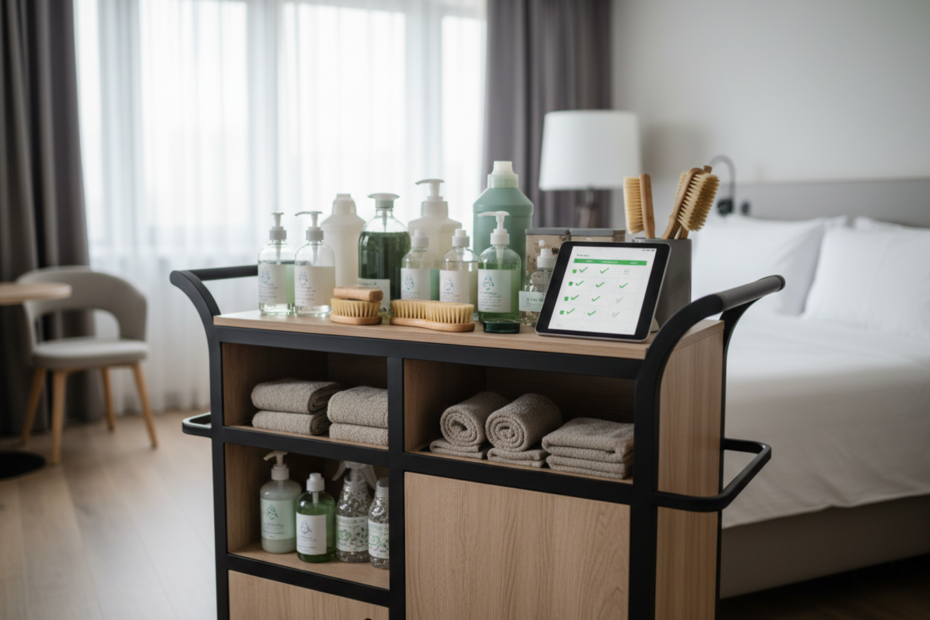
A housekeeping supervisor checks the supply closet before the afternoon shift. Several shelves hold opened cleaning products, excess toiletries and linen packs. Some items have expired, while others sit unused because employees keep taking fresh stock instead of checking existing supplies.
These small habits increase operating costs and make inventory control harder. Reducing supply waste in hotel housekeeping closets requires clear storage rules, regular stock checks and consistent employee practices.
For US hotel owners, general managers and operations leaders, a structured approach helps control purchasing costs, maintain supply availability and reduce unnecessary disposal across properties.
Why Housekeeping Closets Experience Supply Waste
Housekeeping closets support daily room cleaning and floor operations. Employees need quick access to cleaning products, guest amenities, linen and other supplies. Without clear controls, stock levels become difficult to manage.
Common causes of waste include:
Employees taking more supplies than required.
Duplicate purchases caused by poor stock visibility.
Products stored without clear labels.
Opened containers left unused.
Damaged items caused by unsuitable storage.
Expired products remaining on shelves.
No consistent process for reporting low stock.
Different stocking habits across housekeeping shifts.
A hotel should treat each closet as a controlled storage point. Employees need clear instructions on what to take, where to return items and how to report damaged or low stock.
Step 1: Set Standard Stock Levels for Each Closet
Hotels should define the quantity of each supply item required at every housekeeping location.
Stock levels should reflect room count, occupancy, cleaning frequency and the property’s operating requirements. A high-occupancy hotel might need more daily supplies than a property with lower room turnover.
The housekeeping manager should establish minimum and maximum quantities for frequently used items.
A standard stock list might include:
Supply category | Examples | Stock control |
Cleaning products | Surface cleaners, bathroom cleaners | Track quantity and expiry |
Guest amenities | Soap, shampoo, toiletries | Set usage-based par levels |
Linen | Sheets, pillowcases, towels | Count and inspect condition |
Disposable items | Gloves, liners, wipes | Monitor shift consumption |
Room supplies | Tissue, stationery, bottled water | Replenish according to room demand |
The list should identify the item name, unit of measurement, storage location and approved stock range.
Step 2: Introduce a Check-Before-Opening Rule
Employees should check existing stock before opening a new package or container.
This simple practice helps prevent duplicate usage and reduces the number of partly used products left in storage.
Supervisors should explain the rule during housekeeping briefings:
Check the designated shelf for the required item.
Use an existing opened container when suitable.
Confirm the product remains within its usable period.
Return unused supplies to the correct location.
Report damaged or unsuitable products.
Record stock shortages through the approved process.
The hotel should also establish clear rules for products with manufacturer-specific handling or shelf-life requirements. Employees should follow product labels and safety instructions.
Step 3: Organise Closets With Clear Labels
Poor storage makes stock difficult to track. Employees might open new supplies because they cannot find existing items.
Each closet should follow a consistent layout. Frequently used supplies should have clearly marked storage locations. Separate shelves or sections should hold cleaning chemicals, guest amenities, linen and disposable items.
A practical storage system should include:
Labels for product names and storage locations.
Separate areas for opened and unopened stock.
Clear identification of minimum stock levels.
Designated areas for damaged or expired items.
Easy access to frequently used supplies.
Safe separation of incompatible cleaning chemicals.
Supervisors should check whether employees return supplies to their assigned locations after each shift.
Step 4: Track Daily Supply Usage
Stock counts show what remains, but usage records help managers understand where supplies go.
Housekeeping supervisors should track high-use items by shift, floor or property. The level of detail should match the hotel’s size and operating needs.
Useful records include:
Opening stock quantity.
Supplies issued during the shift.
Additional stock requested.
Damaged or discarded quantities.
Closing stock quantity.
Employee or supervisor responsible for the count.
Managers should compare usage with occupied rooms and completed cleaning assignments. Large differences might indicate inaccurate records, overuse or storage problems.
A hotel group with several properties should use consistent units and reporting periods. This makes comparisons more useful.
Step 5: Apply First-In, First-Out Stock Rotation
Stock rotation helps hotels use older supplies before newer deliveries.
Employees should place newly received items behind existing stock when product instructions allow. Supervisors should check expiry dates and storage conditions during routine inspections.
The process should cover:
Checking delivery dates.
Reviewing product expiry information.
Placing older stock at the front.
Separating damaged or unsuitable products.
Recording products removed from use.
Following manufacturer storage instructions.
Hotels should not use expired or damaged cleaning products. Staff should follow the manufacturer’s disposal guidance and applicable local requirements.
Step 6: Control Linen and Disposable Supply Waste
Linen and disposable supplies represent recurring housekeeping expenses. Poor handling increases replacement and purchasing costs.
Hotels should establish clear procedures for linen collection, sorting, storage and issue.
Supervisors should monitor:
Linen damaged during handling.
Towels and sheets discarded unnecessarily.
Excessive use of disposable cleaning materials.
Unopened guest amenities left in rooms.
Supplies removed from closets without a recorded reason.
Employees should understand when an item requires replacement and when it remains suitable for use. The hotel should also review whether room amenity quantities match its approved service standards.
Step 7: Conduct Regular Closet Audits
A stock audit helps managers identify unused items, shortages and repeated waste patterns.
Housekeeping supervisors should inspect closets on a defined schedule. Larger properties might need more frequent checks for high-use supplies.
An audit should review:
Actual stock against recorded quantities.
Opened and unopened product condition.
Expiry dates and storage requirements.
Shelf labels and organisation.
Damaged or discarded items.
Stock movement records.
Repeated shortages or excess quantities.
Managers should record findings and assign corrective actions. If a property repeatedly over-orders a product, the purchasing quantity or par level should be reviewed.
Supply Waste in Hotel Housekeeping Closets Checklist
Hotel managers should use this checklist to review supply controls across housekeeping areas.
Control area | Required action |
Stock levels | Set minimum and maximum quantities |
Product usage | Check existing stock before opening new items |
Storage | Use clear labels and designated locations |
Usage records | Track stock issued and discarded |
Rotation | Apply first-in, first-out where appropriate |
Linen control | Record damage and unnecessary replacement |
Closet audits | Review quantities, condition and expiry dates |
Staff training | Explain handling and reporting procedures |
Managers should assign responsibility for each closet. A named supervisor helps maintain accountability between shifts.
How Hotel Technology Supports Supply Control
Housekeeping supply control depends on accurate records and coordination between departments. Hotels should assess whether their existing technology supports the required inventory and reporting process.
Aiosell provides connected hotel technology for reservations, front-desk operations and revenue management. Hotels evaluating Aiosell should verify whether its available features or integrations support their specific housekeeping inventory requirements.
A hotel management software platform should be assessed for reporting, user access and integration options. If dedicated housekeeping stock tracking is unavailable, hotels should maintain a separate inventory register or approved stock-management tool.
Aiosell supports core hotel operations through connected technology. Clear stock procedures, supervisor checks and employee accountability should guide supply management alongside the hotel’s software.
Conclusion
Housekeeping supply waste often results from inconsistent storage, unclear stock levels and limited usage records. Hotels should introduce standard stock lists, check-before-opening procedures, stock rotation and regular closet audits.
Reducing supply waste in hotel housekeeping closets also requires employee training and supervisor accountability. Consistent controls help hotel teams maintain supply availability, avoid unnecessary purchases and manage operating costs across US properties.
Frequently Asked Questions
What causes supply waste in hotel housekeeping closets?
Common causes include overstocking, duplicate product use, poor storage, expired supplies, damaged linen and missing usage records. Clear stock procedures help reduce these problems.
How should hotels control housekeeping supply levels?
Hotels should set minimum and maximum quantities based on room count, occupancy and usage. Supervisors should review stock regularly and record supplies issued or discarded.
What is the first-in, first-out method for housekeeping supplies?
First-in, first-out means using older stock before newer stock when product instructions allow. This helps hotels reduce expiry-related waste and maintain better stock rotation.
How often should housekeeping closets be audited?
Hotels should set an audit schedule based on supply usage and property size. High-use closets often need more frequent checks than storage areas with slower stock movement.
Which supplies should hotels monitor most closely?
Hotels should monitor cleaning products, guest amenities, linen, disposable items and frequently used room supplies. Managers should prioritise items with high usage, higher costs or expiry requirements.