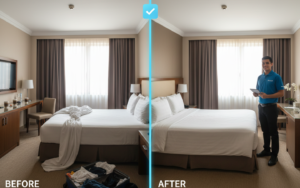
A guest moves from one hotel room to another during a three-night stay. The front desk updates the room assignment, but restaurant and parking charges continue appearing under the previous room number. At checkout, the guest notices missing or incorrect transactions on the final bill.
Room changes require accurate coordination between reservations, front-desk employees and other departments. Errors when transferring guest folios between rooms often happen when employees update room assignments without checking the associated billing records.
US hotels need a consistent process for moving guest charges, reviewing transaction histories and confirming account details. Clear procedures help protect billing accuracy and reduce disputes during checkout.
Why Guest Folio Transfers Require Careful Handling
A guest folio contains financial transactions associated with a hotel stay. These records might include room charges, food and beverage purchases, parking, laundry, taxes and other approved expenses.
When a guest changes rooms, employees must ensure the billing account remains accurate.
Common problems include:
Charges remaining under the previous room number.
Transactions posted to another guest’s folio.
Duplicate room charges.
Missing restaurant or service transactions.
Incorrect tax calculations after a room change.
Confusion between shared and individual guest accounts.
Incomplete billing records during shift handovers.
These problems often result from rushed updates, unclear responsibilities or inconsistent communication between departments.
1. Verify Guest Details Before Starting the Transfer
Start by confirming the guest’s identity and reservation information. Employees should not transfer charges based only on a room number.
Check the following details:
Guest name.
Reservation reference.
Current room number.
New room number.
Arrival and departure dates.
Number of occupants.
Shared billing arrangements, where applicable.
For guests travelling together, confirm which person is responsible for each account. This step helps prevent transactions from moving to the wrong folio.
2. Review the Existing Guest Folio
Before changing the room assignment, review the current folio. Identify all posted charges, pending transactions and outstanding balances.
The review should cover:
Room charges.
Restaurant and bar transactions.
Room service orders.
Parking fees.
Laundry and other guest services.
Deposits and payments.
Taxes and approved adjustments.
Check whether any transactions remain pending or require departmental confirmation.
Employees should record the account position before making changes. This gives the team a clear reference if a discrepancy appears later.
3. Follow a Standard Folio Transfer Procedure
A documented process reduces errors when transferring guest folios between rooms and gives employees a repeatable method.
Follow these steps:
Step 1: Confirm the Room Change
Verify the approved room change with the guest or authorised hotel representative. Confirm the new room number and effective date.
Step 2: Review All Existing Charges
Check the guest’s folio for posted transactions, pending charges and outstanding balances. Identify any charges requiring clarification.
Step 3: Confirm the Billing Arrangement
Determine whether the guest’s charges should remain under the same account or whether the room change involves a separate billing arrangement.
For shared reservations, confirm which expenses belong to the individual guest and which belong to the group account.
Step 4: Update the Room Assignment
Change the room assignment according to the hotel’s approved procedure. Check whether the billing account follows the updated reservation.
Step 5: Verify Charge Allocation
Review the transferred account and confirm the charges appear under the correct guest record. Check room rates, taxes and additional services.
Step 6: Record the Transfer
Document the old room number, new room number, transfer time and employee responsible. Include any unresolved billing questions.
Step 7: Confirm the Final Account
Review the updated folio before checkout. Confirm the balance and provide the guest with an accurate statement.
4. Coordinate With Other Hotel Departments
Not every guest charge originates at the front desk. Restaurants, bars, parking teams and other departments might post transactions to guest accounts.
A room change should trigger clear communication with relevant teams.
Food and Beverage
Inform restaurant and bar employees when the guest’s room assignment changes. Confirm the correct room reference before posting new charges.
Housekeeping
Coordinate room status and guest movement. Ensure employees follow the hotel’s process for updating room assignments and occupancy records.
Parking and Other Services
Update relevant guest account references where required. Check whether existing service transactions need correction or transfer.
Finance Team
Escalate unusual transactions, duplicate charges and billing adjustments. Finance employees should review discrepancies requiring additional approval.
5. Manage Shared and Group Folios Carefully
Group bookings and shared reservations need additional checks. Several guests might occupy different rooms while sharing some expenses.
For example, a family might have separate room accounts but one shared dining bill. A corporate group might place accommodation charges on individual folios and meeting expenses on a master account.
Before moving charges, confirm:
Which expenses belong to the individual guest.
Which expenses belong to the master account.
Who approved the billing arrangement.
Whether the room change affects the original agreement.
Which employee should review the final allocation.
Never assume all charges should move with the room assignment. Follow the documented billing instructions.
Best Practices for Preventing Folio Transfer Errors
Hotels should establish consistent procedures across all shifts.
Use Individual Employee Logins
Where supported, assign individual system credentials to employees. Individual access improves accountability and helps managers review who made a billing change.
Require Approval for Manual Adjustments
Define approval limits for charge transfers, refunds and corrections. Employees should escalate unusual adjustments rather than making unsupported changes.
Review Folios During Shift Handovers
Include room changes, pending transactions and unresolved billing questions in handover records. The incoming employee should know which accounts need further review.
Train Employees on Billing Procedures
Provide practical training on room changes, shared accounts, charge transfers and tax adjustments. Use examples based on common hotel situations.
Conduct Regular Billing Reviews
Managers should review a sample of room-change transactions. Look for duplicate charges, missing entries, incorrect room references and unexplained adjustments.
Using Hotel Technology to Support Accurate Folio Management
Hotel technology helps employees access reservation information and coordinate front-desk activities. A hotel management software platform supports connected hotel workflows and reduces reliance on separate manual records.
A hotel property management system helps manage room assignments and reservation information. A hotel front-desk management system supports guest administration during room changes, check-in and checkout, depending on the platform’s available features.
Aiosell provides connected technology for hotel reservations, front-desk operations and revenue management. Hotels should verify the available folio, billing, room-transfer and reporting functions before relying on a platform for specific transaction transfers.
Aiosell supports connected hotel workflows, but accurate billing still requires documented procedures, employee checks and appropriate approval controls. Managers should confirm system capabilities and staff responsibilities before introducing changes to existing processes.
Guest Folio Transfer Checklist for Hotel Managers
Use this checklist during room changes and operational reviews:
Guest identity and reservation verified.
Previous and new room numbers confirmed.
Existing folio reviewed.
Posted and pending charges checked.
Shared billing arrangements confirmed.
Room assignment updated.
Charge allocation verified.
Taxes and room rates reviewed.
Relevant departments informed.
Manual adjustments approved.
Transfer details recorded.
Final folio checked before checkout.
Managers should review this checklist regularly to identify errors when transferring guest folios between rooms and improve billing procedures across shifts.
Conclusion
Accurate folio transfers depend on verified guest details, complete transaction reviews and clear communication between hotel departments. Employees should follow a standard procedure whenever a guest changes rooms.
With proper checks and documented responsibilities, hotels reduce billing discrepancies and improve checkout accuracy. Aiosell supports connected hotel operations, while consistent front-desk procedures help US properties maintain reliable guest account records.
Frequently Asked Questions
Why do guest folio transfer errors happen?
Errors often result from incorrect room updates, missed transactions, duplicate postings, unclear billing arrangements or poor communication between departments.
Should hotels transfer every charge when a guest changes rooms?
No. Employees should review the billing arrangement before moving charges. Some expenses might belong to an individual guest, while others belong to a shared or master account.
Who should verify a guest folio after a room change?
The assigned front-desk employee should review the updated account. A supervisor or finance employee should review unusual adjustments and unresolved discrepancies according to hotel policy.
How should hotels handle charges posted to the previous room?
Employees should verify the transaction, identify the correct guest account and follow the hotel’s approved correction procedure. Record the adjustment and retain supporting details.
How often should hotels audit guest folio transfers?
Managers should review room-change transactions regularly. Daily exception reviews and periodic sample audits help identify repeated billing problems.