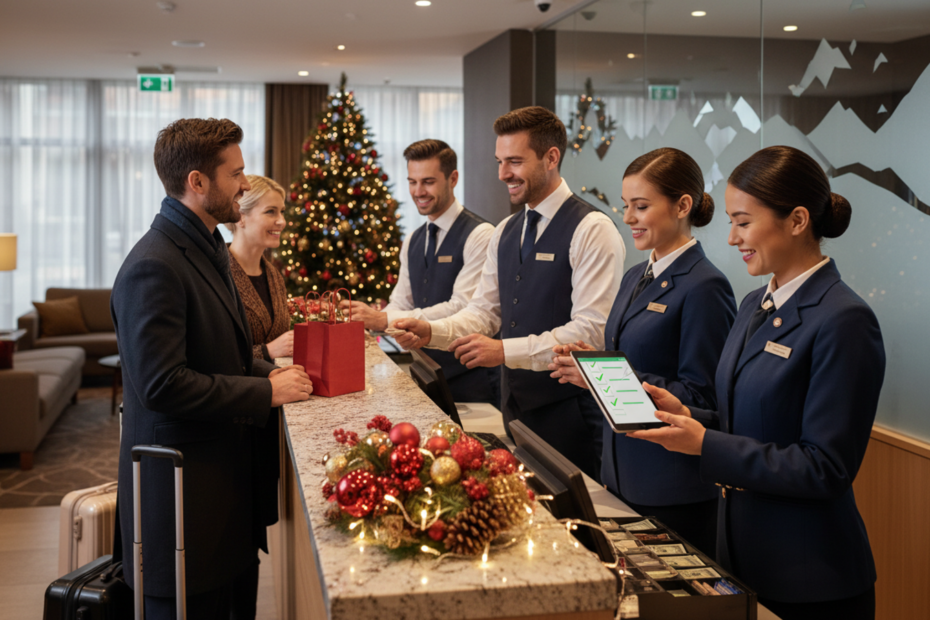
Holiday periods bring higher occupancy, more group bookings and concentrated guest arrivals. A hotel might receive several families, tour groups and business travellers within the same hour. Without proper preparation, front-desk employees face long queues, delayed check-ins and repeated guest enquiries.
US hotels need a clear plan before peak holiday dates. Preparing front-desk teams for high-volume holiday arrival periods involves staffing, reservation checks, room coordination and communication across departments.
A structured approach helps hotel owners and general managers maintain service standards while handling increased arrival volumes.
Why Holiday Arrival Periods Create Front-Desk Pressure
Holiday demand often creates uneven arrival patterns. Many guests arrive around standard check-in times, while others request early access after long journeys.
Front-desk teams also handle several tasks at once:
Verifying reservations and guest details.
Processing payments and deposits.
Assigning available rooms.
Responding to special requests.
Coordinating with housekeeping.
Managing group arrivals.
Answering questions about hotel facilities and local services.
When employees lack clear responsibilities, routine tasks take longer. Small delays can create queues and affect the guest experience.
1. Forecast Arrival Volumes Before the Holiday Period
Start preparation with an arrival forecast. Review historical occupancy, booking pace, group reservations and expected departure patterns.
Identify the dates and time slots likely to experience the highest check-in volume.
The front-office manager should review:
Expected arrivals by date.
Group and tour bookings.
Early-arrival requests.
Late arrivals.
VIP and long-stay reservations.
Expected room availability.
Outstanding guest requests.
Use this information to estimate staffing needs. A hotel expecting several group arrivals should prepare differently from a property with a steady flow of individual bookings.
2. Build a Front-Desk Staffing Plan
Staffing should match expected arrival demand. Avoid relying on the same shift structure used during quieter periods.
Preparing front-desk teams for high-volume holiday arrival periods requires managers to assign clear responsibilities before the busy dates.
Consider assigning employees to specific functions:
Check-In Support
These employees verify guest details, confirm reservations and complete registration procedures.
Payment and Billing Support
Assign trained employees to handle deposits, payment questions and billing concerns. This reduces interruptions for employees managing check-in queues.
Guest Assistance
A designated employee should respond to general enquiries, direct guests and assist with special requests.
Shift Supervision
The supervisor monitors queue length, staff workload and unresolved issues. They should also coordinate with housekeeping and other departments.
Adjust staffing based on occupancy, group size and expected arrival times.
3. Review Reservations Before Guest Arrival
Reservation errors create delays during check-in. Review upcoming bookings before the holiday rush begins.
Check the following details:
Guest names and contact information.
Arrival and departure dates.
Room categories.
Number of occupants.
Payment status.
Deposits and outstanding balances.
Special requests.
Group booking details.
Identify duplicate reservations, incomplete guest details and payment issues early.
For group bookings, prepare rooming lists and arrival schedules in advance. Confirm the main contact and identify any special billing arrangements.
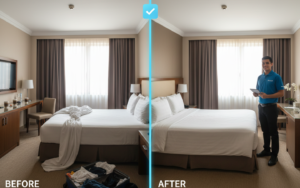
4. Coordinate Room Readiness With Housekeeping
Front-desk employees need accurate room-status information to manage arrivals.
Before peak dates, the front-office and housekeeping managers should agree on a room-readiness process.
The process should cover:
Expected checkout times.
Priority rooms for early arrivals.
Housekeeping workload distribution.
Room inspection responsibilities.
Maintenance-related room restrictions.
Updates on rooms ready for occupancy.
During busy periods, share room-status updates promptly. Avoid assigning rooms based only on expected cleaning completion times.
If a room is delayed, communicate the expected update to the guest and offer available alternatives according to hotel policy.
5. Prepare Check-In Procedures for Faster Processing
Standardised check-in procedures help employees complete routine tasks consistently.
Create a checklist covering:
Reservation confirmation.
Guest identification requirements.
Registration details.
Payment authorisation.
Deposit collection.
Room assignment.
Key preparation.
Guest information and directions.
Where permitted by applicable laws and hotel policy, complete eligible pre-arrival steps before guests reach the desk.
Train employees to handle common questions without interrupting every transaction. Keep important information about parking, breakfast, Wi-Fi and holiday facilities readily available.
6. Prepare for Group and Family Arrivals
Holiday periods often include families, tour groups and guests travelling together.
Large arrivals require additional coordination. The hotel should confirm rooming lists, payment arrangements and expected arrival times before the group reaches the property.
Useful preparations include:
Assigning a group check-in contact.
Preparing registration materials.
Reviewing room allocations.
Confirming payment responsibilities.
Identifying accessibility requests.
Coordinating luggage assistance.
Sharing arrival instructions with group organisers.
Avoid assigning all group members to individual check-in queues when a coordinated process is available.
7. Strengthen Guest Communication During Peak Hours
Guests become frustrated when they receive unclear information about waiting times or room readiness.
Front-desk employees should provide accurate updates and explain the next steps.
For example, when a room is not ready, employees should acknowledge the delay, check the current status and provide a realistic update. Avoid promising a specific completion time without confirmation from housekeeping.
Preparing front-desk teams for high-volume holiday arrival periods also means training employees to communicate calmly during difficult situations.
Managers should prepare standard responses for common questions about early check-in, room delays, deposits and holiday services.
8. Use Shift Briefings to Maintain Coordination
A short briefing before each shift helps employees understand expected demand.
The supervisor should cover:
Expected arrivals and departures.
Group booking schedules.
VIP and special requests.
Room availability.
Staffing assignments.
Outstanding guest issues.
Maintenance restrictions.
Escalation contacts.
Repeat the briefing when significant changes occur. Incoming employees should also receive clear handover notes about unresolved guest requests and payment matters.
Best Practices for Front-Desk Teams During Holiday Peaks
Hotels should review their preparation process before every major holiday period.
Cross-Train Employees
Train selected employees to support basic front-desk tasks during unexpected demand. Cross-training gives managers more flexibility when staff members are absent or queues increase.
Keep Essential Information Accessible
Prepare quick-reference information about hotel services, parking, breakfast timings, local transport and holiday arrangements.
Monitor Queue Lengths
Supervisors should observe waiting times and reassign employees when one part of the check-in process becomes overloaded.
Define Escalation Responsibilities
Employees should know who handles payment disputes, room changes, guest complaints and reservation errors. Clear escalation reduces unnecessary delays.
Review Performance After Peak Dates
After each holiday period, review guest feedback, check-in delays, staffing levels and common operational problems. Use these findings to improve the next peak-period plan.
Using Hotel Technology to Support Front-Desk Operations
Hotel technology helps teams access reservation details and coordinate daily front-desk activities. A hotel management software platform supports connected workflows and reduces dependence on disconnected records.
A hotel front-desk management system helps employees manage guest and reservation information during check-in and checkout. A hotel property management system supports room and reservation administration, depending on the platform’s available features.
Aiosell provides connected technology for hotel reservations, front-desk operations and revenue management. Hotels should review the available reservation, room-status, reporting and integration features before selecting tools for peak-period operations.
Technology supports faster access to information, but it does not replace staffing plans, employee training or department coordination. Aiosell should form part of a wider operating process built around clear responsibilities and reliable communication.
Conclusion
Holiday arrival surges require preparation across staffing, reservations, housekeeping and guest communication. Hotels should forecast demand, review bookings, assign responsibilities and establish clear procedures before peak dates.
Preparing front-desk teams for high-volume holiday arrival periods helps US hotels manage queues, reduce avoidable delays and maintain consistent service. Aiosell supports connected hotel workflows, while trained employees and practical operating procedures keep front-desk operations organised during busy periods.
Frequently Asked Questions
How should hotels prepare front-desk staff for holiday arrivals?
Hotels should forecast arrival volumes, adjust staffing, review reservations, coordinate room readiness and brief employees before each shift.
How can hotels reduce check-in queues during holiday periods?
Hotels should prepare reservation details in advance, assign clear staff roles, coordinate group arrivals and provide accurate room-status updates.
What should a front-desk holiday shift briefing include?
A briefing should cover expected arrivals, departures, group bookings, special requests, room availability, staff assignments and unresolved guest issues.
How should hotels handle early arrivals when rooms are unavailable?
Employees should check room status, explain the expected process and offer available alternatives according to hotel policy. They should avoid promising room access before confirmation.
How can hotel managers evaluate front-desk performance after a holiday period?
Managers should review check-in waiting times, guest feedback, reservation errors, staffing levels and unresolved complaints. These findings help improve future peak-period plans.