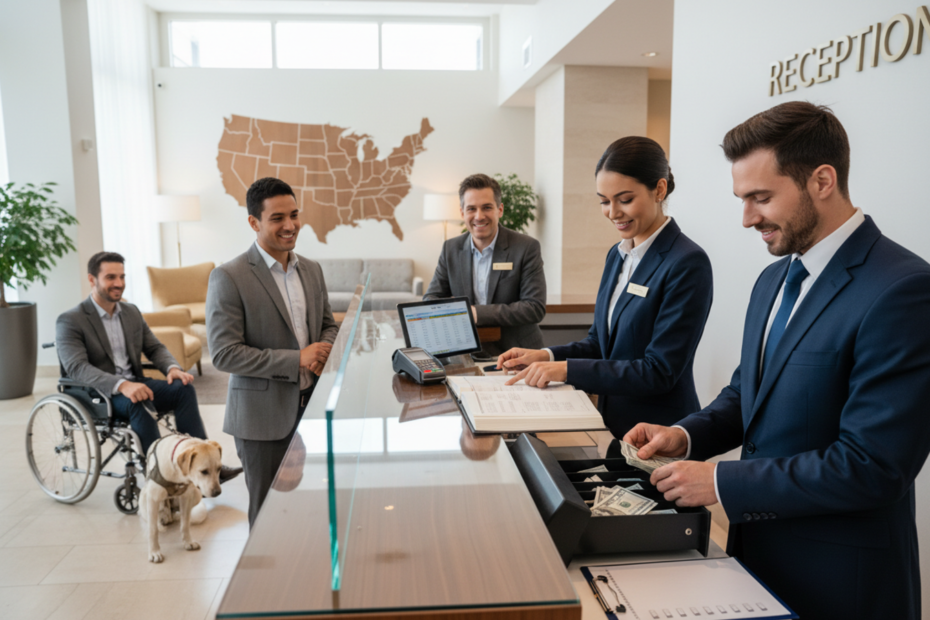
A guest contacts a hotel before arrival and requests a wheelchair-accessible room. The reservation team records the request, but the front desk assigns a different room category during a busy check-in period. The guest arrives and finds the room does not meet the stated requirements.
Situations like this highlight the importance of accurate reservation records and clear communication. US hotels need reliable procedures for handling accessibility requests from the first enquiry through checkout.
Managing accessible-room assignments and guest requests consistently requires coordination between reservations, front-desk employees, housekeeping and management. A documented process helps teams review room availability, communicate guest requirements and reduce avoidable assignment errors.
Understanding Accessible-Room Requests in US Hotels
Accessible rooms support guests with different mobility, hearing, vision and other accessibility requirements. Room features vary by property and room category.
Examples of accessible features include:
Wheelchair-accessible entrances and routes.
Wider doorways and accessible room layouts.
Roll-in showers or accessible bathtubs.
Grab bars near toilets and bathing areas.
Lowered switches and controls.
Visual notification devices.
Accessible communication equipment.
Hotels should maintain accurate information about the accessibility features available in each room. Employees should describe specific features instead of relying only on general labels such as accessible or mobility-friendly.
Under the Americans with Disabilities Act (ADA), covered lodging facilities must meet applicable accessibility requirements. Hotels should review current federal, state and local obligations and ensure employees follow the property’s approved procedures.
Why Consistent Room Assignment Matters
Accessibility requests often involve specific room features. Assigning a room based only on its category name might not meet the guest’s needs.
Common operational problems include:
Incorrect accessibility details in reservation records.
Requests recorded without enough information.
Accessible rooms assigned to guests who did not request them.
Room changes made without checking accessibility features.
Poor communication between reservations and front-desk teams.
Housekeeping updates not reflected in room availability records.
A clear process for managing accessible-room assignments and guest requests consistently helps hotels reduce these issues and improve coordination.
Step 1: Record Guest Requests During Reservation
Capture accessibility requests when guests make their reservations. Employees should record the requested room features and any relevant preferences.
For example, a guest might request a roll-in shower, a visual doorbell alert or an accessible route from the entrance to the room.
Use clear, factual notes. Avoid making assumptions about a guest’s condition or needs.
If the booking platform does not support detailed accessibility notes, follow the hotel’s approved process for recording and communicating the request securely.
Step 2: Maintain Accurate Accessible-Room Information
Hotels should maintain a room-level record of accessibility features.
The record should include:
Room number and category.
Doorway and entrance details.
Bathroom configuration.
Shower and bathing facilities.
Available communication features.
Accessible routes and facilities.
Any temporary maintenance restrictions.
Review these details whenever the property renovates rooms or changes fixtures. Front-desk employees need reliable information when discussing room options with guests.
Step 3: Check Availability Before Confirming Assignments
Before confirming an accessible-room assignment, employees should review the actual availability of the required room type.
A room appearing available in the reservation system does not always mean the room is ready for arrival. Housekeeping or maintenance restrictions might affect its status.
The team should:
Confirm the guest’s reservation details.
Identify the requested accessibility features.
Check the availability of a suitable room.
Confirm the room’s operational status.
Record the assignment.
Communicate any unresolved request to the appropriate manager.
Do not confirm a specific room feature until the hotel has verified its availability.
Step 4: Coordinate Reservations and Front-Desk Teams
Reservation employees should pass accessibility requests to the front desk before the guest arrives.
The handover should include:
Guest name and reservation reference.
Requested accessibility features.
Confirmed room category.
Any pending room assignment.
Relevant guest communication.
Follow-up responsibility.
The front desk should review these details during arrival preparation. A clear handover reduces the risk of missed requests during busy check-in periods.
Step 5: Coordinate Housekeeping and Maintenance
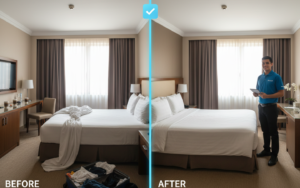
Accessible rooms need the same readiness checks as other guest rooms, along with verification of the requested features.
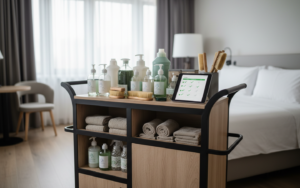
Housekeeping should confirm room cleanliness and readiness. Maintenance employees should report any faults affecting accessible fixtures or equipment.
If a requested feature is unavailable because of a maintenance issue, the front desk should receive the update before assigning the room.
Do not mark a room as suitable when a key accessibility feature is damaged or unavailable.
Step 6: Confirm Guest Requirements During Check-In
At arrival, employees should confirm the assigned room and relevant features discreetly.
Ask whether the room meets the guest’s stated requirements. Avoid asking unnecessary personal questions or requesting medical details.
If the assigned room does not meet the request, involve a supervisor and review suitable alternatives. Explain available options clearly and avoid making promises before checking room availability.
Best Practices for Managing Accessible-Room Requests
A consistent approach to managing accessible-room assignments and guest requests consistently depends on accurate information and clear staff responsibilities.
Use Standard Reservation Notes
Create a consistent format for recording accessibility requirements. Employees across departments should understand the same terminology.
Keep notes relevant to the guest’s requested room features. Restrict access to personal information according to hotel privacy procedures.
Prioritise Accurate Availability Records
Keep room status information updated. Communicate changes caused by maintenance, cleaning delays or room moves as soon as possible.
Train Front-Desk Employees
Train employees to understand accessible room features, communicate respectfully and handle assignment changes.
Include practical scenarios involving late arrivals, room unavailability and guest requests received after booking.
Establish an Escalation Process
Define who handles requests that the front desk cannot fulfil immediately. Managers should coordinate with reservations, housekeeping and maintenance when a suitable room is unavailable.
Review Guest Feedback
Track complaints involving incorrect room assignments or unavailable accessibility features. Review repeated issues to identify gaps in room information, staff training or communication.
Using Hotel Technology to Support Room Coordination
Hotel technology helps teams organise reservations, guest information and room availability. A hotel management software platform supports connected hotel workflows and reduces reliance on disconnected records.
A hotel property management system helps employees manage room and reservation information. A hotel front-desk management system supports guest administration during check-in and checkout, depending on the platform’s available features.
Aiosell provides connected technology for reservations, front-desk operations and revenue management. Hotels should verify the available room-status, reservation-note and guest-record functions before relying on a platform for detailed accessibility coordination.
Technology supports information sharing, but it does not replace accurate room inspections or employee training. Aiosell should form part of a wider operating process supported by documented accessibility procedures.
Accessible-Room Assignment Checklist for Hotel Managers
Use this checklist during staff training and operational reviews:
Accessibility features documented for each relevant room.
Guest requests recorded during reservation.
Reservation notes reviewed before arrival.
Suitable room availability confirmed.
Room status checked before assignment.
Housekeeping readiness verified.
Maintenance restrictions communicated.
Front-desk handover completed.
Guest requirements confirmed during check-in.
Unresolved requests escalated to management.
Guest feedback reviewed for recurring problems.
Review the process for managing accessible-room assignments and guest requests consistently whenever room features, reservation procedures or accessibility requirements change.
Conclusion
Accessible-room coordination depends on accurate room information, reliable reservation notes and clear communication between hotel departments. Employees should verify room features, check availability and confirm assignments before guest arrival.
A consistent process for managing accessible-room assignments and guest requests consistently helps US hotels reduce assignment errors and improve guest administration. Aiosell supports connected hotel workflows, while documented accessibility procedures and regular staff training help maintain reliable service.
Frequently Asked Questions
What information should hotels record for an accessible-room request?
Hotels should record the specific room features requested, such as a roll-in shower, accessible bathroom or visual notification device. Employees should avoid collecting unnecessary medical information.
Should hotels confirm accessible-room features before guest arrival?
Yes. Employees should verify the room’s actual features, availability and operational status before confirming the assignment.
What should a hotel do if the requested accessible room is unavailable?
The front desk should involve a supervisor, review suitable alternatives and communicate clearly with the guest. Employees should not promise a room feature without verifying availability.
How should hotels maintain accessible-room information?
Hotels should maintain room-level records of accessibility features and update them after renovations, repairs or equipment changes. Front-desk and reservations teams should use the same verified information.
Does the ADA apply to US hotels?
Yes. Hotels covered by the ADA must follow applicable accessibility requirements. Management should review the relevant federal standards and any additional state or local obligations.