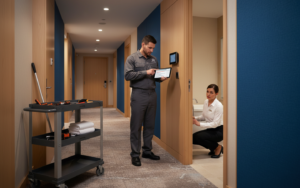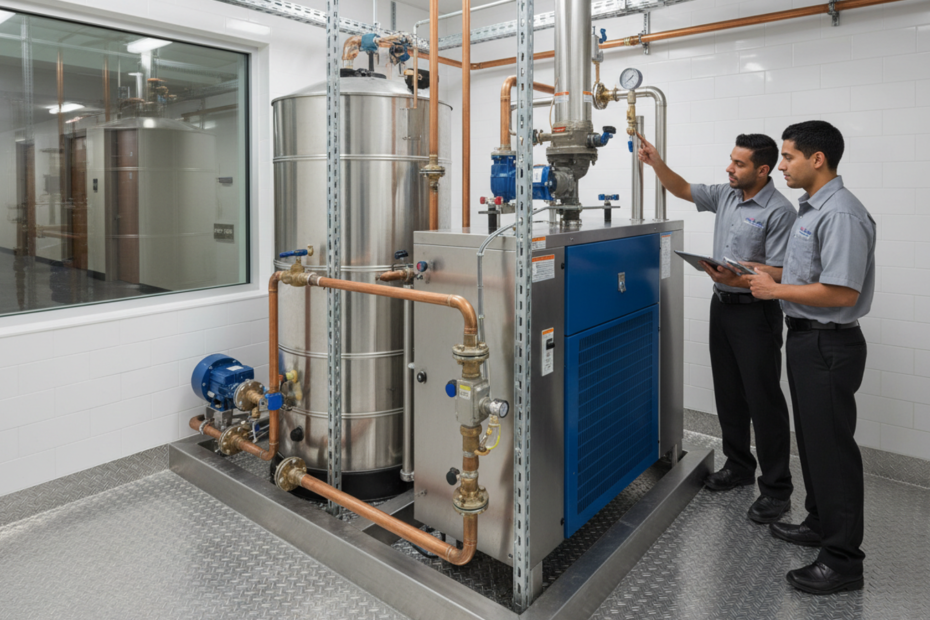
A guest reports that the room air conditioner is not cooling properly. The maintenance team repairs the unit, but the same complaint returns a few days later. In another room, the hot-water supply stops working again after a recent repair. These repeated issues affect guest comfort, room availability and maintenance costs.
Reducing repeat failures in HVAC and hot-water systems requires more than fixing individual faults. Hotel teams need to identify recurring causes, maintain accurate repair records and schedule preventive inspections. A structured process helps maintenance teams address underlying problems instead of repeatedly treating the same symptoms.
Why HVAC and hot-water systems need regular attention
HVAC and hot-water systems support essential guest-room services. Frequent use, equipment condition, installation quality and maintenance practices all affect performance.
Common problems include:
HVAC systems
Inadequate cooling or uneven room temperatures.
Blocked or dirty air filters.
Water leakage from indoor units.
Unusual noise or vibration.
Thermostat or control faults.
Refrigerant-related issues.
Poor airflow or drainage problems.
Hot-water systems
Inconsistent water temperature.
Slow hot-water delivery.
Low water pressure.
Leaking pipes or valves.
Heating element or thermostat faults.
Scale accumulation in relevant equipment.
Circulation or pump problems.
These symptoms do not always point to the same cause. Technicians should inspect the equipment and follow manufacturer guidance before deciding on repairs.
Identify the causes behind repeat equipment failures
Repeat failures in HVAC and hot-water systems often occur when teams repair visible symptoms without checking the underlying cause.
1. Incomplete fault diagnosis
Replacing a faulty component without checking connected parts might lead to another failure. For example, an HVAC unit with repeated cooling problems needs a proper assessment of airflow, controls, drainage and other relevant components.
2. Irregular preventive maintenance
When teams postpone filter cleaning, equipment inspections or other scheduled tasks, small defects might develop into larger problems.
3. Poor repair documentation
If technicians do not record previous repairs, the next team might repeat the same checks without understanding the equipment’s history.
4. Incorrect spare parts
Using unsuitable or incompatible replacement parts might affect equipment performance. Maintenance teams should verify specifications before installation.
5. Operating conditions and heavy usage
High occupancy, frequent equipment operation and local water conditions affect maintenance requirements. Hotels should review equipment performance under actual operating conditions.
How to reduce repeat failures in HVAC and hot-water systems
A consistent maintenance process helps teams investigate recurring defects and prevent unnecessary repeat repairs.
1. Maintain an equipment history
Create a separate record for each major HVAC and hot-water asset. Include:
Equipment identification and location.
Manufacturer and model details.
Installation or commissioning date.
Previous fault reports.
Inspection and service dates.
Parts replaced.
Technician observations.
Repair completion details.
When a fault returns, technicians should review the equipment history before starting another repair.
2. Investigate recurring faults
Do not close a repeated complaint after a temporary correction. Ask the technician to identify why the issue returned.
For example, repeated air-conditioning water leakage might involve drainage, installation or maintenance conditions. A recurring hot-water temperature problem might involve controls, heating components or circulation.
Record the confirmed cause and corrective action. Refer complex technical issues to qualified service professionals.
3. Follow preventive maintenance schedules
Create inspection schedules based on equipment manuals, usage and service recommendations.
For HVAC equipment, relevant checks might include filters, airflow, drainage, electrical connections and operating performance.
For hot-water systems, inspections might cover temperature controls, visible pipework, valves, pumps and equipment condition.
Use qualified technicians for technical work. Follow applicable safety requirements and manufacturer instructions.
4. Standardise repair procedures
Use a standard process for reporting, diagnosing, repairing and testing equipment.
Every repair record should state:
Reported symptom.
Inspection findings.
Confirmed or suspected cause.
Repair performed.
Parts used.
Testing completed.
Follow-up action, if required.
A standard record helps supervisors review repair quality across rooms and shifts.
5. Test equipment after repairs
Do not rely only on a technician’s confirmation that a component has been replaced. Test the system under suitable operating conditions.
For an HVAC repair, check the relevant operating performance and inspect for visible leakage or unusual noise. For a hot-water repair, verify the required temperature and flow according to hotel procedures and equipment specifications.
Record the test result before closing the request.
Repeat failures in HVAC and hot-water systems checklist
Use this checklist during maintenance reviews:
HVAC and hot-water assets listed by room and equipment type.
Equipment history maintained.
Previous repair records reviewed before repeat work.
Recurring faults identified and grouped.
Root causes investigated by qualified technicians.
Preventive maintenance schedule followed.
Manufacturer service recommendations reviewed.
Correct spare parts used.
Repairs tested before closure.
Follow-up inspections scheduled where required.
Repeated defects escalated to the maintenance supervisor.
Equipment replacement considered when repair history supports the decision.
Supervisors should review unresolved and recurring issues during maintenance meetings.
Best practices for HVAC and hot-water maintenance
Group failures by equipment type
Track faults separately for air-conditioning units, thermostats, pumps, heaters, valves and other components. This helps managers identify equipment categories with frequent problems.
Prioritise repairs by guest impact
A complete cooling failure in an occupied room requires faster attention than a minor cosmetic defect. A hot-water failure affecting guest use should also receive suitable priority.
Use the hotel’s approved maintenance priority system and communicate room restrictions to the front desk.
Review spare-part quality and availability
Maintain a list of frequently used parts and approved specifications. Check compatibility before installation. Record parts used against each repair.
Train staff to report early symptoms
Housekeeping and front-desk teams often receive the first reports of equipment problems. Train staff to record symptoms clearly, including room number, time and guest feedback.
Employees should report faults rather than attempt technical repairs outside their training.
Review repair history before replacing equipment
Frequent failures might indicate that an asset needs major repair or replacement. Compare repair costs, equipment age, service recommendations and downtime before making the decision.
Coordinate maintenance with room cleaning
Schedule technical work when room access is available. If repairs create dust, water residue or debris, housekeeping should complete the required cleaning afterwards.
Confirm room readiness before returning the room to available inventory.
How hotel technology supports maintenance coordination
Accurate room and reservation information helps managers plan equipment repairs without creating unnecessary booking conflicts. A hotel property management system supports reservation and room-availability workflows. Hotels should review how room-status updates connect with their maintenance procedures.
A hotel front-desk management system also supports arrival planning and reservation coordination. Front-desk teams need current information when rooms are blocked for repairs or returned to service.
Aiosell provides connected hotel technology for reservations, front-desk operations and revenue management. Hotels evaluating hotel management software should check how available features support their operational reporting and existing integrations.
Aiosell does not replace a dedicated maintenance or asset-management system. Hotels should use a suitable tool or register to track equipment history, preventive inspections, work orders and repair outcomes. Confirm available integrations before selecting a platform.
KPIs to track recurring equipment problems
Managers should measure repair quality and equipment reliability through clear indicators.
KPI | What to measure |
Repeat failure rate | Equipment faults reported again within a defined period |
Mean time between failures | Average operating time between recorded failures |
Repair completion time | Time from work-order assignment to completion |
Preventive maintenance completion | Scheduled inspections completed on time |
Equipment downtime | Time an asset remains unavailable |
Maintenance cost per asset | Repair and service spending by equipment |
Guest complaints | HVAC and hot-water complaints by room or issue type |
Review results monthly. Identify rooms and equipment with repeated failures. Assign corrective actions and check whether the next inspection confirms improvement.
Conclusion
Repeat equipment failures affect guest comfort, room availability and maintenance budgets. Hotels should maintain accurate equipment histories, investigate recurring faults and test every repair before closure.
Regular inspections and clear reporting help teams identify patterns and plan corrective work. Aiosell supports connected reservation, front-desk and revenue workflows, while dedicated maintenance procedures and technical tools help hotels manage HVAC and hot-water assets.
Frequently asked questions
Why do HVAC systems fail repeatedly in hotels?
Recurring HVAC problems might result from incomplete diagnosis, irregular maintenance, unsuitable replacement parts or operating conditions. Technicians should review the equipment history and inspect the system before repeating a repair.
How do hotels prevent repeated hot-water problems?
Maintain equipment records, inspect relevant components according to manufacturer guidance and test repairs before closure. Investigate recurring temperature, pressure and flow complaints rather than applying temporary fixes.
How often should hotels service HVAC systems?
The schedule depends on equipment type, usage, manufacturer guidance and operating conditions. Hotels should follow the service recommendations and adjust inspections based on equipment history.
Who should monitor repeat maintenance failures?
The maintenance supervisor should review repair records and recurring defects. The operations manager should monitor downtime, guest impact and corrective actions.
When should a hotel replace HVAC or hot-water equipment?
Consider replacement when repeated failures, repair costs, equipment condition or downtime make continued operation unsuitable. Seek a qualified technical assessment before deciding.