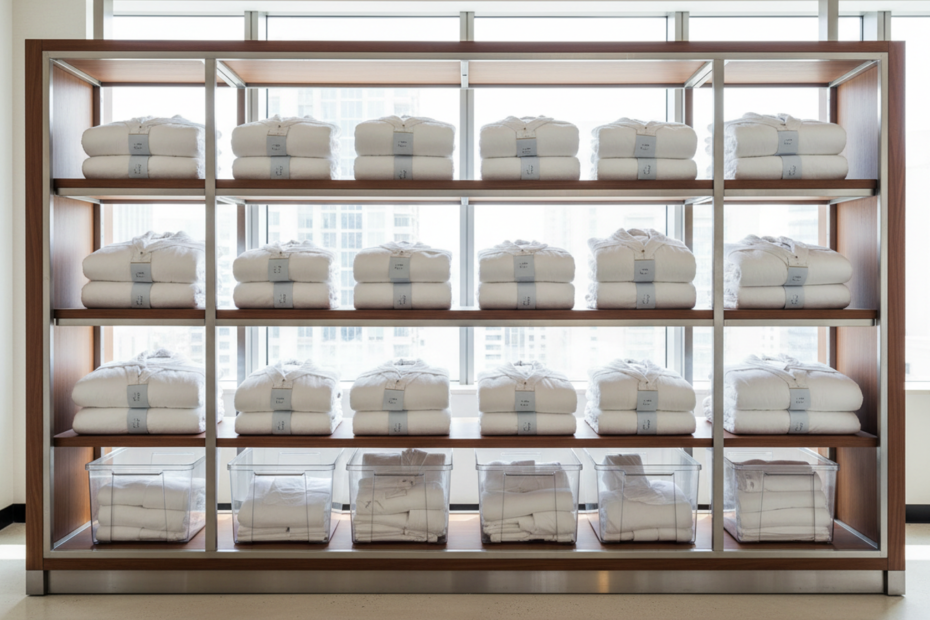
A hotel with 50 rooms faces a busy weekend. Housekeeping needs fresh bedsheets, pillow covers and towels for departing guests. At the same time, used linen waits for laundry processing. If the hotel holds insufficient stock, room preparation slows down and staff spend time searching for available items.
Managing linen par levels and replacement cycles helps hotels maintain enough clean linen for daily operations while controlling storage, laundry and purchasing costs. A clear system also helps housekeeping supervisors identify shortages, monitor damaged items and plan replacements before stock levels affect guest service.
What Are Linen Par Levels in Hotel Operations?
A linen par level refers to the quantity of linen a hotel keeps to support its operating requirements. Hotels often calculate par levels based on room count, occupancy, laundry turnaround time and linen usage.
For example, a hotel might maintain three sets of bedsheets for each bed:
One set in guest rooms.
One set in the laundry process.
One clean set in storage, ready for use.
This is commonly described as a three-par system. The required quantity varies according to hotel operations, laundry arrangements and occupancy patterns.
Why Hotels Need a Structured Linen Management Process
Linen shortages affect more than housekeeping inventory. They also influence room readiness, laundry scheduling and purchasing decisions.
A structured process helps hotels:
Maintain sufficient clean linen for expected occupancy.
Reduce delays caused by missing bedsheets and towels.
Identify damaged or worn-out stock.
Avoid unnecessary linen purchases.
Track laundry losses and stock discrepancies.
Maintain consistent guest-room presentation.
Hotels should review linen usage regularly instead of relying on fixed estimates throughout the year.
How to Calculate Linen Par Levels
Start by identifying the number of rooms, beds and linen items required for each room category. Then consider laundry turnaround time and the hotel’s operating pattern.
A basic calculation follows this method:
Linen par quantity = Number of required linen items per room × Number of rooms × Par level
For example, consider a 50-room hotel. Each room requires one bedsheet per bed, and the hotel follows a three-par system.
Assuming one bed per room:
Bedsheets required per room: 1
Number of rooms: 50
Par level: 3
Total bedsheets required: 1 × 50 × 3 = 150 bedsheets.
This example covers one bedsheet per room. Hotels should calculate separate quantities for pillow covers, bath towels, hand towels, bath mats and other linen categories.
The calculation should also account for additional beds, extra linen requests and differences between room categories.
Factors That Affect Linen Stock Requirements
A hotel should not use the same par level for every linen item. Different items have different usage patterns and replacement needs.
Occupancy Levels
Higher occupancy increases linen consumption and laundry volume. Review seasonal demand, weekend occupancy, group bookings and expected room usage before adjusting stock requirements.
Laundry Turnaround Time
Hotels using external laundry services need enough linen to cover collection, washing, drying, ironing and delivery time. Delayed deliveries increase the quantity required in reserve.
Room Categories
Suites, family rooms and premium categories often require different linen quantities. Calculate stock according to the actual room setup.
Linen Usage Frequency
Some items require replacement more frequently because guests use them more often. Towels, bedsheets and pillow covers should have separate stock records.
Damage and Loss
Stains, tears, missing items and laundry damage reduce usable inventory. Track these losses so purchasing plans reflect actual stock availability.
Linen Par Levels and Replacement Cycles Checklist
Use this checklist to review linen stock and housekeeping requirements.
Stock Planning
Record the total number of rooms and beds.
List linen items required for each room category.
Calculate par levels for each linen category.
Review occupancy patterns and seasonal demand.
Account for laundry turnaround time.
Set minimum stock levels for essential items.
Maintain a record of additional linen requirements.
Daily Linen Control
Count clean linen issued to housekeeping.
Record used linen sent to laundry.
Check returned linen quantities.
Separate stained and damaged items.
Record missing or unreturned linen.
Check available clean stock before peak arrivals.
Update inventory records after stock movement.
Replacement Planning
Inspect linen condition regularly.
Identify items with permanent stains or tears.
Record damaged and unusable quantities.
Review replacement requirements by category.
Approve purchases based on stock levels.
Remove unfit linen from guest-room circulation.
Review replacement records periodically.
Best Practices for Managing Linen Stock
Linen par levels and replacement cycles should form part of a regular housekeeping control process. Managers need clear stock records and consistent procedures for issuing, collecting and replacing linen.
Maintain Separate Records for Each Linen Category
Track bedsheets, pillow covers, bath towels, hand towels, bath mats and other items separately. Combining all linen into one stock figure makes shortages harder to identify.
Use a simple inventory register with these fields:
Field | Information to Record |
Linen category | Bedsheet, towel, pillow cover or other item |
Opening stock | Quantity available at the start |
Issued quantity | Items sent to housekeeping |
Laundry quantity | Items sent for washing |
Returned quantity | Clean items received |
Damaged quantity | Items removed from usable stock |
Closing stock | Quantity available at the end |
Replacement requirement | Additional stock needed |
Set a Fixed Linen Issue and Return Process
Housekeeping should collect linen through a defined issue process. Record the quantity issued to each floor or team.
When used linen returns, count the items and compare the quantity against the issue record. Investigate repeated differences instead of adjusting stock figures without explanation.
Inspect Linen Before Reuse
Laundry completion does not automatically mean linen is ready for guest use. Employees should check for stains, tears, unpleasant odours and incomplete cleaning.
Separate unfit items immediately. Do not return them to clean storage.
Establish Replacement Criteria
Hotels should define when linen needs replacement. Common reasons include:
Permanent stains.
Tears and damaged seams.
Worn or thin fabric.
Discolouration.
Loss of shape or absorbency.
Repeated guest complaints about linen condition.
Replacement decisions should follow condition and hotel standards rather than age alone. Maintain records to identify which items require frequent replacement.
Review Stock Before High-Occupancy Periods
Before holidays, events and group bookings, review clean stock and expected laundry demand. Arrange additional supplies early when existing stock is insufficient.
This reduces the risk of last-minute purchases and room-preparation delays.
How to Manage Linen Replacement Cycles
A replacement cycle defines how hotels review, remove and replenish linen stock. The cycle should combine regular condition inspections with stock monitoring.
Step 1: Inspect Linen Condition
Supervisors should inspect linen during routine housekeeping checks. Record damage, stains and items showing signs of wear.
Step 2: Classify Linen
Separate stock into three groups:
Usable: Suitable for guest-room use.
Repair or review: Requires further assessment according to hotel policy.
Unusable: Unfit for guest use and ready for removal from circulation.
Step 3: Record Removed Items
Update inventory records whenever linen leaves circulation. Include the item category, quantity and reason for removal.
Step 4: Calculate Replacement Needs
Compare usable stock against the required par level. Include pending laundry returns and upcoming occupancy requirements.
Step 5: Purchase and Replenish
Raise purchase requests based on the shortage and approved budget. Check the quality and specifications of new linen before adding stock to circulation.
Step 6: Review the Cycle
Review replacement records to identify frequent damage, excessive losses or purchasing gaps. Adjust stock plans when operating requirements change.
Use Hotel Technology to Support Housekeeping Coordination
Accurate operational information helps hotel teams coordinate reservations, room status and front-desk activities. Hotels should define how housekeeping communicates room readiness and how staff record operational updates.
Aiosell supports connected hotel operations through reservation, front-desk and revenue management functions. Hotels should review available features and integrations when planning their housekeeping coordination process.
For linen inventory, maintain a suitable stock register or inventory solution that records quantities issued, returned, damaged and replaced. Do not assume room-management software automatically tracks linen inventory. Confirm the available functions before selecting a system.
Aiosell forms part of the wider hotel technology setup. Clear housekeeping procedures and accurate inventory records still guide daily linen control.
KPIs to Monitor Linen Management
Hotel managers should review linen records regularly to understand stock availability, losses and replacement costs.
KPI | What It Measures |
Linen stock availability | Whether usable stock meets the required par level |
Linen loss rate | Quantity of linen missing during a reporting period |
Damage rate | Percentage of linen removed due to damage |
Replacement cost | Spending on new linen |
Laundry turnaround time | Time taken for linen to return from laundry |
Stock variance | Difference between recorded and physical stock |
Linen shortage incidents | Frequency of shortages affecting housekeeping |
Review these measures by linen category. A shortage of bath towels requires a different response from frequent bedsheet damage.
Conclusion
Effective linen management helps Indian hotels maintain room readiness, control purchasing costs and support consistent housekeeping standards. Set par levels according to room requirements, occupancy and laundry turnaround. Track stock movement and inspect linen condition before reuse.
Regular reviews help managers identify shortages, losses and replacement needs early. With clear procedures and connected hotel operations, Aiosell supports the reservation and front-desk workflows that form part of daily hotel management.
FAQs
What Does Three-Par Linen Stock Mean in Hotels?
A three-par system maintains three sets of linen for each required item. One set is in use, another is in laundry and the third is available as clean reserve stock. Actual requirements depend on laundry turnaround and hotel operations.
How Do Hotels Calculate Linen Par Levels?
Hotels calculate par levels using the number of rooms, beds, linen items required per room and the number of stock sets needed. Laundry turnaround, occupancy and additional guest requirements also influence the calculation.
How Often Should Hotels Replace Bed Linen and Towels?
Hotels should inspect linen regularly and replace items when stains, tears, wear or other defects make them unsuitable for guest use. Replacement timing depends on usage, fabric quality and hotel standards.
How Do Hotels Prevent Linen Loss?
Maintain issue and return records, count linen sent to laundry, verify returned quantities and investigate repeated stock differences. Regular physical stock checks help identify losses.
Who Is Responsible for Linen Inventory Management?
The housekeeping department usually manages daily linen issue, collection and condition checks. Housekeeping supervisors monitor stock records, while managers review purchasing requirements and replacement budgets.