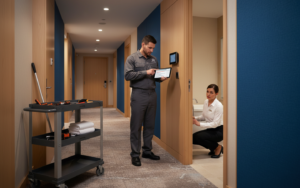
A guest reports an air-conditioning problem shortly after checking into a hotel room. The front-office team arranges another room, but housekeeping has not received the update. The new room is still being cleaned, and the guest has to wait. Poor coordination during room changes creates delays and affects the guest experience.
Room moves without disrupting guest service require coordination between front office, housekeeping and maintenance teams. Employees must confirm room availability, communicate with the guest and update hotel records before completing the transfer.
For hotel owners and operations leaders, a standard room-move procedure helps prevent confusion and maintain service quality. This guide explains how Indian hotels should manage room changes, assign responsibilities and maintain accurate records.
Why Do Hotels Need a Standard Room-Move Process?
Hotels move guests to different rooms for several reasons. Some changes happen because of guest preferences, while others involve maintenance issues or operational requirements.
Common reasons include:
Air-conditioning or plumbing problems.
Housekeeping or cleanliness concerns.
Guest requests for a different room type.
Noise complaints or location preferences.
Accessibility requirements.
Room allocation errors.
Maintenance work requiring a room to be vacated.
Each room change affects several departments. Front office must update the guest’s accommodation details. Housekeeping needs to prepare the replacement room. Maintenance might need to inspect the original room.
Without a standard process, employees risk assigning an unavailable room, missing guest belongings or recording incorrect billing details.
Plan Room Moves Without Disrupting Guest Service
A planned process helps employees manage room changes with fewer delays. Front-office teams should follow a consistent sequence whenever a guest requests a room move.
1. Understand the Guest’s Concern
Listen to the guest and identify the reason for the request. Ask relevant questions to understand whether the issue requires an immediate room change.
For maintenance complaints, inform the appropriate team. For preference-based requests, check available room options before making a commitment.
2. Check Replacement Room Availability
Review the room inventory before confirming a transfer.
Check:
Current room status.
Room category and occupancy capacity.
Housekeeping readiness.
Maintenance restrictions.
Guest preferences and requirements.
Any special allocation instructions.
Never promise a replacement room before confirming its availability and readiness.
3. Coordinate with Housekeeping
Contact housekeeping to verify whether the replacement room is clean and ready. Share the expected transfer time so the team can prioritise preparation where necessary.
Housekeeping should also receive information about the original room. The team needs to know whether the room requires cleaning, inspection or maintenance.
4. Inform the Guest About the Transfer
Explain the available room option and the expected transfer process. Share clear information about the new room location and any expected waiting time.
If the transfer involves a delay, update the guest rather than leaving them without information.
5. Update the Hotel Records
Record the room change in the hotel’s property management system or approved room-allocation records.
Update the guest’s room assignment, billing details and relevant service instructions. Inform the departments responsible for guest requests and room preparation.
6. Confirm the Guest Has Settled In
After the transfer, check whether the guest has entered the new room and received the required assistance.
Confirm that the original complaint has been addressed. If the issue involves maintenance, retain the details for inspection and follow-up.
Room Moves Without Disrupting Guest Service Checklist
Hotel owners and front-office managers should use a standard checklist to ensure employees complete every important step.
Before finalising a room move, confirm:
The reason for the room change has been recorded.
The guest’s requirements have been understood.
Replacement room availability has been verified.
Housekeeping has confirmed room readiness.
Maintenance has received relevant complaints.
The guest has received clear transfer instructions.
Luggage assistance has been arranged where required.
Guest records have been updated.
Billing and room charges have been checked.
Relevant departments have received the update.
The guest has confirmed satisfaction with the new room.
The original room has been marked for the required follow-up.
The front-office supervisor should review unresolved items before closing the room-move request.
Best Practices for Managing Hotel Room Changes
A consistent process helps employees respond to room changes without creating additional work for other departments.
Maintain Accurate Room-Status Information
Front-office and housekeeping teams should work with updated room-status records. Avoid assigning rooms based on outdated information or verbal confirmation alone.
Assign Responsibility for Each Transfer
The front-office employee coordinating the move should remain responsible for tracking progress until the guest settles into the replacement room.
Housekeeping and maintenance should receive specific tasks with clear timelines.
Coordinate Luggage Assistance
Offer assistance with luggage when a guest changes rooms. Confirm whether the guest prefers to move independently or requires support from hotel staff.
Employees should handle guest belongings carefully and follow hotel procedures for identifying and transferring luggage.
Check Billing Before Closing the Transfer
Review room rates, additional charges and payment instructions after the room change. If the new room belongs to a different category, explain any applicable price difference before completing the transfer.
Record the Reason for Every Room Move
Maintain a record of why each transfer occurred. Repeated complaints about the same room, equipment or service issue should receive management attention.
Follow Up with the Guest
A short follow-up helps confirm whether the new room meets the guest’s expectations. Employees should also check whether the original problem requires further action.
How Technology Supports Room-Move Coordination
Manual room-allocation records and verbal updates increase the risk of errors. Hotel management systems help front-office teams review reservation details and maintain updated room information.
Aiosell provides integrated hotel management technology covering reservations, front-desk operations and revenue management. These connected systems support hotel teams in managing booking information and daily front-office activities.
Hotels evaluating a hotel property management system should review how the platform supports room allocation, reservation records and front-desk workflows.
Aiosell supports connected hotel operations through integrated technology. Hotels should combine system records with direct communication between front office, housekeeping and maintenance teams.
How Hotel Managers Should Monitor Room-Move Performance
Hotel owners and general managers should review room-move records to identify recurring operational problems.
Track the following indicators:
Number of room changes during each review period.
Main reasons for guest transfers.
Average time taken to arrange a replacement room.
Guest complaints after room changes.
Delays caused by housekeeping readiness.
Maintenance issues linked to repeated transfers.
Billing corrections after room allocation changes.
Use these records during management meetings. For example, frequent room changes due to air-conditioning problems might indicate a need for better maintenance planning.
Reviewing these patterns helps managers address the underlying issues instead of treating every transfer as an isolated incident.
Conclusion
Room changes require coordination across front office, housekeeping and maintenance. Hotels should follow a standard procedure for checking room availability, communicating with guests, updating records and completing follow-up tasks.
Room moves without disrupting guest service depend on accurate information, clear responsibilities and timely communication. Aiosell supports hotel operations through integrated technology for reservations, front-desk activities and revenue management. Hotels should combine suitable technology with consistent employee procedures to manage room changes efficiently.
FAQs
Why do hotels move guests to different rooms?
Hotels move guests because of maintenance problems, cleanliness concerns, room preferences, noise complaints or allocation errors. The reason determines which departments need to coordinate the transfer.
Who is responsible for managing a hotel room move?
The front-office team usually coordinates the transfer. Housekeeping confirms room readiness, while maintenance handles technical issues when required.
Should hotels update guest records after a room change?
Yes. Hotels should update room assignments, billing details and relevant guest instructions in their approved records or property management system.
How do hotels reduce delays during room transfers?
Hotels should verify replacement room availability, coordinate with housekeeping, assign transfer responsibilities and keep guests informed about progress.
What should hotels check after moving a guest?
Employees should confirm the guest has settled into the replacement room, review billing details and ensure the original complaint has received appropriate attention.