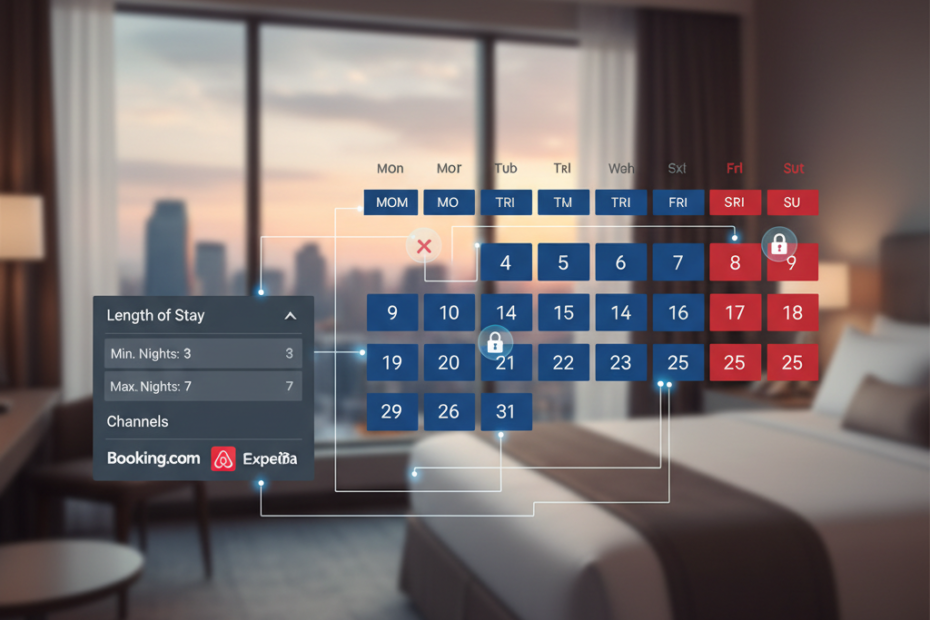
Managing room inventory across multiple booking platforms can feel like juggling flaming torches. One wrong move and you risk overbookings, revenue loss, or frustrated guests. Length-of-stay restrictions offer hoteliers a powerful tool to control bookings during high-demand periods, optimize occupancy, and maximize revenue. When you pair these restrictions with a hotel channel manager, you gain the ability to automate and synchronize these rules across all your distribution channels instantly. This combination transforms how you manage bookings and helps you capture the right guests at the right price.
What Are Length-of-Stay Restrictions?
Length-of-stay restrictions, often called LOS restrictions, are booking rules that control how many nights guests must book. These rules help hotels manage inventory strategically by setting minimum or maximum stay requirements. A minimum length of stay (MinLOS) requires guests to book at least a certain number of nights, while a maximum length of stay (MaxLOS) caps how long guests can reserve a room.
Hotels typically use these restrictions during peak seasons, special events, or weekends when demand spikes. For example, a beach resort might set a three-night minimum during summer weekends to avoid short stays that leave gaps in the booking calendar. Convention hotels often use MinLOS rules during major conferences to maximize revenue from high-demand periods. These restrictions prevent low-value bookings that could block inventory from more profitable longer stays.
How Channel Managers Automate LOS Rules
A hotel channel manager acts as your central command center for distribution. It connects your property management system to multiple online travel agencies (OTAs), booking sites, and direct booking channels. When you set length-of-stay restrictions in your channel manager, the system automatically pushes those rules to all connected platforms simultaneously.
This channel manager automation eliminates the need to log into each OTA separately to update booking rules. Without automation, you would need to manually adjust settings on Booking.com, Expedia, Airbnb, and every other platform you use. That process wastes hours and creates opportunities for errors. A single mistake could mean losing thousands in revenue or facing angry guests who booked through outdated rules.
Modern channel managers update LOS restrictions in real time across all channels. When you change a minimum stay requirement from two nights to three nights, every connected platform reflects that change within minutes. This synchronization ensures consistency across your entire distribution network and prevents booking conflicts.
Types of Length-of-Stay Booking Rules
Understanding the different types of LOS restrictions helps you apply the right strategy for your property. Each rule type serves a specific purpose in your revenue management toolkit.
Minimum Length of Stay (MinLOS)
MinLOS requires guests to book a specific number of nights or more. This rule works best during high-demand periods when you want to avoid short stays. A three-night MinLOS during a holiday weekend ensures you fill those valuable nights with committed guests rather than one-night bookings that leave gaps.
Maximum Length of Stay (MaxLOS)
MaxLOS caps how long guests can book. Hotels use this restriction less frequently, but it proves valuable when you expect sustained high demand. A MaxLOS of seven nights during peak season allows you to accommodate more guests and capture multiple booking cycles rather than locking rooms for extended low-rate stays.
Closed to Arrival (CTA) and Closed to Departure (CTD)
While technically separate from LOS restrictions, CTA and CTD rules work alongside them. CTA prevents guests from checking in on specific dates, while CTD blocks checkouts. These rules help you manage stay patterns and prevent undesirable booking combinations that create inventory gaps.
Strategic Benefits of LOS Restrictions
Length-of-stay restrictions deliver measurable advantages when you apply them strategically. These rules do more than control bookings; they shape your revenue outcomes and operational efficiency.
First, LOS restrictions maximize revenue during peak demand. By requiring longer stays when demand exceeds supply, you capture more nights at premium rates. A hotel near a major stadium might enforce a four-night minimum during championship games, ensuring those valuable nights generate maximum revenue instead of going to single-night bookings.
Second, these restrictions reduce operational costs. Longer stays mean fewer check-ins and checkouts, which translates to less housekeeping turnover and lower labor costs. Your staff spends less time processing arrivals and departures, allowing them to focus on guest service quality.
Third, LOS rules help you avoid booking gaps. Short stays during high-demand periods often create orphan nights that remain unsold. A two-night minimum on Fridays and Saturdays prevents Thursday or Sunday gaps that become difficult to fill.
Best Practices for Implementing LOS Restrictions
Setting up length-of-stay restrictions requires careful planning and ongoing adjustment. Follow these proven practices to get the best results from your channel manager.
Start by analyzing your booking patterns and demand cycles. Review historical data to identify when guests typically book longer or shorter stays. Look for patterns around weekends, holidays, local events, and seasonal peaks. This analysis reveals where LOS restrictions will deliver the most value.
Set restrictions well in advance of high-demand periods. Most channel managers let you schedule LOS rules to activate automatically on specific dates. Program your summer weekend minimums in early spring so they appear across all channels before guests start booking.
Monitor performance regularly and adjust as needed. If a three-night minimum leaves rooms empty, reduce it to two nights. If you sell out quickly, consider increasing the minimum for future similar periods. Your channel manager should provide reporting tools that show how restrictions affect booking velocity and revenue.
Communicate clearly with potential guests. While your channel manager pushes restrictions to all platforms, make sure your direct booking website explains why minimums exist. Transparency builds trust and reduces frustrated inquiries.
Common Mistakes to Avoid
Even experienced hoteliers stumble when managing LOS restrictions. Avoid these frequent errors to protect your revenue and guest satisfaction.
Never set restrictions too early or too rigidly. Overly aggressive minimums during uncertain demand periods can block bookings entirely. If you enforce a five-night minimum three months before a festival that might get cancelled, you risk empty rooms.
Do not forget to remove restrictions after peak periods end. Leaving a weekend minimum in place during low season will cost you bookings. Use your channel manager’s scheduling features to automatically lift restrictions when demand returns to normal.
Avoid inconsistent rules across channels. Your channel manager exists to maintain consistency, but manual overrides on individual platforms can create confusion. Keep all restrictions synchronized unless you have a specific strategic reason for channel-specific rules.
Conclusion
Length-of-stay restrictions via channel manager give you precise control over your booking inventory while saving countless hours of manual work. These automated rules help you maximize revenue during peak demand, reduce operational costs, and prevent booking gaps that hurt profitability. By understanding the different restriction types, applying them strategically, and avoiding common mistakes, you transform your channel manager into a powerful revenue management tool. The key lies in analyzing your property’s unique patterns, setting restrictions thoughtfully, and monitoring results continuously to refine your approach.