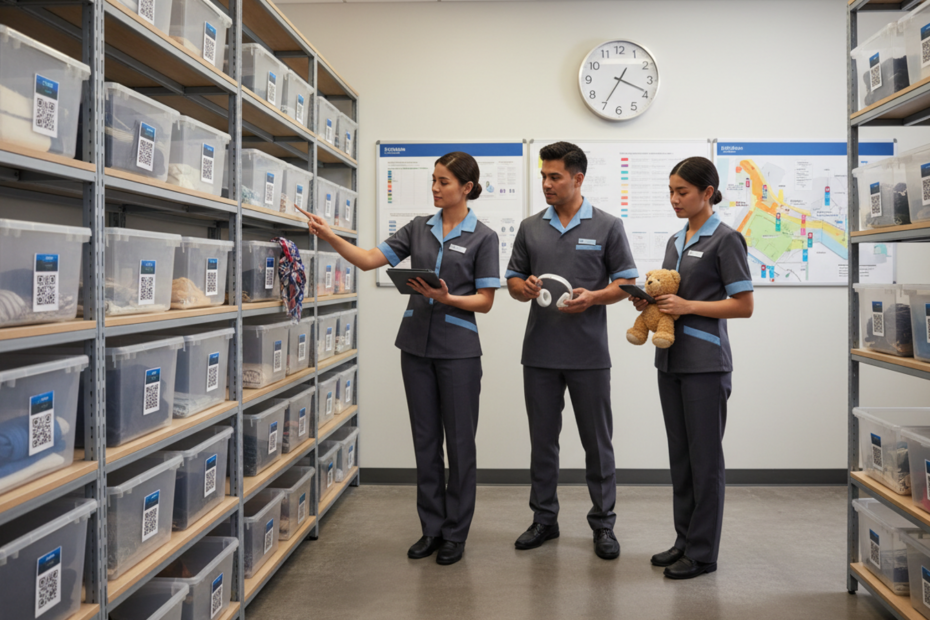
A guest checks out of a hotel and leaves a mobile phone inside the bedside drawer. Housekeeping finds the phone during room cleaning and informs the supervisor. Before the next shift begins, the front desk receives a call from the guest asking about the missing item. Without a clear record, employees might struggle to confirm where the phone was found or who currently holds it.
Tracking lost-and-found items across shifts requires a standard reporting process, secure storage and accurate handover records. Hotel managers should ensure every department follows the same procedure from the moment an item is found until its return or authorised disposal.
Why Hotels Need a Standard Lost-and-Found Process
Guests leave personal belongings in bedrooms, bathrooms, restaurants, lobbies and other hotel areas. Housekeeping employees often find items during room cleaning, while restaurant and front-office staff might receive items from guests or other employees.
Without a standard process, hotels face several operational problems:
Items are misplaced after being found.
Employees forget to record important details.
Shift changes create gaps in responsibility.
Staff struggle to identify the person holding an item.
Guest enquiries take longer to resolve.
Unclaimed items remain in storage without review.
A documented process gives employees clear instructions and helps managers maintain accountability.
Establish a Clear Lost-and-Found Reporting Procedure
Every employee should know what to do after finding a guest’s belongings. The procedure should remain consistent across housekeeping, front office, food and beverage and other departments.
1. Secure the Found Item
The employee should avoid using, opening or unnecessarily handling the item. If the item appears valuable or contains personal information, follow the hotel’s security procedure.
Do not attempt to access a guest’s phone, laptop, wallet or personal documents.
2. Record the Discovery Details
The employee should report the item to the designated supervisor. Record the date, time, location and name of the employee who found it.
For example, record “black mobile phone found in Room 204 bedside drawer” rather than simply writing “phone found.”
3. Assign a Unique Reference Number
Give every found item a unique identification number. Use the reference number on the record and storage label.
This helps employees identify the correct item without repeatedly handling or describing personal belongings.
4. Transfer the Item to Secure Storage
Move the item to the hotel’s designated lost-and-found storage area. Restrict access to authorised employees.
Valuable items should follow stricter security and documentation procedures according to hotel policy.
5. Update the Lost-and-Found Register
Record the item’s current storage location and the employee responsible for custody. Update the register whenever the item changes hands.
Lost-and-Found Items Across Shifts Checklist
A standard checklist helps employees complete each step and maintain accurate records during shift changes.
When an Item Is Found
Record the date and time.
Note the exact location where the item was found.
Describe the item clearly.
Assign a unique reference number.
Record the name of the employee who found it.
Inform the designated supervisor.
Transfer the item to authorised storage.
Record the storage location.
During Shift Handover
Review all newly reported items.
Check items awaiting guest collection.
Confirm the current storage location.
Identify the employee responsible for custody.
Record pending guest enquiries.
Highlight valuable or sensitive items.
Obtain acknowledgement from the incoming employee.
Update the register after the handover.
When Returning an Item
Verify the claimant’s identity.
Confirm ownership using suitable details.
Record the date and time of collection.
Record the recipient’s name.
Obtain acknowledgement according to hotel policy.
Update the item status.
Close the record after completing the return.
How to Manage Lost-and-Found Items Across Shifts
Lost-and-found items across shifts need clear ownership. A handover should confirm both the physical item and its recorded status.
Use One Central Register
Maintain one official register for all departments. Avoid separate records that create conflicting information.
A central register should include:
Record Field | Information to Capture |
Reference number | Unique item identification |
Item description | Type, colour and visible features |
Found location | Room number or hotel area |
Date and time found | When the item was reported |
Found by | Employee name or staff ID |
Storage location | Approved storage area |
Current custodian | Employee responsible for the item |
Guest enquiry status | Whether a guest has contacted the hotel |
Collection status | Pending, returned or unclaimed |
Final action | Collection or authorised disposal |
Keep descriptions factual. Avoid recording unnecessary personal information.
Make Lost-and-Found Part of Every Shift Handover
The outgoing supervisor should review the register before leaving. The incoming supervisor should confirm pending items and accept responsibility for follow-up.
A proper handover should include:
Newly found items awaiting storage.
Items already placed in secure storage.
Guest enquiries awaiting a response.
Items scheduled for collection.
Unclaimed items approaching the hotel’s review deadline.
Any security concern requiring management attention.
Both employees should acknowledge the handover according to hotel procedure.
Assign One Responsible Department
Hotels should designate a department or supervisor to oversee the register. Housekeeping often finds items during room cleaning, while front office frequently handles guest enquiries.
Define who maintains the master record and who has authority to release items. Other departments should report discoveries through the same process.
Use Secure Storage
Keep found items in a designated, access-controlled location. Separate valuable items, documents, electronics and ordinary belongings according to hotel policy.
Avoid leaving items at reception counters, housekeeping trolleys or open office shelves.
Maintain a Clear Collection Process
Before returning an item, staff should verify the claimant’s identity and ask for details supporting ownership. Record the handover and obtain acknowledgement.
For items collected by representatives, follow the hotel’s authorisation procedure. Do not release belongings based only on a verbal description when stronger verification is required.
Best Practices for Preventing Lost-and-Found Handover Errors
A consistent process reduces confusion and protects guest belongings.
Train Employees Across Departments
Every department should understand how to report found items. Include the procedure in employee induction and refresher training.
Use practical examples such as a phone found in a guest room, jewellery found in a bathroom or a wallet reported by restaurant staff.
Keep Records Updated Immediately
Employees should record items as soon as they find them. Delayed entries increase the risk of missing details and unclear ownership.
Review Valuable Items Separately
Follow stricter custody and escalation procedures for cash, jewellery, electronics, passports and identity documents. Restrict access and maintain a clear record of every transfer.
Set a Written Retention Policy
Define how long the hotel retains unclaimed belongings. The policy should explain review dates, guest contact attempts, authorised disposal and any special handling requirements.
Do not apply one retention period to every item. Personal documents, valuables and ordinary belongings might require different procedures. Follow applicable legal requirements and hotel policy.
Audit the Register Regularly
Managers should compare the physical items in storage against the register. Investigate missing entries, incorrect locations and items without a clear custodian.
A monthly review helps identify repeated handover gaps.
Use Hotel Technology to Support Record Management
A consistent record helps employees check item status and follow up on guest enquiries. Hotels should use a suitable register or internal record system with controlled access and clear ownership.
Aiosell supports connected hotel operations through reservation, front-desk and revenue management functions. Hotels should review available features and integrations when planning how front-office teams access guest and reservation information.
Do not assume a hotel management system includes a dedicated lost-and-found module. If the existing system does not support item tracking, maintain a separate controlled register. Record reference numbers, storage locations, handover details and collection status.
Aiosell supports the wider hotel technology setup, while staff procedures and secure storage remain essential for lost-and-found control.
KPIs to Monitor Lost-and-Found Operations
Managers should review lost-and-found records to identify delays and process gaps.
KPI | What Managers Should Review |
Items recorded | Number of items entered into the register |
Handover completion rate | Percentage of shift handovers acknowledged |
Record accuracy | Whether physical items match register details |
Guest enquiry response time | Time taken to respond to item-related enquiries |
Item return rate | Percentage of reported items returned to owners |
Unclaimed item count | Number of items awaiting collection |
Storage audit discrepancies | Differences between physical stock and records |
Review these measures monthly. Investigate missing items and incomplete handovers immediately.
Conclusion
A reliable lost-and-found process protects guest belongings and gives hotel employees clear responsibilities. Indian hotels should maintain one register, secure storage, consistent shift handovers and a documented collection procedure.
Regular audits and staff training help prevent missing records and unclear custody. With structured front-office procedures and connected hotel operations, Aiosell supports the wider reservation and front-desk workflows used by hotel teams.
FAQs
What Should Hotels Do When an Employee Finds a Guest’s Belongings?
The employee should secure the item, report the discovery, record its location and description, and transfer it to authorised storage. The hotel should assign a unique reference number.
Who Should Manage the Hotel Lost-and-Found Register?
The hotel should assign one responsible department or supervisor to maintain the master register. Housekeeping, front office and other departments should report found items through the same procedure.
How Should Hotels Handle Lost-and-Found Items During Shift Changes?
The outgoing employee should review pending items, confirm storage locations and explain outstanding guest enquiries. The incoming employee should acknowledge custody and update the register.
How Long Should Hotels Keep Unclaimed Items?
The retention period should follow the hotel’s written policy and applicable legal requirements. Hotels should define separate handling procedures for valuables, personal documents and ordinary belongings.
How Should Hotels Verify a Guest Before Returning a Lost Item?
Staff should ask the claimant to provide identifying details and verify ownership. Record the collection date, recipient information and acknowledgement according to hotel policy.