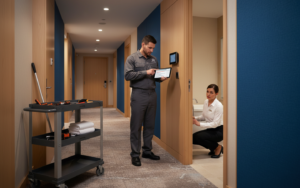
A guest walks into the reception of a hotel on a busy weekend and asks for a room for the night. The front desk is already handling scheduled arrivals, while most rooms are occupied or reserved for upcoming check-ins. The guest is ready to book, but the team must first confirm whether a suitable room is genuinely available.
Managing walk-in guests when occupancy is high requires more than checking the number of vacant rooms. Hotel teams must consider confirmed reservations, expected arrivals, room readiness, housekeeping schedules and the time required to prepare a room. A clear process helps staff respond professionally without creating booking conflicts or disrupting the experience of existing guests.
Why Walk-in Bookings Become Challenging During High Occupancy
Walk-in guests can provide an additional booking opportunity, but accepting a reservation without checking the full room position can create operational problems.
Some common challenges include:
Reserved rooms being treated as available: A room may appear vacant but could already be assigned to a confirmed arrival.
Incorrect room status: Housekeeping may still be cleaning or inspecting a room that reception considers ready.
Unclear availability across room categories: A hotel may have vacant rooms, but not the category or configuration requested by the guest.
Pressure on front-office staff: Employees may feel pushed to confirm a booking quickly without completing the necessary checks.
Disruption to scheduled arrivals: An unplanned booking can affect room allocation and preparation for guests who have already reserved.
These situations are especially important during weekends, festivals, holidays and local events when Indian hotels may experience concentrated arrival demand.
Walk-in Guests When Occupancy Is High: Best Practices
A consistent walk-in booking process helps staff make decisions based on actual availability rather than assumptions. Hotel owners and general managers can introduce the following practices.
1. Check Confirmed Reservations Before Offering a Room
The first step is to review the hotel’s current reservation position. Staff should check occupied rooms, confirmed future arrivals, expected departures and any rooms blocked for maintenance.
A vacant room is not automatically an available room. It may be reserved for a guest arriving later in the day.
Before accepting a walk-in booking, reception should confirm that the room can be allocated for the requested dates and duration without affecting an existing reservation.
2. Verify Room Readiness With Housekeeping
A room should only be offered when its status has been confirmed. A recently vacated room may still need cleaning, inspection or maintenance.
The front desk should follow a clear process for checking room readiness with housekeeping. This is particularly important when several departures and walk-in enquiries happen close together.
If a room is not ready, staff should provide a realistic waiting time rather than promising immediate access.
3. Review Room Categories and Guest Requirements
Walk-in guests may ask for specific room types, such as twin rooms, family rooms or rooms with particular facilities. Reception should check the availability of the requested category before confirming the booking.
If the preferred category is unavailable, staff can explain which alternatives are available. Any difference in room type, price or facilities should be communicated before the guest makes a decision.
This reduces misunderstandings and helps the hotel allocate its remaining inventory appropriately.
4. Follow a Clear Rate and Booking Policy
During high-demand periods, staff should follow the hotel’s approved pricing and booking policies. They should not quote inconsistent rates or make informal commitments that create confusion later.
Before confirming a walk-in booking, explain the room rate, applicable taxes, included services, payment conditions and check-in or check-out timings.
A consistent process helps protect revenue while ensuring guests understand what they are booking.
5. Set Clear Responsibilities at the Front Desk
When occupancy is high, reception teams may handle walk-in enquiries alongside scheduled arrivals, departures and guest requests.
Managers should define who checks availability, who confirms room readiness and who approves exceptions. Staff should also know when a request needs approval from the duty manager.
Clear responsibilities reduce repeated checks and prevent two employees from making different commitments for the same room.
6. Keep Reservation and Room Information Updated
Manual notes, verbal updates and disconnected spreadsheets can make it difficult to maintain an accurate room position.
Hotel management software can help organise reservation information and make relevant booking details easier for staff to access. The usefulness of a system depends on its actual capabilities and how consistently the team updates and uses it.
Aiosell provides hotel technology solutions intended to help hoteliers simplify operations and reduce manual work. Hotel teams evaluating technology should check how its available reservation and room-management capabilities fit their existing booking processes.
7. Know When to Decline a Walk-in Booking
Not every enquiry needs to become a reservation. If the hotel cannot provide a suitable room for the requested period, staff should avoid confirming a booking that may create problems later.
A polite explanation is better than an uncertain promise. Where appropriate, staff can suggest another available room category or explain when availability may next be reviewed.
The priority is to protect confirmed bookings and maintain service standards for guests already staying at the property.
Walk-in Guests When Occupancy Is High: Checklist for Hotel Teams
Use this checklist before confirming a walk-in reservation:
Check current room occupancy.
Review confirmed arrivals and upcoming reservations.
Verify the room category requested by the guest.
Confirm room readiness with housekeeping.
Check whether any rooms are blocked for maintenance.
Confirm the rate, taxes and booking conditions.
Record the guest and reservation details accurately.
Follow the hotel’s approval process for exceptions.
Communicate check-in and check-out timings clearly.
Confirm the booking only after all checks are complete.
Building a Consistent Walk-in Guest Process
Managing walk-in demand is an important part of daily hotel operations. The objective should not be to accept every enquiry, but to make informed decisions using accurate reservation information and clear communication.
For Indian hotel operations, this process is particularly useful during festive seasons, long weekends, business events and local peak-demand periods. Managers should review situations where walk-in enquiries resulted in delays, room allocation errors or guest complaints. These reviews can help identify gaps in reservation updates, housekeeping coordination or staff training.
A practical hotel operations guide should make the process easy to follow across different shifts. When front-office teams understand how to check availability, verify room readiness and communicate booking conditions, they can handle enquiries with greater confidence.
With clear procedures and suitable technology, hotels can manage walk-in guests when occupancy is high without compromising confirmed reservations or the experience of existing guests. Aiosell supports hoteliers looking to simplify day-to-day operations and reduce manual work, while a well-defined front-office process helps teams make better booking decisions.
Frequently Asked Questions
1. How should hotels manage walk-in guests when occupancy is high?
Hotels should check confirmed reservations, current occupancy, room readiness and upcoming arrivals before accepting a walk-in booking. Staff should confirm the room category, rate and booking conditions before making a commitment.
2. Should hotels accept walk-in bookings when all rooms appear occupied?
Hotels should not accept a booking unless a suitable room is genuinely available for the requested period. Staff should verify the reservation position and avoid treating rooms reserved for future arrivals as vacant inventory.
3. How can front-office staff check room availability accurately?
Front-office staff should review the reservation system, check upcoming arrivals and departures, and confirm room status with housekeeping. The room should only be offered after its availability and readiness have been verified.
4. Why is housekeeping coordination important for walk-in bookings?
Housekeeping confirms whether vacant rooms have been cleaned, inspected and prepared for the next guest. Regular communication helps reception avoid assigning rooms that are not ready for immediate occupancy.
5. How should hotels handle walk-in guests when their preferred room category is unavailable?
Staff should explain the availability clearly and offer suitable alternatives, if any. Differences in room type, facilities and pricing should be communicated before the guest confirms the booking.
6. Should hotels offer different rates to walk-in guests during peak occupancy?
Hotels should follow an approved pricing policy that considers demand and the property’s revenue strategy. Staff should communicate the room rate, applicable taxes and booking conditions clearly and consistently.
7. What should hotels do if a walk-in guest requests a room that is reserved for a later arrival?
The hotel should protect the confirmed reservation and should not allocate that room for a conflicting stay. Staff can check whether another suitable room is available or politely explain that the requested room cannot be offered.
8. How can hotel management software help manage walk-in bookings?
Hotel management software can help organise reservation information and make relevant booking details easier to access. Depending on the system, it may also support room and availability management. Hotels should verify specific capabilities before choosing a solution.
9. What should be included in a walk-in guest booking checklist?
The checklist should include current occupancy, confirmed reservations, room category, housekeeping status, maintenance blocks, room rate, taxes, booking conditions and accurate guest details. Staff should complete these checks before confirming the reservation.
10. How can Aiosell help hotels simplify front-office operations?
Aiosell provides hotel technology solutions designed to help hoteliers simplify operations and reduce manual work. Hotel owners can evaluate its available capabilities against their reservation and front-office workflows to determine how they fit their operational requirements.