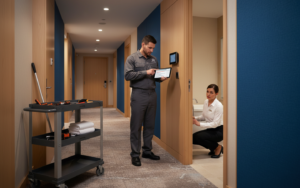
A guest arrives at 9 AM, but the room is occupied until the standard check-out time. Another guest requests a late departure, while the next reservation is expected to check in that afternoon. These situations are common in Indian hotels, particularly during weekends, holidays, and peak travel seasons. Managing early arrivals and late departures without room conflicts requires clear communication, accurate room status updates, and coordination between front-office and housekeeping teams.
The challenge is not simply deciding whether to allow an early check-in or a late check-out. Hotel teams must balance guest expectations with room availability, cleaning schedules, and confirmed reservations. A consistent process helps managers handle these requests without creating unnecessary pressure on staff or disappointing arriving guests.
Why Early Arrivals and Late Departures Create Room Conflicts
Hotels work with fixed check-in and check-out timings, but guest travel plans rarely follow a perfect schedule. Flights may arrive early, trains may be delayed, business meetings may run late, and families may need additional time before departure.
Room conflicts usually occur when these requests are handled without checking the complete booking and housekeeping picture.
Common operational challenges include:
Room availability uncertainty: A guest requests early check-in, but the room is still occupied or has not been cleaned.
Late check-out affecting the next booking: The departing guest remains in the room beyond the agreed time, reducing the housekeeping team’s preparation window.
Delayed room status updates: Reception may not know whether a room is occupied, vacant, under cleaning, or ready for the next guest.
Poor communication between departments: Front-office staff and housekeeping may work with different information.
Unplanned guest expectations: Staff confirm special timings before checking availability or operational constraints.
These problems can affect the arrival experience, delay room allocation and increase pressure on the front desk.
Early Arrivals and Late Departures Without Room Conflicts: Best Practices
A structured approach makes it easier to manage guest requests while protecting the hotel’s room inventory. The following practices can help hotel owners and operations teams establish a reliable process.
1. Check Room Availability Before Confirming Requests
An early check-in request should never be confirmed based only on the room’s booking status. Staff should check whether the previous guest has departed, whether housekeeping has completed the cleaning process and whether the room has passed the hotel’s readiness checks.
Similarly, a late check-out request should be evaluated against the next reservation. If another guest is expected to occupy the same room, the team must consider the available cleaning time.
Train front-office staff to verify room availability before promising a specific time. When the requested room is unavailable, explain the situation clearly and provide a realistic alternative.
2. Record Special Arrival and Departure Requests
Guest requests should be recorded as soon as they are received. This includes the requested early arrival time, late departure time, room preference and any agreed conditions.
A verbal conversation at the reception desk can easily be missed during a busy shift. Recording requests in the hotel’s reservation or property management system gives relevant staff a shared reference.
During shift handovers, highlight pending early check-ins and late check-outs. This helps the incoming team understand which rooms require attention and which guest commitments are still active.
3. Coordinate Front Office and Housekeeping Teams
Housekeeping plays an important role in managing room availability. The front desk may know that a guest has checked out, but that does not automatically mean the room is ready for another arrival.
Establish a clear communication process for updating room status. Housekeeping should inform the front office when cleaning begins, when a room is ready and when an inspection is still pending.
For hotels with several rooms departing on the same morning, managers can prioritise cleaning based on confirmed arrivals and room requirements. This helps teams use their time efficiently without compromising cleaning standards.
4. Set Clear Rules for Early Check-in and Late Check-out
Hotels should have a consistent policy for handling requests outside standard timings. The policy should explain when early check-in or late check-out may be offered, how availability is confirmed and whether additional charges apply.
Staff should understand the difference between a request and a confirmed arrangement. They should avoid guaranteeing a room or departure time until the relevant team has checked availability.
Clear policies also help prevent inconsistent decisions between reception staff and different shifts.
5. Review the Next Day’s Arrivals and Departures in Advance
A daily arrivals and departures review can prevent many room conflicts. Before the start of a busy day, the front-office manager should review:
Expected arrivals and their estimated arrival times.
Scheduled departures and any late check-out requests.
Rooms with back-to-back reservations.
Rooms requiring maintenance or additional preparation.
Special requests that may affect room allocation.
This simple review gives the team time to identify potential overlaps before guests reach the reception desk.
6. Offer Practical Alternatives When a Room Is Not Ready
Not every early arrival can be accommodated with an immediate room allocation. Staff should communicate this politely and offer alternatives based on the hotel’s available facilities and policies.
For example, guests may be offered luggage storage or access to an appropriate waiting area, where available. Reception staff can also provide an estimated update time rather than making an uncertain promise.
For late departures, explain the applicable check-out policy and discuss available alternatives where possible. A clear explanation often prevents misunderstandings at the front desk.
7. Use Hotel Management Software to Maintain Accurate Information
Managing room availability through scattered notes, spreadsheets and verbal updates can become difficult as booking volumes increase.
Hotel management software can help teams maintain organised reservation information and access relevant booking details. The value depends on the system’s actual capabilities and how consistently staff use it.
Aiosell provides hotel technology solutions designed to help hoteliers simplify operations and reduce manual work. Hotels evaluating software should check how its reservation and room-management capabilities fit their existing front-office workflows.
Technology should support staff decisions, not replace the communication and operational checks required before confirming special guest requests.
An Early Arrivals and Late Departures Without Room Conflicts Checklist
Hotel owners and front-office managers can use this checklist during daily operations:
Review the day’s expected arrivals and departures.
Identify bookings with early check-in requests.
Identify guests requesting late check-out.
Check the next reservation before approving a late departure.
Confirm room status with housekeeping before assigning rooms.
Record all approved special timing arrangements.
Communicate pending requests during shift handovers.
Prioritise room cleaning based on confirmed arrivals.
Inform guests promptly if their requested timing cannot be accommodated.
Review any room delays and identify the reason.
Using this checklist consistently can help reduce missed requests and improve coordination between departments.
Building a More Reliable Front-Office Routine
Managing early arrivals and late departures is an everyday operational responsibility, not an occasional exception. Hotels need a process that connects reservation information, room readiness, housekeeping schedules, and guest communication.
For Indian hotel operations, this becomes especially important during long weekends, school holidays, festive periods, and high-demand travel seasons. Managers should review recurring room conflicts and identify whether they result from late departures, delayed cleaning, inaccurate room status updates, or unclear staff responsibilities.
A practical hotel operations guide should focus on making these routines consistent across shifts. Staff training, clear policies, and reliable information are often more useful than adding complicated approval steps.
Aiosell supports hoteliers looking to reduce manual work and simplify day-to-day hotel operations through technology. By combining a clear front-office process with suitable systems, hotels can manage early arrivals and late departures without room conflicts, maintain better room readiness, and create a more predictable experience for arriving and departing guests.
FAQs: Handling Early Arrivals and Late Departures Without Room Conflicts
These FAQs are written to match the blog’s practical, informative tone and address common questions from hotel owners, general managers and front-office teams.
1. How can hotels manage early arrivals when rooms are not ready?
Hotels should check room availability and confirm the housekeeping status before approving an early check-in. If the room is unavailable, staff can communicate an estimated waiting time and offer alternatives such as luggage storage or a waiting area, where available.
2. How can hotels manage late check-outs without affecting the next guest?
Hotels should check upcoming reservations before approving a late check-out. The front office must coordinate with housekeeping to ensure sufficient time for cleaning and room preparation. If the next booking is scheduled soon, staff should explain the hotel’s check-out policy and discuss available alternatives.
3. What are the best practices for handling early arrivals and late departures without room conflicts?
The best practices include checking room availability before confirming requests, recording special arrival and departure timings, coordinating with housekeeping, reviewing daily arrivals and departures, and communicating clearly with guests. Consistent procedures help prevent room allocation problems.
4. Why is coordination between front office and housekeeping important?
Front-office staff manage reservations and guest requests, while housekeeping confirms whether rooms are cleaned and ready. Regular communication ensures that room status information is accurate and prevents staff from assigning rooms before they are prepared.
5. Should hotels charge extra for early check-in or late check-out?
Hotels can establish charges for early check-in and late check-out based on their pricing policies, room availability and operational requirements. These conditions should be communicated clearly during booking or when the guest makes the request.
6. How can hotel management software help prevent room conflicts?
Hotel management software can help organise reservation information and make relevant booking details easier for staff to access. Depending on the system’s capabilities, it may also support room-status visibility and front-office coordination. Hotels should evaluate these functions against their operational requirements.
7. How should hotels handle multiple early check-in requests during peak seasons?
Hotels should review expected arrivals and departures in advance, identify rooms that can be prepared earlier, and coordinate cleaning priorities with housekeeping. Staff should confirm early check-in only after checking actual room readiness and communicate realistic waiting times when rooms are unavailable.
8. How can Indian hotels improve their early check-in and late check-out process?
Indian hotels can improve the process by establishing clear timing policies, reviewing daily room occupancy, recording guest requests, training front-office teams, and coordinating with housekeeping. These practices are particularly useful during weekends, festive periods, and holiday seasons when arrival and departure volumes may increase.
9. What should hotel staff do when an early check-in and late check-out request overlap?
Staff should review the room’s current occupancy, the next confirmed reservation, and the time required for housekeeping. If both requests cannot be accommodated, the team should explain the limitation and offer alternatives without making commitments that could affect the next guest.
10. How does Aiosell help hotels simplify front-office operations?
Aiosell provides hotel technology solutions designed to help hoteliers simplify operations and reduce manual work. Hotels can evaluate its available reservation and room-management capabilities to understand how they fit their front-office workflows and operational needs