A front desk terminal fixed to one location made sense when hotel software required a physical connection to an on-site server. That constraint no longer exists, yet many properties still operate as though staff need to return to a single desk for every task. Mobile access to a property management system removes that limitation, and the operational benefits extend well beyond simple convenience.
Why Mobile Access Has Become Essential
Cloud-based hotel technology made mobile access technically possible, but adoption has accelerated because the operational case for it is genuinely strong. Guests increasingly expect a fast, personal check-in experience rather than waiting in a lobby queue. Housekeeping and maintenance teams work throughout the property, not at a desk, making a fixed terminal fundamentally mismatched to how their work actually happens. Management increasingly needs visibility into property performance without being physically on-site.
A property management system accessible from tablets and smartphones addresses each of these needs directly, extending the software’s usefulness to wherever staff and management actually are, rather than confining its value to a single physical location.
Front Desk Mobility
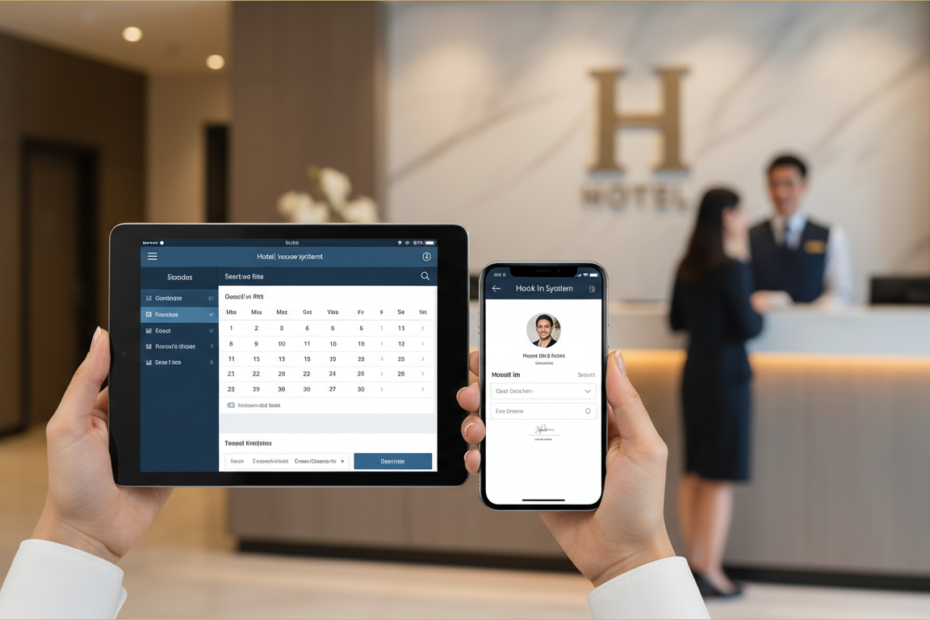
Mobile check-in represents one of the more visible applications of this shift. Staff equipped with tablets can greet arriving guests directly in the lobby, verify identity, process payment, and issue digital or physical room access without requiring guests to wait for an available desk terminal. This is particularly valuable during group arrivals or peak check-in periods, when a fixed desk creates a natural bottleneck regardless of how efficient the underlying software is.
Mobile access also supports a more personal interaction style — staff can greet guests by name while approaching them, rather than guests approaching an anonymous desk and stating their name to begin the process. For hotels prioritizing a warmer, more boutique-style guest experience, this shift in interaction pattern matters beyond pure operational efficiency.
Housekeeping Efficiency Through Mobile Tools
Housekeeping represents perhaps the clearest operational case for mobile PMS access. Staff moving between rooms throughout the property can update room status — clean, dirty, inspected, out of order — directly from a tablet or phone as they complete each task, rather than waiting to report back to a central location or relying on a supervisor to manually update the system later.
This real-time update flow directly affects how quickly a cleaned room becomes available for a new guest, particularly relevant for early check-in requests or high-turnover days. It also gives management accurate, live visibility into housekeeping progress throughout the day, rather than relying on periodic manual check-ins with the housekeeping team to understand current status.
Maintenance staff benefit similarly, with mobile access allowing them to receive task assignments, log completed repairs, and flag ongoing issues directly from wherever they’re working in the property, without needing to return to an office to update records.
Management Visibility on the Move
For general managers and ownership, mobile access to reporting and dashboards means property performance data is available continuously, not just when physically present at a desk terminal. Checking occupancy, reviewing the previous night’s revenue, or monitoring a specific situation — an unusually high cancellation rate, a maintenance issue affecting available inventory — can happen from anywhere, supporting faster decision-making than waiting to review data during a scheduled office check-in.
For multi-property operators, this mobile visibility extends further, allowing oversight across several locations without needing to be physically present at each one, an increasingly important capability as hotel chains manage growing portfolios with lean corporate teams.
Practical Considerations for Mobile Deployment
Adopting mobile PMS access effectively requires more than simply enabling the capability. Staff need appropriate devices — reliable tablets or smartphones with sufficient battery life and durability for daily hotel use — and reliable property-wide wireless connectivity, since mobile tools are only as useful as the network supporting them.
Training also needs to account for mobile-specific workflows, which sometimes differ slightly from desktop interfaces in navigation and available functionality. Staff should feel equally confident completing key tasks on a mobile device as they would at a traditional terminal, rather than treating mobile access as a secondary, less reliable option.
Security Considerations for Mobile Access
Extending system access to mobile devices introduces additional security considerations worth addressing directly. Role-based permissions should apply consistently regardless of device, ensuring staff only access information relevant to their position. Device management policies — requiring passcodes, enabling remote wipe capability for lost devices, and ensuring software updates apply promptly — help protect guest data as access extends beyond a controlled, on-site terminal environment.
The Broader Operational Shift
Mobile access reflects a broader shift in how hotel technology is expected to function: available wherever work actually happens, rather than confined to a fixed physical location designed around older technology constraints. Properties that fully embrace this shift tend to see meaningful improvements in operational responsiveness — faster room turnaround, quicker response to maintenance issues, and a front desk experience that feels less like a transaction at a counter and more like genuine hospitality.
For hotels still relying primarily on fixed terminals, evaluating how well the current property management system supports mobile access is worth prioritizing, particularly as guest expectations around speed and personalization continue to rise, and as staff increasingly expect the flexibility that mobile tools provide in nearly every other aspect of daily work.